
 E-Paper



Urban Challenge Fund to tackle challenges from rapid urbanisation: Vaishnaw
Information and broadcasting minister Ashwini Vaishnaw said the UCF will focus on creative redevelopment of cities, positioning them as growth hubs

 Prefer HTon Google


The ₹1 lakh crore Urban Challenge Fund (UCF) that the Union Cabinet approved on Friday is designed to tackle the day-to-day challenges from rapid urbanisation, said information and broadcasting minister Ashwini Vaishnaw on Saturday.
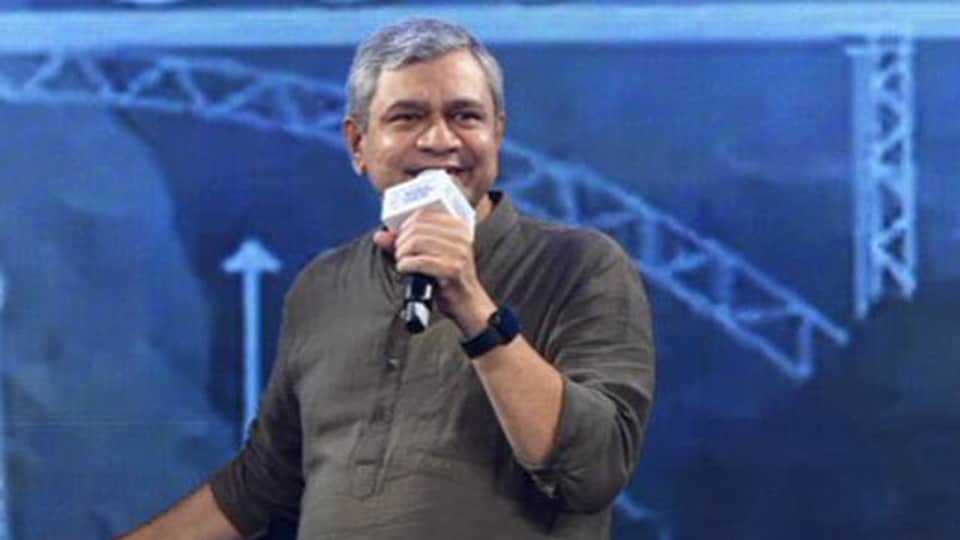
Vaishnav said the UCF will focus on creative redevelopment of cities, positioning them as growth hubs, and strengthening water and sanitation systems to drive transformative, market-linked urban infrastructure. He added that the centrally sponsored scheme will provide ₹1 lakh crore in central assistance between FY 2025-26 and FY 2030-31, extendable by three years.
The Centre’s contribution will be capped at 25% of the project cost, with at least 50% mobilised from market sources, such as loans, bonds, or public-private partnerships. The remaining 25% will come from states, Union territories, urban local bodies (ULBs), or be raised from the market.
“With ₹1 lakh crore investment from the government of India, more than ₹3 lakh crore investment will come for urban areas,” Vaishnaw said at a press briefing on decisions taken at the Cabinet meeting on Friday.
He said that urban infrastructure can no longer rely solely on budgetary grants. “The design marks a shift from grant-based financing to market-linked, reform-driven, and outcome-oriented infrastructure creation.”
The thrust will be on rejuvenating congested central business districts and core areas under creative redevelopment of cities. Upgrading legacy infrastructure such as drainage, water supply, and sewerage networks, improving mobility and public spaces, and enabling land value capture to make redevelopment viable will be the end goal.
The scheme will also focus on legacy waste remediation, dumpsite treatment, and integrated command and control centres.
The second vertical of cities as growth hubs aims to strengthen city regions as economic engines by connecting industrial, defence, tourism, port-based, and other economic anchors with trunk infrastructure and integrated spatial and transit planning.
“In cities as growth hubs, focus will be on increasing economic activity, expanding services, and boosting manufacturing in surrounding areas,” said Vaishnaw.
The third component, water and sanitation, will close legacy gaps and move cities towards service saturation, sustainability, and reuse. Projects will include stormwater drainage, flood mitigation, non-revenue water reduction, metering, and reuse of treated water.
Projects funded under schemes such as AMRUT 2.0 and Swachh Bharat Mission 2.0 will not be eligible under UCF. Vaishnaw said there will be synergy with the Smart Cities Mission, which is nearing completion.
Challenge-mode selection
Vaishnaw said the fund will have a wide coverage footprint, covering cities with populations above a million, state capitals, major industrial cities with populations above 100,000, and cities in the Northeast and hilly states.
The projects will be chosen through a competitive “challenge-mode” mechanism based on readiness, bankability, and clear outcome indicators.
“Governments and urban local bodies will bring projects under the Urban Challenge Fund mechanism, approvals will be done there, and projects will be taken forward,” Vaishnaw said.
He added that the administrative control of projects will remain with state governments and ULBs. “Municipal control will remain with the municipal body and the state government,” he said. He noted that technology providers and industry players will continue to participate in execution.
“Monitoring will be fully paperless, with milestone-based fund release, third-party verification, and independent checks. Citizen consultations will be integral to project design.”
Reform-linked funding, credit guarantee
A strong reform component has been embedded into the scheme, with cities expected to undertake improvements in urban governance, municipal finance, digital services, project monitoring, and integrated land use–mobility planning. “The endeavour is to improve urban governance and bring new reforms, keeping citizens at the centre,” Vaishnaw said.
He added that the Cabinet approved a ₹5,000 crore credit repayment guarantee corpus to enable smaller cities and those in the Northeast and hilly states to access market finance.
For first-time loans, the Union government will guarantee up to ₹7 crore or 70% of the loan amount, whichever is lower, supporting projects of around ₹20 crore initially and ₹28 crore in subsequent rounds.
Vaishnaw said that extensive consultations were held with states over the past year before finalising the framework. “States have a very important role in this… that is why it took one year to frame the complete project,” he said.


