
 E-Paper



US shared clues after downing Chinese balloon
The US Air Force has shared details of the Chinese spy balloon incident with several air forces, including India's, according to top US official.

 Prefer HTon Google


Two months after the US shot down a giant Chinese spy balloon off the coast of South Carolina, a top American military official on Monday said that the United States Air Force (USAF) shared some details of the incident, including how the airship was brought down and the tactical challenges involved, with several air forces, including the Indian Air Force (IAF).
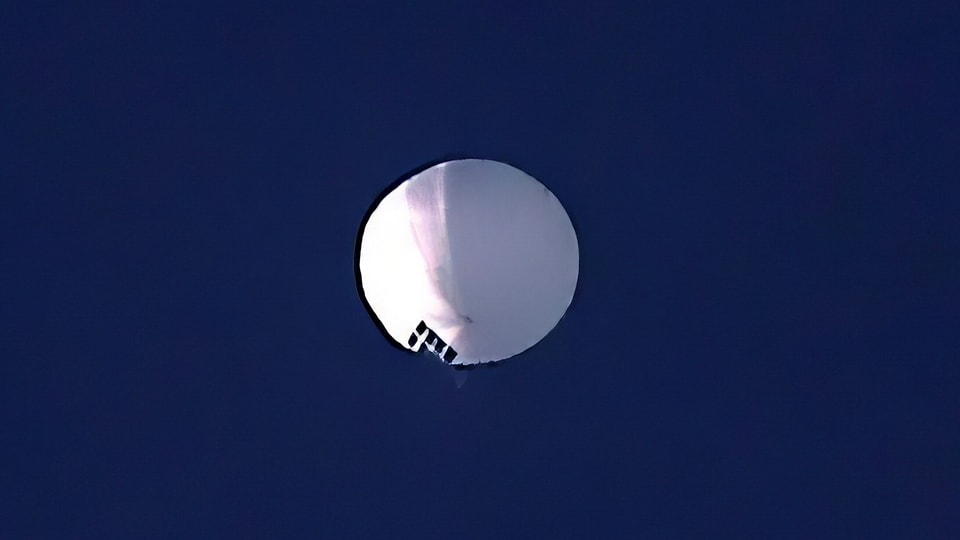
The comments were made by General Kenneth S Wilsbach, the commander of Pacific Air Forces, who flagged concerns about China violating the sovereignty of other nations – a concern that India has repeatedly raised on global forums.
“Certainly, we have had some dialogue on it (the balloon incident),” said General Wilsbach, who is also the air component commander of the US Indo-Pacific Command.
He said that two US B-1 supersonic heavy bombers were set to take part in an air exercise in India for the first time.
“We have had conversations on this with most of the air chiefs in the region. These weren’t public comments, but rather talks behind closed doors. We discussed the situation that occurred with us with the airship that crossed Alaska, Canada and the US, and how we went about dealing with it,” he said.
The US believes that the Chinese balloon was spying on its military sites.
He said the US was happy to share with friendly air forces the lessons learnt from the incident, how the USAF shot the airship down, and the tactical challenges involved as it was flying very high and not moving that fast.
Wilsbach, who is currently on an official visit to India, said he was not open to sharing what information the US had gleaned from its analysis of the balloon debris, but stressed that any country that was violating the sovereignty of another’s airspace, and which was not abiding by international law, should be a cause for concern.
Also read: India, US special forces carry out wargames, focus on fighter aircraft ops amid China standoff
Days after it was shot down, the US concluded that the Chinese surveillance balloon was equipped with signals intelligence and monitoring capabilities, and was part of a Chinese fleet of surveillance balloons that conducted similar operations in more than 40 countries across five continents. China claimed the balloon was collecting meteorological data, and had strayed off course.
There have been some reports of Chinese balloon sightings in Indian airspace too.
“We believe that your airspace here in India is your sovereign airspace, and you should decide who gets to fly in it,” said Wilsbach.
“And we have countries that don’t necessarily agree with that, and they just decide they are going to violate your sovereignty and fly in it --- whether it is your airspace, or ours, or Canada’s.”
In February, HT reported that the US state department briefed Indian diplomats in Washington DC on the Chinese surveillance operation and alerted them that India was among the countries that are targets of Chinese surveillance.
Wilsbach indicated that violation of sovereign airspace could have dangerous consequences.
“We should have discussions to encourage countries that do not abide by the rule of law to comply with international norms so that we don’t have areas that could turn into a very big miscalculation. In this case, there was an unmanned vehicle, an airship of sorts. What if it is manned? There could be loss of lives, which would be terrible.”
Wilsbach also elaborated on the cooperation between the USAF and IAF on a day the two sides kicked off Exercise Cope India 23 at the Kalaikunda airbase in West Bengal, with the 11-day drills aimed at enhancing mutual understanding and sharing their best practices.
The general said apart from the participation of two B-1 heavy bombers, the bilateral exercise will involve four to six F-15E Strike Eagle fighter jets, two C-130J special operations aircraft, and a C-17 heavy-lifter. While the C-130Js and C-17 are already here for the drills, the US bombers and fighters are expected to land in India later this week.
“We have had our B-1 bombers here twice for two Aero India, but this will really be the first time that they will be in India for an exercise. It’s good because we have the opportunity not just to show the aircraft to the public, but now the crews will have the opportunity to be able to train with one another, and to incorporate the bombers into the exercise scenarios so that everybody has a chance to see how they would operate,” Wilsbach said.
The exercise will help both air forces improve their tactics, techniques and procedures, he said.
On the significance of the bombers taking part in the exercise, Wilsbach said the B-1s are a unique platform, have extremely long range and can carry a myriad of weapons.
Cope India will be conducted across three bases in the country – Kalaikunda, Panagarh and Agra. Indian aircraft taking part in the drills include Sukhoi-30s, Rafales, Jaguars, light combat aircraft Tejas, C-17s and C-130Js, IAF officials said.
“The first phase of the exercise commenced on Monday. This phase will focus on air mobility and will involve transport aircraft and special forces assets from both the air forces. Both will field the C-130J and C-17 aircraft...The exercise also includes the presence of Japanese Air Self Defense Force aircrew, who will participate in the capacity of observers,” the IAF said in a statement.


