
 E-Paper



US, UK militaries strike Houthi targets in Yemen
The US and UK launched strikes on Houthi military capabilities in Yemen in response to attacks against shipping in the Red Sea corridor

 Prefer HTon Google


The US and UK on Thursday launched strikes on Houthi military capabilities and assets in Yemen in response to attacks and threats by the Iran-backed rebel group against shipping in the Red Sea corridor, a move that represents an escalation and a possible widening of the West Asian war and brings the US into greater conflict with Iran.
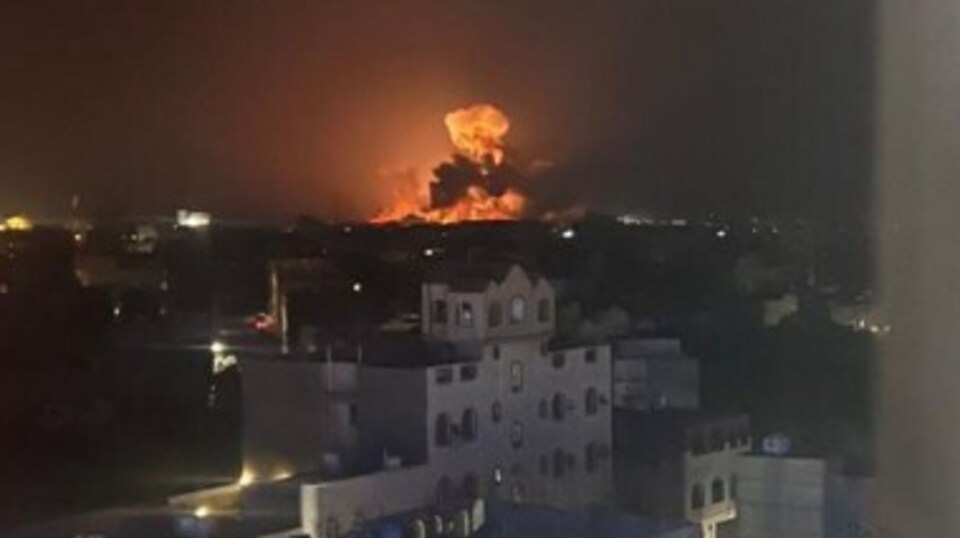
In a statement, President Joe Biden said that the US and UK — with the support of Australia, Bahrain, Canada, and the Netherlands — conducted “strikes against a number of targets in Yemen used by Houthi rebels to endanger freedom of navigation” and warned that the strikes were a clear message that the US and its partners will not “tolerate attacks on our personnel or allow hostile actors to imperil freedom of navigation in one of the world’s most critical commercial routes”.
On Friday, the group acknowledged the attack and warned of retaliation. It said at least five sites, including airfields, had been attacked and at least five rebels were killed. In a recorded address, military spokesman, Brig Gen Yahya Saree said that the strikes would “not go unanswered or unpunished”.
Biden said that the strikes were a direct response to “unprecedented Houthi attacks” against international maritime vessels, including the use of anti-ship ballistic missiles for the first time in history. The Houthis, which took control of most of Yemen in the past decade, have been attacking ships in the Red Sea — a crucial maritime route connecting Europe, Asia and Africa which sees 15% of the world’s seaborne trade — in a show of support for Hamas. It has said it won’t stop the attacks unless Israel ceases its offensive in Gaza.
“More than 50 nations have been affected in 27 attacks on international commercial shipping. Crews from more than 20 countries have been threatened or taken hostage in acts of piracy. More than 2,000 ships have been forced to divert thousands of miles to avoid the Red Sea — which can cause weeks of delays in product shipping times. And on January 9, Houthis launched their largest attack to date — directly targeting American ships,” Biden noted.
Biden added that Thursday’s action also followed a concerted diplomatic campaign. In December, the US launched Operation Prosperity Guardian, a naval coalition with 19 other countries, to deter Houthi attacks on shipping in the Red Sea. Last week, the US, with 13 other countries, warned the Houthis of consequences if their attacks didn’t cease. And this week, the UN Security Council passed a resolution calling for an end to their attacks.
In his own statement, Prime Minister Rishi Sunak said the UK had “taken limited, necessary and proportionate action in self-defence, alongside the United States... to degrade Houthi military capabilities and protect global shipping” after the group continued to carry out attacks despite warnings.
In a separate statement, US secretary of defence Lloyd Austin said that the action was intended to “disrupt and degrade” the Houthis’s capabilities to “endanger mariners” and “threaten global trade”.
“Today’s strikes targeted sites associated with the Houthis’ unmanned aerial vehicle, ballistic and cruise missile, and coastal radar and air surveillance capabilities,” Austin added, keeping open the option of follow up strikes if needed.
Offering more background on the attacks, a senior US administration official told reporters that the immediate trigger for the strikes was the Houthi attack on US ships on January 9. “Nearly 20 drones and multiple missiles were launched in multiple salvos directly against US ships. This attack was defeated by the US and UK naval forces working jointly as part of Operation Prosperity Guardian. If not for this defensive mission, we have no doubt that ships would have been struck, perhaps even sunk, including, in one case, a commercial ship full of jet fuel.”
Outlining the sequence of decision-making, the official said that on January 1, following an attack on a Denmark-owned ship, Biden had asked his national security team to both intensify the diplomatic campaign, build a multinational campaign for military action, identify targets, and issue a final warning statement. Following the attack on Tuesday, Biden met his national security team to discuss options and then directed Austin to carry out the strikes.
The senior administration official rejected any attempt to link the Houthi attacks with the situation in Gaza. “That is completely baseless and illegitimate. The Houthis also claim to be targeting specifically Israeli-owned ships or ships bound for Israel. That is simply not true. They are firing indiscriminately on vessels with global ties. Most of the ships that have come under attack have nothing whatsoever to do with Israel. And even if they were — even if that were not the case, it is no justification for these illegal attacks in international waterways.” The official also reiterated the “special and historic” American responsibility to “help protect and defend these arteries of global trade and commerce”.
The senior official also categorically called out Iran. “Iran is a primary, if not the primary, enabler or supporter, sponsor of the Houthis and that Iran has been involved operationally in the conduct of these attacks. They provided information and intelligence to the Houthis. They provided the Houthis the very capabilities that they have used to conduct these attacks. So we believe that they have been certainly involved in every phase of this,” the official said.
A senior military official termed the action “significant” and emphasised that the targets were chosen for minimising the risk of any collateral damage. The Pentagon official said, “We were absolutely not targeting civilian population centres. We were going after very specific capability in very specific locations with precision munitions.”
The strikes prompted a range of political responses in the US. While Republicans supported the strikes, they used the moment to attack Biden for removing the terrorist designation on Houthis after coming to power and called the action “overdue”. While most Democrats backed the President, progressives in particular called for White House to work with the US Congress and seek authorisation for its military operations.
Iran called the strikes “a clear violation of Yemen’s sovereignty” and a “breach of international laws”. Lebanon’s Hezbollah group, which has also traded fire with Israel in the months after the campaign in Gaza began, said they confirmed that “the US is a full partner in the tragedies and massacres committed by the Zionist enemy in Gaza and the region”.
While the US has spent weeks trying to reduce tensions in the region after widespread condemnation of Israel’s campaign in Gaza, West Asia appeared to be on the edge again on Friday. Hussein al-Ezzi, a Houthi official in their foreign ministry, that “America and Britain will undoubtedly have to prepare to pay a heavy price and bear all the dire consequences of this blatant aggression”.
While confident that the strikes did degrade Houthi capabilities, American officials expect retaliatory attacks and acknowledge that this is “not the last word on the topic”.


