E-Paper



‘Use electricity wisely’: Govt urges citizens amid severe heatwave warning as power demand breaks record
“Due to the intense heat wave in the country, the demand for electricity is also increasing,” the ministry said.

 Prefer HTon Google


The ministry of power on Friday cautioned that electricity demand across the country is breaching all previous records amid an intense heat wave, and advised citizens to use power wisely and judiciously as the India Meteorological Department (IMD) forecast severe heat wave conditions over large parts of India during the next week.
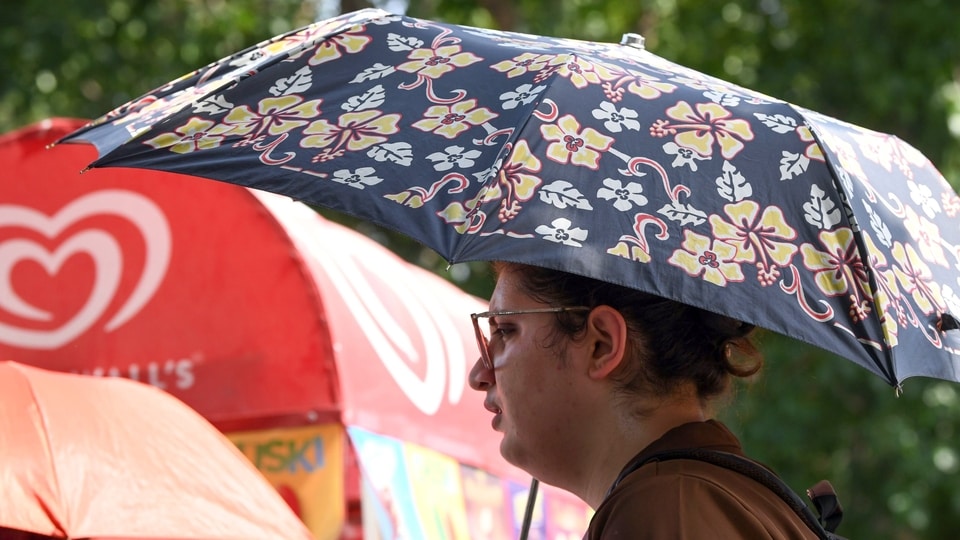
“Due to the intense heat wave in the country, the demand for electricity is also increasing. In the last four days, electricity demand has broken all previous records. The daytime peak electricity demand was met as follows: May 18: 257.37 GW; May 19: 260.45 MW; May 20: 265.44 MW; May 21: 270.82 MW. The peak daytime demand usually occurs between 2 PM to 4 PM. Although we are ready to supply electricity as required, due to the intense summer, let us all try to use electricity wisely and judiciously,” the ministry said on Friday.
On Friday, the peak power demand was 267.68 GW. Over the weekend, the peak demand is expected to reduce marginally as commercial establishments may remain closed.
The IMD, meanwhile, has warned that heat wave to severe heat wave conditions are likely to continue over the plains of northwest India, central and east India, and parts of peninsular India during the next 6-7 days.
Also Read | Warmest night in 14 yrs, power demand to touch 9,000 MW: How Delhi summer is already breaking records
On Thursday, maximum temperatures were in the range of 40-47°C over northwest, west, central and adjoining east India, north peninsular India and adjoining southeast coastal India. The highest maximum temperature of 47.6°C was reported at Banda.
Heat wave conditions are very likely in isolated/some pockets over Uttar Pradesh and Madhya Pradesh till May 28, with severe heat wave conditions over east Uttar Pradesh and east Madhya Pradesh during the same period. Heat wave conditions are very likely in isolated/some pockets over Punjab and Haryana, Chandigarh and Delhi till May 28, with severe heat wave conditions likely in some/many pockets during May 24 and 27.
Heat wave conditions are very likely in isolated/some pockets over Rajasthan till May 28, with severe heat wave conditions likely in isolated/some pockets over west Rajasthan during May 24 to 28.
Heatwave conditions likely
Heat wave conditions are very likely in isolated pockets over Vidarbha till May 28, with severe heat wave conditions likely in isolated pockets till May 28. Heat wave conditions are very likely in isolated pockets over Coastal Andhra Pradesh and Yanam till May 26, with severe heat wave conditions likely in isolated pockets till May 24.
Heat wave conditions are very likely in isolated pockets over Bihar till May 24; Jammu and Kashmir, Himachal Pradesh and Uttarakhand till May 28. Hot and humid weather conditions are likely to prevail over Gangetic West Bengal till May 26. Warm night conditions are very likely to prevail in isolated pockets over Uttar Pradesh and Vidarbha till May 24; Odisha till May 26; and Telangana on May 23.
There is a red category warning for parts of Uttar Pradesh, Madhya Pradesh, coastal Andhra Pradesh and Telangana, while large parts of the country are under orange warning for severe heat during the next three days.
A red category warning implies that there is a very high likelihood of developing heat illness and heat stroke in all age groups. Extreme care is needed for vulnerable people. For orange alert areas, the IMD has warned of high temperatures and an increased likelihood of heat illness symptoms in people who are either exposed to the sun for a prolonged period or doing heavy work. It also flagged high health concerns for vulnerable people such as infants, the elderly and people with chronic diseases.
“Avoid heat exposure– keep cool. Avoid dehydration. Drink sufficient water- even if not thirsty,” the IMD said.
Experts warn of disproportionate impacts
Experts have warned of disproportionate impacts on informal workers who spend more time outdoors. The Occupational Safety, Health and Working Conditions (OSH) Code, 2020, the main legislation on workers’ safety, does not define heat thresholds considered dangerous, especially wet-bulb temperatures, unlike an older law it replaced. The code, however, provides for “adequate ventilation and suitable temperature” on factory floors.
Also Read | 97 of world’s 100 hottest cities in India as brutal heatwave pushes temperatures past 45°C
“With climate-related heat exposure, especially outdoors, the hazard itself cannot always be eliminated entirely. However, exposure can often be reduced. One important approach is minimizing exposure to peak heat and direct sun intensity through work organisation measures. In some countries and sectors, work is shifted toward cooler morning or evening hours during periods of extreme heat, particularly for physically demanding outdoor work such as construction or road work,” said Yogindra Samant, Occupational Safety and Health Specialist, ILO Decent Work Team for South Asia, responding to a query on measures being considered globally.
“The next level in the hierarchy of controls involves engineering and workplace design measures. Improved ventilation, reflective roofing, insulation, airflow, shading, and cooling systems where feasible can help reduce indoor heat exposure in factories, warehouses, and other enclosed workplaces. Dark roofing materials, for example, can absorb and retain significant heat. Administrative and organisational measures are also important. These may include work-rest cycles, worker rotation, reducing heavy physical work during peak heat periods, and allowing opportunities for cooling and recovery during the workday,” Samant added.
Sustainable Futures Collaborative’s new report, released on Thursday, has examined whether Indian cities are prepared for rising heat risk.
The study found that while Heat Action Plans (HAPs) are rapidly expanding across the country, the overall response remains heavily focused on short-term emergency measures. The team considered cities with the highest projected percentage increase in extreme heat index days — when the ‘feels like’ temperature is hotter than 98% of all historically recorded days for that specific region — under a 1.5°C warming scenario.
The final sample included Surat, Mumbai, Meerut, Faridabad, Kota, Delhi, Gwalior, Ludhiana and Bengaluru, collectively representing 42.7 million people. Based on interviews with city, district and state government officials in these cities, the researchers found that:
1. All nine cities have reported short-term emergency measures. These include actions such as access to drinking water, changes in work schedules, and boosting hospital capacity before or during a heat wave.
2. Many of the life-saving short-term actions reported across cities are the result of emergency directives from higher levels of government.
3. Measures such as making household or occupational cooling available to the most heat-exposed, developing insurance cover for lost work, expanding fire management services for heat waves, and electricity grid retrofits to improve transmission reliability and distribution safety are missing from all cities.