
 E-Paper



Utilisation of Nirbhaya Fund by states not up to mark: Government data
The corpus was formed in the aftermath of the gang rape and murder of a paramedical student in Delhi in December 2012, an incident that sparked widespread protests and also led to stricter anti-rape laws.

 Prefer HTon Google


Over five years after the Nirbhaya Fund was constituted to help government agencies combat cases of violence against women, utilisation of funds by states still remains low across the country, according to data presented by the government in Parliament.
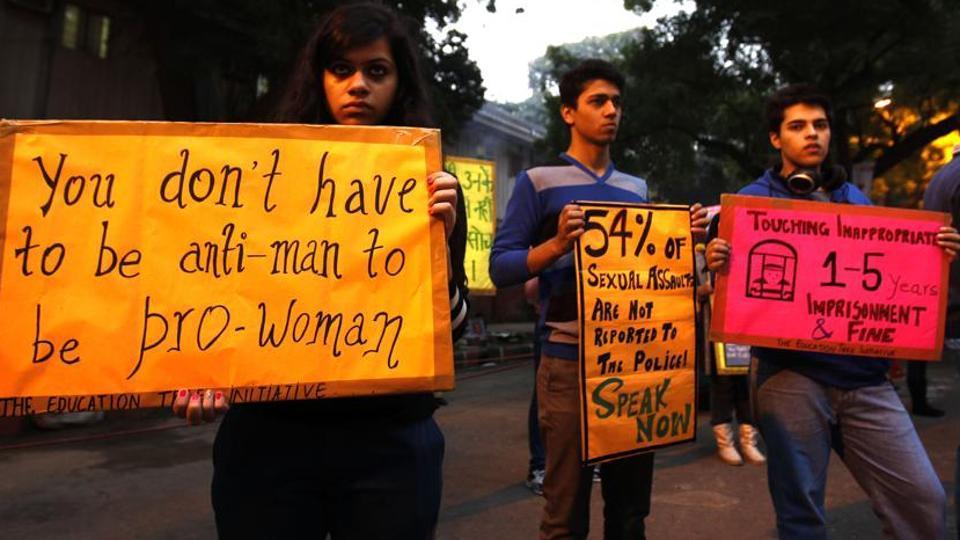
The corpus was formed in the aftermath of the gang rape and murder of a paramedical student in Delhi in December 2012, an incident that sparked widespread protests and also led to stricter anti-rape laws.
For the funds given by the women and child affairs (WCD) ministry, the road transport ministry and the railways ministry, the utilisation stands at 20%, 25% and 15%, respectively, in the same period. Just over 20% of the funds released by the home ministry to states and Union Territories in the last five years have been utilised.
This is from the data that the WCD ministry — the nodal ministry for the Nirbhaya Fund — furnished in Parliament in ongoing winter session and the monsoon session. Apart from the WCD ministry, several other ministries run projects . The home ministry has 13 schemes, the road and transport ministry has four, the railway ministry has two, and the information and technology ministry and the department of justice have one each.
As per the Nirbhaya Fund’s framework, an Empowered Committee of officials chaired by the WCD secretary looks at proposals from all ministries. Initially, the WCD ministry was mandated to release the funds. But since the process turned out to be a lengthy one, it was decided that the WCD ministry will send its approvals to the Department of Economic Affairs (DEA), which will release the funds.
Under the Nibhaya Fund, the WCD ministry allocated ₹1,000 crore in 2013-14 and 2014-15 . For 2016-17 and 2017-18, the allocation was ₹550 crore. The figure stood at ₹500 crore in 2018-19 and 2019-20. While the Centre allocates money to states from the fund, the states spend it for women’s safety.
Punjab was allocated ₹1185.37 lakh under a scheme that provides for a one-stop redressal window for women facing any form of violence for the period between 2014 and 2019. It showed a utilisation certificate of ~65.62 lakh. The home ministry, under the NDA government, has released ₹1,656.71 crore in the last five years to states and UTs. Of them, utilisation certificates of only ₹146.98 crore have been given by the states. To be sure, of the 13 projects under the MHA, certificates were filed for just nine.
For instance, Andhra Pradesh was allocated ₹2085 lakh in the last five years, but it submitted a utilisation certificate of ₹814.01 lakh. While Uttar Pradesh and Delhi were allocated 11939.85 lakh and 39090.12 lakh, respectively, their certificates show spending of ₹393 lakh and ₹1941.57 lakh.


