
 E-Paper



Uttarakhand glacier burst: What we know about region’s worst disaster in 8 yrs
The surging waters on Sunday washed away homes, damaged two major dams, cut off 13 villages, and snapped crucial road links and bridges that connect far-flung areas in the Himalayan region

 Prefer HTon Google


Rescuers dug through a mountain of mud and slush on Monday to pull out people trapped under the debris of the flash floods in Uttarakhand’s Chamoli. Here is what we know so far about the worst disaster to hit the region in eight years:
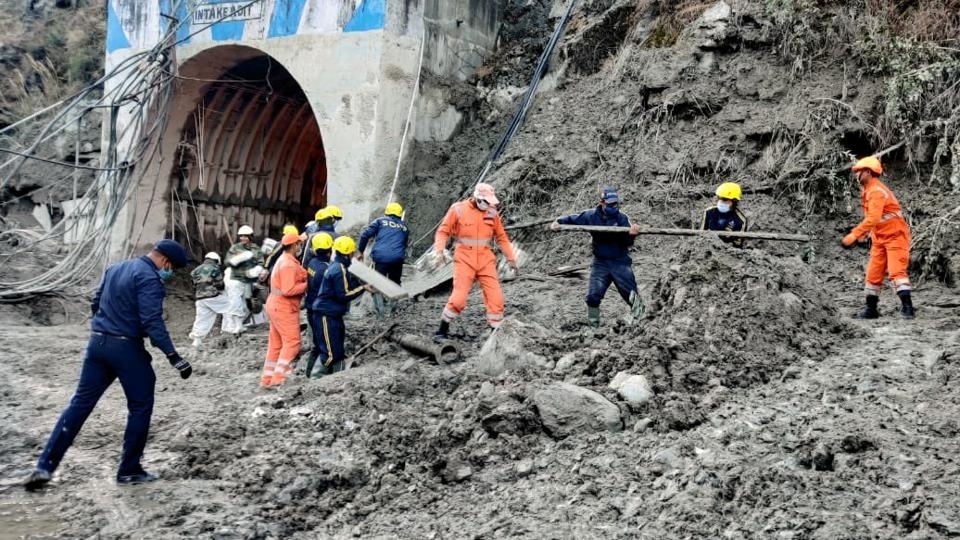
• The toll from the tragedy on Monday climbed to 26 with 171 people still missing even as at least 1,000 disaster response, military and paramilitary personnel worked to clear a 1.7-km tunnel in the badly hit hydroelectric power project of Tapovan.
Also Read | ‘Had lost all hope’: Survivors recall horror tales of Chamoli disaster
• At least 35 people are still stranded in waist-deep muck at the project site.
• The surging waters on Sunday washed away homes, damaged two major dams, cut off 13 villages, and snapped crucial road links and bridges that connect far-flung areas in the Himalayan region.
• The missing include 11 villagers, two police personnel and workers from the two dam sites.
• Rescue workers were scanning the Alaknanda river to find bodies and visiting the affected villages to provide them relief.
• US-based scientists, who looked at satellite images, suggested the tragedy was caused by a landslide onto a glacier which led to debris flooding the river.
• But a group of Indian scientists said there was no landslide or avalanche but pointed at the possibility of a glacial lake that led to the breach. They said the release of water from an underground glacial lake led to flash floods and inundation in the valley.
• Many flood victims in the upper reaches of Uttarakhand blamed unchecked construction and environmental damage for the tragedy.
• The disaster is the worst to hit Uttarakhand since the 2013 Kedarnath floods killed 5,700 people and highlighted the impact of the climate crisis and degradation of the fragile ecology.
• The disaster on Sunday struck at 9.30am when a glacier breach under the Nanda Devi, the country’s second-highest peak, sent a torrent of water, rock and dust down a valley into the Rishiganga river, where workers were building a dam.
Also Read | Uttarakhand flash flood: Rescuers struggle to reach trapped men
• Visuals showed the muddy floodwaters smashing most of the plant and inundating bridges before roaring downstream into the Dhauliganga and partially damaging the National Thermal Power Corporation’s 530 MW Tapovan Vishnugad project, roughly 8 km away.
• Columns of slush and debris have been strewn across at least 30km area, where authorities have airdropped ration packets to stranded villagers.
• Uttarakhand chief minister Trivendra Singh Rawat, Union ministers RK Sinha and Ramesh Pokhriyal ‘Nishank have been among the politicians who visited the site.
• Sinha said Tapovan suffered a loss of about ₹1,500 crore, but ruled out the possibility of scrapping the project.


