E-Paper



Ensure peace, high court tells Uttarakhand government amid communal tensions
A division bench of chief justice Vipin Sanghi and justice Rakesh Thapliyal direct the state to take whatever steps necessary to fulfil its constitutional obligation


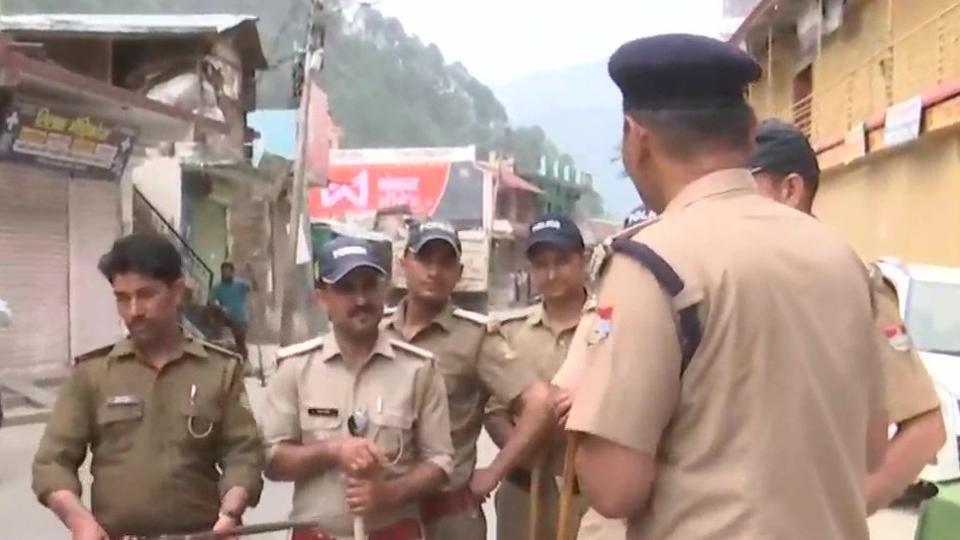
The Uttarakhand high court on Thursday directed the state government to maintain peace and ensure there is no loss of life or property while hearing a petition related to the mahapanchayat (grand assembly of village leaders) Hindu organisations had called in Purola amid communal tensions in the hill town.
A division bench of chief justice Vipin Sanghi and justice Rakesh Thapliyal asked the government to check whether any public meeting or congregation can incite violence and breach peace before giving permission for it. “We direct the state to take whatever steps necessary in this regard to fulfil its constitutional obligation.”
The court directed the state government to take long-lasting steps for maintaining peace. It stressed that it is the paramount duty of the state to maintain law and order and ensure there is no loss of life and property.
The directions came days after authorities on Tuesday denied permission for the mahapanchayat as posters threatening Muslim traders to shut shops and leave the state by June 15 came up in Purola. No mahapanchayat was held in Purola on Thursday and right-wing activists instead registered a symbolic protest.
Non-governmental organisation (NGO) Association for Protection of Civil Rights this week moved the Supreme Court against the mahapanchayat as the organisers did not call off the gathering despite the refusal of permission for it. Muslim organisations separately called their mahapanchayat in Dehradun on June 18.
The Supreme Court on Wednesday refused an urgent hearing of the NGO’s petition. It disapproved of “short-circuiting” the judicial process and asked the petitioner to approach the Uttarakhand high court first.
Shahrukh Alam, who represented the petitioner, referred to previous Supreme Court directives for a crackdown on hate speech and said the mahapanchayat was called saying a particular community has to leave by June 15
On April 28, the Supreme Court directed police chiefs of states and Union territories to file cases on their own against hate speeches and warned of contempt action if its direction is not complied with. The court emphasised that hate speech is an “offence affecting the fabric of the nation”. It said the court wants criminal prosecution of all those involved in it irrespective of their religion.
Alam opted to withdraw the petition with the liberty to approach the suitable authorities as well as the Uttarakhand high court.
The tensions in Purola were triggered on May 26 when two men, a Muslim, and a Hindu, allegedly tried to abduct a girl. Residents alleged it was a case of love jihad, a term used by right-wing groups to describe an alleged conspiracy by Muslim men to woo Hindu women. Courts and the Union government do not officially recognise the term.
The two accused were arrested on May 27. But right-wing groups held protests and attacked shops and houses of Muslims.
The high court on Thursday issued directions that those related to the matter should not participate in social media and TV debates.
Alam, who appeared online before the high court, said only one first information report (FIR) has been filed against unknown people for putting up posters asking Muslims to leave. She added no FIR has been filed against people who signed a letter sent to the Tehri administration on June 5 asking Muslims to leave.
“By 10 days of inaction, the district magistrate has breached his duty by not taking strict action,” she said. Alam added Muslims in the area are facing structured violence, psychological fear, and social and economic boycott. “People are not buying from Muslim shopkeepers. Owners are asking tenants to leave…this constitutional harm needs to be immediately redressed.”
She said both Muslim and Hindu mahapanchayats need to be addressed as they can incite violence. “…this narrative of posters, letters, social media warnings is being replicated in other areas as well,” she said
SN Babulkar, Uttarakhand’s advocate general, told the court that the first mahapanchayat has been called off and Code Of Criminal Procedure’s Section 144 barring the gathering of over four people has been imposed in the area.
The court maintained it is not entitled to direct registration of FIR as it would be first for police to examine whether a cognisable offence has been committed.
Alam said the administration was focussed on mahapanchayat and other things were not being taken care of. “The Muslims in the area be allowed to open their shops….due to polarisation and fear they are not opening their shops.”