
 E-Paper



VB-G RAM G Bill, that seeks to replace MGNREGA, gets Lok Sabha clearance amid Opposition protest
VB-G RAM G Bill or Viksit Bharat Guarantee for Rozgar and Ajeevika Mission (Gramin) aims to provide a statutory guarantee of 125 days of employment every year.

 Prefer HTon Google


The Lok Sabha on Thursday passed the Viksit Bharat Guarantee for Rozgar and Ajeevika Mission (Gramin), or the VB-G RAM G Bill, which seeks to replace the UPA-era MGNREGA that guarantees employment in rural areas.
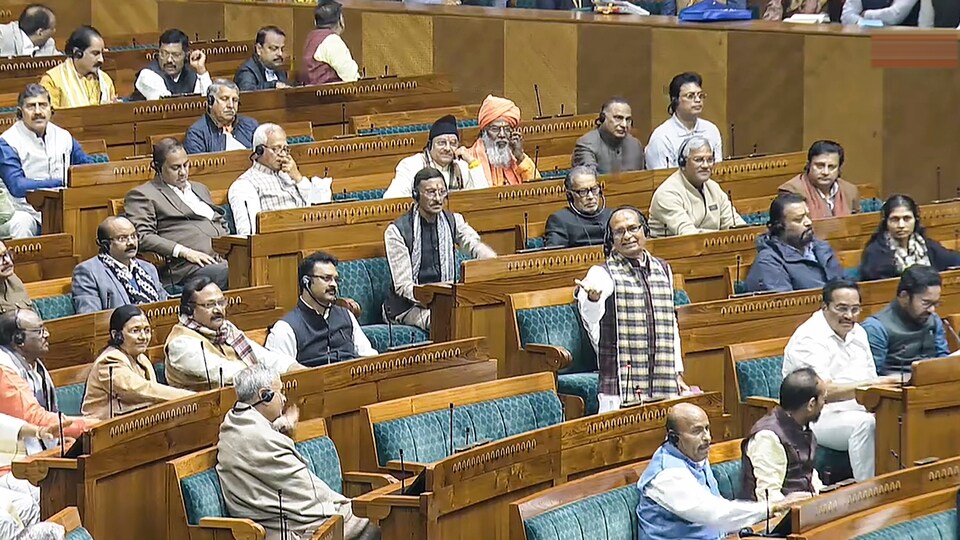
The VB-G RAM G Bill was introduced in the Parliament by Rural Development and Agriculture Minister Shivraj Singh Chauhan on December 16.
The proposed legislation aims to provide a statutory guarantee of 125 days of wage employment every year in rural areas, with the government allocating ₹95,000 crore for the initiative.
The Lok Sabha passed the G RAM G Bill by a voice vote amid a protest by the opposition. Several Opposition MPs entered the well of the House raising slogans against the government, tore copies of the bill and fling it towards the chair.
Also Read: VB-G RAM G bill to replace MGNREGA; sparks row in Parliament
The opposition, led by the Congress, has claimed that by withdrawing MGNREGA, the NDA government is insulting Mahatma Gandhi and diluting the provisions of the Act.
"The Modi government has not only insulted the Father of the Nation, Mahatma Gandhi, but has also crushed the right to work, which was instrumental in bringing about socio-economic transformation in India's villages," Kharge said in a post on X.
What is VB-G RAM G Bill?
The VB–G RAM G Bill proposes to replace the UPA-era MGNREGA or Mahatma Gandhi National Rural Employment Guarantee Act, which provided an employment guarantee for at least 100 days in its initial years. However, states had the authority to increase the 50 days of work, in addition to the guaranteed 100 days. The NDA government also increased the wage days to 150 for ST communities in forest areas.
Also Read: ‘Nehru even in their dreams’: Congress after govt seeks papers from Sonia Gandhi
The new bill, however, provides a statutory guarantee of 125 days of wage employment, according to a government statement. The Centre has also asserted that the intent of the bill is to ensure that money is well spent and there is transparency and accountability in spending.
Shivraj Chouhan has said that the proposed law will lead to “comprehensive development of villages” and “meant to provide abundant employment to every poor person, uphold their dignity, and offer additional protection to the differently-abled, elderly, women, Scheduled Castes, and Scheduled Tribes”.
The government has earmarked ₹95,000 crore for the initiative. A senior official told Hindustan Times that earlier the states found ways of not spending money on material costs and tried to extract funds from the Centre’s contribution.
Under the new bill, the gram panchayat and sabha will be empowered to make plans on what work needs to be undertaken, instead of spending money on projects that were undertaken only for the sake of collecting dues under MNREGA.


