E-Paper



Manipur violence: All you need to know about the conflict in the state
A look at the festering discontent in Manipur over the United Naga Council-imposed blockades in the northeastern state.


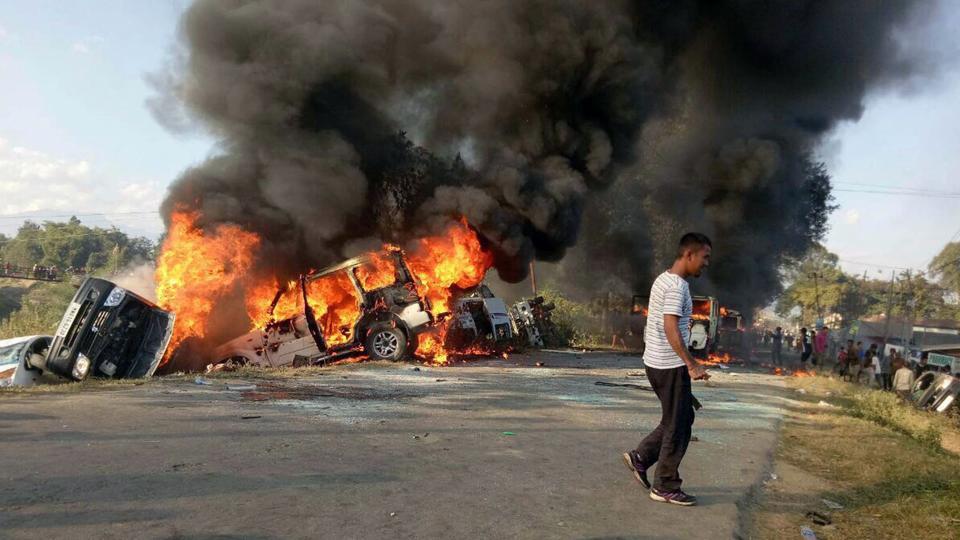
The scale of the ongoing violence and the economic blockade in Manipur went up further on Sunday with protesters — those opposed to the blockade imposed by United Naga Council (UNC) — burning over 20 vehicles in Imphal East district and forcing curfew in the area.
Read | Tension grips Manipur: Mobile internet services shut, few areas under curfew
Here’s a look at the issue that has been festering for over one and half months.
■ The United Naga Council (UNC), which claims to be a common platform for Nagas in Manipur, imposed a blockade of two key highways — Imphal-Dimapur (NH2) and Imphal-Jiribam (NH37) — from November 1 in protest against the state government’s proposed move to create two new districts — Jiribam and Sadar Hills. UNC feels the move by the majority Meiteis will hurt their interests.
■ The blockade restricted entry of trucks carrying essential supplies to the state. Scarcity of goods has led prices to escalate. Cost of petroleum products have almost tripled. Though some trucks have been reaching the state under heavy security, scarcity of essentials continue.
Read | Blockades in Manipur a gross violation of law: MHA warns
■ Demonetisation of old currency notes, which came into effect a week after the blockade, further worsened the situation. Banks have not been able to cater to the demand for new notes and the blockade has affected supply of currency to all parts of the state.
■ Despite opposition by UNC, the Congress government of Okram Ibobi Singh issued a gazette notification on December 9 announcing creation of seven new districts — Jiribam, Kangpokpi, Kakching, Tengnoupal, Kamjong, Pherzawl and Noney — by carving Imphal East, Churachandpur, Senapati, Thoubal, Chandel, Ukhrul and Tamenglong districts. With the move, which the government claim is for “administrative convenience”, the number of districts in Manipur increased to 16 from the existing nine.
■ While the creation of new districts was welcomed by Meiteis and Kukis, the Nagas intensified protests. Last week there were several attacks on security personnel at various locations, killing three security personnel and injuring nearly a dozen. The attacks are believed to be the handiwork of National Socialist Council of Nagaland-(NSCN-IM).
Read | Manipur: 22 vehicles torched near Imphal, violence spreads, curfew imposed
■ Three blasts, allegedly carried out by UNC cadres, rocked Impahl on Friday. There were no injuries. But the situation forced the administration to shut down internet services in most districts indefinitely. On Sunday, protesters in Imphal East district opposed to the UNC blockade targeted vehicles on the way to Ukhrul at Khurai and torched over 20 buses and SUVs.
■ Manipur goes to polls early next year. Chief minister Okram Ibobi Singh, who has held on the post since 2002, hopes to retain it again and the move to create new districts is bound to be an important election issue.
Also read | Manipur blockade: The Congress and BJP must stop shadow boxing