
 E-Paper



We aren’t a xenophobic race: Assam Civil society
The way the global media and international organizations have portrayed them, they say, matters to them because they don’t preach violence or advocate harsh, inhumane treatment to anyone declared a non-citizen.

 Prefer HTon Google


In the glare of global attention and facing accusations of religious bias, advocates of Assam’s cumbersome bureaucratic exercise to identify foreigners say they have been mischaracterized as “xenophobic”.
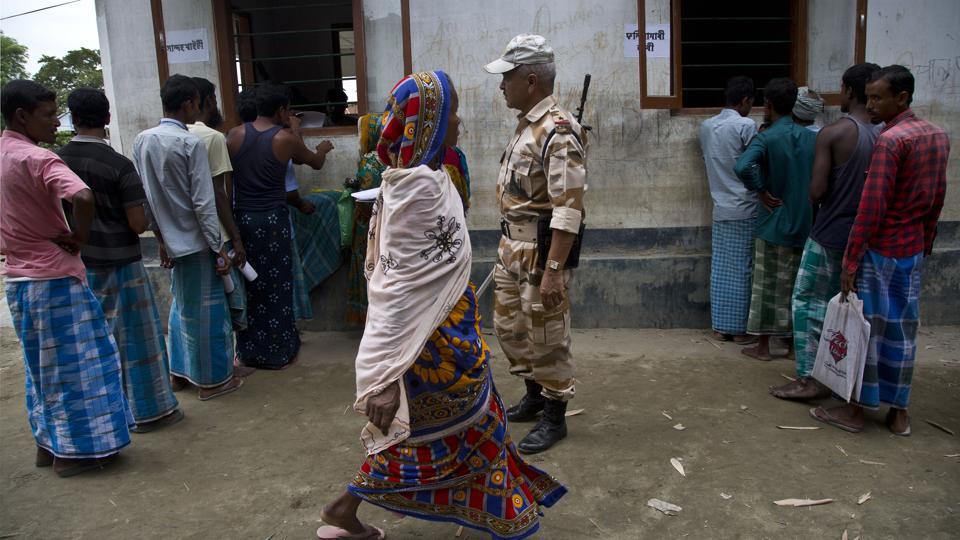
The way the global media and international organizations have portrayed them, they say, matters to them because they don’t preach violence or advocate harsh, inhumane treatment to anyone declared a non-citizen.
Backlashes against Bengali-speaking immigrants, racial slurs and detention are obvious reasons why observers from outside the state tend to look at the process of updating a citizens’ register as mainly targeted at Muslim immigrants.
Assam has historically faced waves of illegal migration from neighbouring Bangladesh and indigenous people say they were being swamped by foreigners.
“The reality is that National Register of Citizens was a religion-neutral process,” said Harekrishna Deka, the former chief of Assam police who now leads the Axom Nagarik Samaj, a social organization.
The citizens’ register released on Saturday is the final list of those found to be bona fide citizens. It excluded nearly 1.9 million residents because their claims to citizenship were found invalid after a labyrinthine bureaucratic process.
Prominent citizens such as Deka cited stories in the international media, such as the New York Times, The Times of London as well as Al Jazeera, to say that they did not take into account what people like him had to say.
An Al Jazeera report on August 29 referred to a UN special rapporteur statement that said the citizenship issue could “exacerbate the xenophobic climate” in Assam.
A June 2018 letter, signed jointly by four United Nations special rapporteurs, including the special rapporteur on freedom of religion or belief, argued that the updated citizens’ list is part of the government’s ongoing efforts to introduce a “religious test specifically aimed at clearing out Muslims”.
The killings of more than 3,000 Bengali-speaking Muslims in Nellie in central Assam’s Nagoan district on February 18, 1983 have often been a reference point for these concerns.
“Nellie is almost a telescopic reference, but the context is very different now,” Deka claimed.
In a story on Assam on August 17, the New York Times said “members of India’s Muslim minority are growing more fearful by the day”.
The Times of London on August 29 said Assam was “the testing ground for an ominous exercise in state control”, referring the process of updating the citizens’ register.
“Those declared foreigners should have basic rights. Nobody supports any violence. Neither should they be indefinitely held in detention camps,” Deka said.
The Assam government said on Saturday that no one excluded from the citizens’ list becomes a foreigner by default. Only a Foreigners’ Tribunal, a quasi-court system, could declare a person a non-citizen.
Mrinal Talukdar, a prominent local journalist, said he was alarmed by international opinion on Assam’s situation. When they use terms like “genocidal” and “xenophobic,” it is “simply a baggage of international conflict reporting in countries like Iraq and Syria for one day of reporting glory”, he said.
Talukdar said he would never want to carry the “moral burden” of treating foreigners violently. In the event that foreigners can’t be deported, they should be allotted work permits, he said.
The citizens’ list cannot be allowed to become the “centre of religious politics”, according to Prasanta Rajguru, another local leader.
The flip side is that one shade of organizations has been fulminating against Muslim immigrants and not speaking as much against Bengali-speaking Hindu migrants, who too must prove their citizenship.
Leaders from the ruling Bharatiya Janata Party (BJP) have openly declared that they were sceptical of the citizens’ register and would not allow Bengali-speaking Hindu to be impacted. “Whatever be the number of people excluded, we will not allow Bengali Hindus to become non-citizens because they have fled to India due to religious persecution in Bangladesh,” said BJP’s state vice-president Biswarup Bhattacharjee.
Abhijit Sarma of the NGO Assam Public Works, who had moved one of the earliest petitions in the Supreme Court to weed out illegal migrants, has pretty much said Muslims alone would have to share a higher burden of verification in the process of compiling a citizens’ list.
“The issue of Hindu Bengali migrants was never an issue. It was largely ignored. The Assam agitation was against illegal Bengali Muslims,” he said, before the list was made public.
Assamese residents abroad, such as Melbourne-based Shaheen Ahmed, are taking to social media to set the record straight, she says. “I don’t want them (foreigners) to be subjected to any violence or put in jail. But a modern nation-state will after all distinguish between citizens and non-citizens,” she said.
Ahmed, a PhD student at Monash University, said she was horrified by attacks from many activists when she endorsed the process of updating the citizens’ register. “I need a closure. The Assamese people need a closure,” she said.


