
 E-Paper



Weather conditions, not climate change responsible for Chennai rain: Experts
The average rainfall received from the northeast monsoon season is 449 mm and 784 in Tamil Nadu and Chennai, respectively, according to Regional Meteorological Centre (RMC) data. In 2020, this was in excess as the city and state received 477mm and 1,040mm respectively.


The average rainfall received in Tamil Nadu and Chennai is more than normal during the northeast monsoon season, which started in October, weather experts said. They added that little has been learnt from 2015 devastating floods that killed more than 400 people across the state.
The average rainfall received from the northeast monsoon season is 449 mm and 784 in Tamil Nadu and Chennai, respectively, according to Regional Meteorological Centre (RMC) data. In 2020, this was in excess as the city and state received 477mm and 1,040mm respectively.
“This year the chances of receiving above-normal rainfall in November is very high,” says independent weather blogger Pradeep John. “We have received 330 mm of rain from the northeast monsoon already, which is almost 75% of average, and we still have 50 days to go.”
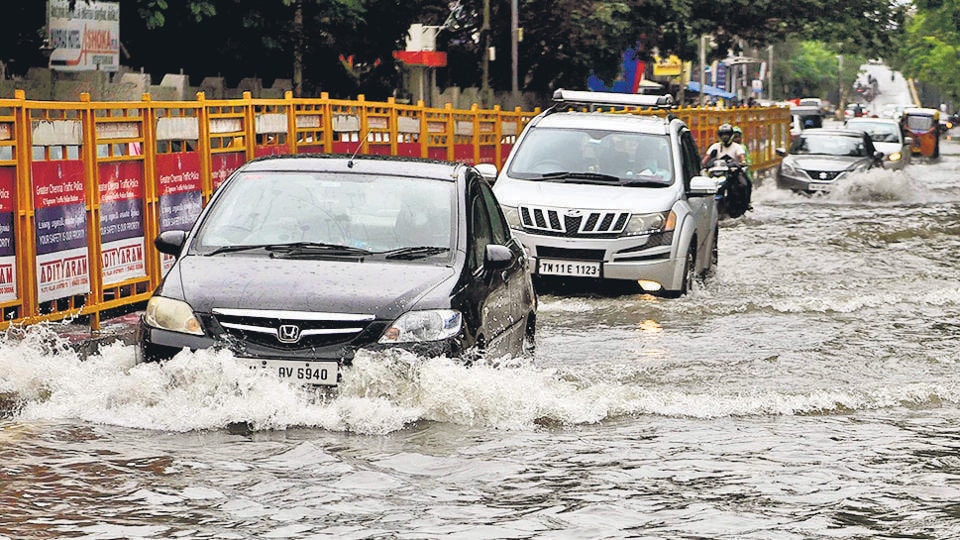
The rainfall in Chennai and neighbouring districts on Saturday night and Sunday left most of the city underwater, forcing the authorities to rescue over 500 people and keep them in shelters. The rainfall has been the highest Chennai has got since December 2015.
IMD on Sunday said that a cyclonic circulation lies over north coastal Tamil Nadu, southeast of the Bay of Bengal and a low-pressure area is likely to form by November 9, which would then move towards the Tamil Nadu coast, bringing more rainfall for at least the next three days.
Under its influence, rainfall is likely in northern regions like Chennai, Villupuram, Cuddalore and in delta areas of Mayiladuthurai and Nagapattinam districts besides neighbouring Puducherry and Kariakkal on Monday. “Showers in such regions may be heavy and at isolated places, very heavy and there could be thunderstorm activity as well. Other regions, including southern Madurai, are also expected to receive rainfall,” an official bulletin said.
John further said that La Nina is considered unfavourable for the northeast monsoon and brings less rain to Tamil Nadu, but the presence of other favourable conditions such as a phenomenon called Madden-Julian Oscillation (MJO) and the inter-tropical convergence over the state could be the reason behind Sunday’s downpour.
“Even in a La Nina year, if there is a favourable Indian Ocean Dipole (IOD), it will give low-pressure systems and monsoons may not end in a deficit,” John said. “But the key is the MJO. We are seeing that it has had a longer presence, so more low pressures will come to Tamil Nadu, and its influence is seen now,” said John. “This year is similar to the pattern of 2005 where one after another low pressure kept coming.”
John and weather department officials ruled out the effects of climate change. “These extreme rains have happened several times in the past too. It is not due to any climatic change. The record for the highest rainfall in Chennai on a single day in November is still 1976,” said YEA Raj, meteorological expert and retired deputy director of the RMC. “For the last three years, we have not had such high rainfall in Chennai. But since the northeast monsoon began this year, several parts of Tamil Nadu have received more than 17cm of rainfall, but more flooding happens in Chennai due to more built-up area.”
Activists say that no lessons have been learned after the city flooded in 2015 concerning land planning and removal of encroachments such as the infrastructure around rivers, lakes and watercourses.
“Unless we fix these systemic problems, Chennai will flood again,” says Pooja Kumar, coordinator, Coastal Resource Centre. “Infrastructure projects that come up on flood plains and wetlands are approved by regulatory authorities. These encroachments drastically alter the water spread, carrying capacity of the river.”
Chennai’s wide network of integrated stormwater drains has also not helped in draining water. “These projects are also planned to bring water to the tail end of the river basins which are already encroached. The carrying capacity of a river is also impacted because of dumping of fly ash, not desilting and untreated sewage flowing into the river.”


