E-Paper



Welfare of armed forces a core government function, says SC
The Supreme Court ruled that the Air Force Group Insurance Society is a "State" under the Constitution, allowing employees to challenge its decisions in court.

 Prefer HTon Google


The protection and welfare of armed forces personnel is a “core government function”, the Supreme Court has held while ruling that a group insurance society established for serving and retired Air Force members and other members of services qualifies as “State” under the Constitution.
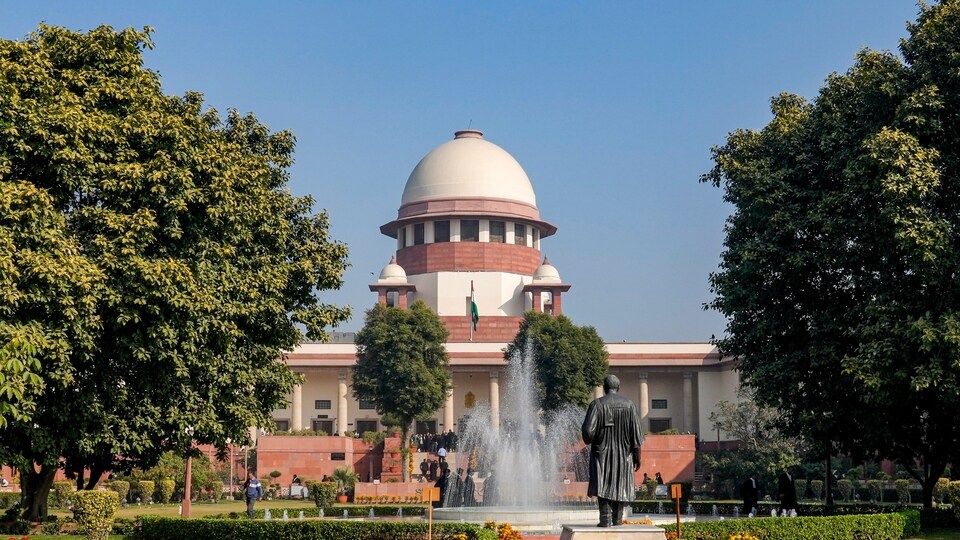
“Providing insurance coverage to service members… addresses a collective obligation the State has towards a defined public class whose service is indispensable,” the court said, adding that such institutions effectively act as conduits for the discharge of the State’s duty toward armed forces personnel,” said a bench of justices Sanjay Karol and Vipul M Pancholi.
The ruling in the present case declared that the Air Force Group Insurance Society (AFGIS) in Delhi performs a public duty by providing insurance coverage and welfare support to service members and their families, making it amenable to writ jurisdiction before constitutional courts.
The ruling significantly broadens the interpretation of “State” under Article 12 by holding that entities performing essential public functions under deep governmental influence can fall within the constitutional definition even if they are formally structured as autonomous societies. Once an entity is classified as “State”, its actions become subject to judicial review under Articles 32 and 226, meaning employees and affected persons can challenge decisions such as service conditions, pay structures or administrative actions through writ petitions in constitutional courts.
The judgment came on an appeal by employees of AFGIS who had challenged a decision of the Delhi High Court refusing to entertain their writ petitions on the ground that the society was not a “State” under Article 12 of the Constitution.
The dispute arose after AFGIS decided in February 2017 to delink the pay structure of its employees from Central government pay commissions. The society subsequently asked its employees to sign acceptance of revised service terms. Aggrieved workers approached the high court seeking parity with government pay structures.
In February 2023, the high court dismissed the petitions, holding that AFGIS, being a society registered under the Societies Registration Act and funded through member contributions, did not qualify as “State” or “other authority” under Article 12. As a result, the court ruled that writ petitions against it were not maintainable.
Setting aside that ruling, the Supreme Court said the question of whether an entity qualifies as “State” cannot be determined merely by its formal legal structure or funding pattern. Instead, courts must adopt a functional and purposive approach examining the nature of its activities, the extent of governmental control and whether it performs public duties.
The bench noted several factors indicating deep and pervasive governmental involvement in AFGIS. Membership of the society is compulsory for all officers and airmen, with insurance premiums automatically deducted from their salaries. The Board of Trustees consists entirely of senior serving Indian Air Force officials and the society itself was established with the sanction of the President of India.
The court also pointed out that Air Force officers are deputed to the organisation, its financial transactions are periodically reported to senior Air Force authorities and the President has granted approvals for several operational decisions including the creation of posts and pay structures. “Administration of the body is entirely in the hands of government servants even though the body itself is a purportedly private society,” the bench noted.
Importantly, the court underscored that the role performed by AFGIS goes beyond a purely private insurance arrangement. It said the State’s responsibility toward armed forces personnel continues even after their retirement, given the risks and constraints inherent in military service.
Insurance coverage, the bench said, is a critical mechanism for safeguarding the dignity, economic security and well-being of service members and their families in the event of disability, illness or death. The availability of such welfare support also enables personnel to perform their duties without anxiety about the financial security of their dependents.
The court also noted that AFGIS had earlier claimed to be a government entity while seeking exemption from service tax on the ground that it functioned under the control of the Ministry of Defence. The bench said the organisation could not claim to be “government” for one purpose but deny the same status when faced with legal accountability.
Applying this reasoning, the Supreme Court concluded that AFGIS qualifies as a “State” under Article 12 and that the writ petitions filed by its employees were maintainable. The bench restored the employees’ petitions to the Delhi High Court and requested it to decide the dispute expeditiously, noting that the matter has been pending since 2017.