“When it comes to fiscal prudence, the budget has hit a six when only a couple of runs were needed to win”, Aurodeep Nandi, India Economist, Nomura, said in a note, capturing the sentiment of the interim budget’s macro management.
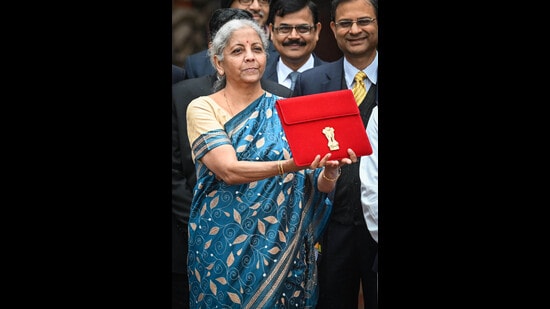
Not only has the budget reduced the fiscal deficit for 2023-24 by more than what last year’s budget promised to do -- the Revised Estimate (RE) number is 5.8% instead of the 5.9% number in the last year’s Budget Estimates (BE) -- it has also announced an aggressive fiscal consolidation by announcing a fiscal deficit of 5.1% in 2024-25 which, more than anything, makes the 2025-26 target of 4.5% look more achievable. The icing on cake is that this fiscal consolidation has been achieved without compromising on the capex focus of the government which is critical for both short-term and long-term growth prospects of the Indian economy.
How has the government managed to do this? No new taxes have been announced. At 10.5%, the nominal GDP growth assumption is far from outlandish. A tight leash on revenue spending of the government is the answer to this question.
The numbers speak for themselves. Between 2023-24 RE (revised estimate) numbers and the 2024-25 BE (budget estimate) numbers, revenue receipts of the government are expected to increase by 11.2% which is marginally higher than the assumed nominal GDP growth. While capital spending will grow at 16.9%, revenue spending of the government is expected to increase by just 3.2%. Even this does not give the true picture of the government’s revenue spending squeeze. If one were to take out the interest payment component of the revenue expenditure of the central government , there has actually been a fall in nominal revenue spending. In terms of share in GDP revenue spending net of interest payments is now just 7.5% compared to 8.4% in the 2023-24 RE numbers.
{{/usCountry}}The numbers speak for themselves. Between 2023-24 RE (revised estimate) numbers and the 2024-25 BE (budget estimate) numbers, revenue receipts of the government are expected to increase by 11.2% which is marginally higher than the assumed nominal GDP growth. While capital spending will grow at 16.9%, revenue spending of the government is expected to increase by just 3.2%. Even this does not give the true picture of the government’s revenue spending squeeze. If one were to take out the interest payment component of the revenue expenditure of the central government , there has actually been a fall in nominal revenue spending. In terms of share in GDP revenue spending net of interest payments is now just 7.5% compared to 8.4% in the 2023-24 RE numbers.
{{/usCountry}}How has the government achieved this reduction in revenue spending without cutting back on important welfare schemes where allocations have either been held constant or seen an increase in nominal terms? It is banking on a big reduction in its subsidy bill. The spending on three most important subsidies, namely food, fertiliser and petroleum is expected to come down from ₹4.13 lakh crore in 2023-24 (RE) to ₹3.81 lakh crore. While the reduction in fertilizer subsidies is understandable given the moderation in global prices, a nominal reduction in the food subsidy bill from ₹2.12 lakh crore in 2023-24 (RE) to ₹2.05 lakh crore in 2024-25 (BE) is a bit counter-intuitive given the fact that minimum support prices (MSP) have increased rather than decreased and the government will not even get the token amount from ration sales it used to get earlier after food entitlements have been made completely free.
To be sure, BE numbers are always notional and the government’s fiscal math is a dynamic equation which keeps changing over the course of the fiscal year. For example, one of the reasons why the government has managed to post a lower fiscal deficit in 2023-24 RE number than what it promised in the BE despite a higher revenue spending is a shortfall of ₹50,000 crore in the RE capital spending number.
The minor slippage, however, has not upset markets or experts. “There will be some hits and misses, but (the budgetary math) seems achievable overall,” Sonal Varma, managing director, chief economist - India and Asia ex-Japan, Nomura, said in a statement.
To be sure, the fact that no tax changes have been announced in the interim budget does not mean that there is no story to be told on the tax side of fiscal policy. Tax-GDP ratio in 2024-25 BE numbers is expected to increase to 11.7%, the highest this number has been since 2007-08. The share of direct taxes in Gross Tax Revenue of the central government is 57.4%, the highest since 2009-10. The rise in share of direct taxes is a result of income taxes in gross tax revenue reaching its highest ever level of 30.2%. While corporation taxes and income taxes show almost the same annual growth of 13% between 2023-24 RE and 2024-25 BE numbers, the latter has a clear edge in terms of share in gross tax revenues which suggests that salaried elites are becoming more important in direct tax collections than corporations. This is more than just a one-year trend in the budget numbers. Indirect taxes are expected to grow at a slower pace with the number being 11.6% for Goods and Services Tax and under 6% for Union excise duties and customs duties.
Is there a larger message in the government’s fiscal math in the interim budget? The growing reliance on income tax collections and resisting the temptation to raise either indirect taxes or revenue spending suggests that the government is banking on the formal sector of the Indian economy to provide more fiscal space to the government to continue to pursue long-term growth enhancing capital spending. The only risk to this strategy not working, as the government has highlighted itself, are large geopolitical economic shocks.