
 E-Paper



What is caste census, Modi govt's big announcement?
A caste census surveys caste-wise population data, including distribution, socio-economic status, education levels, and other related demographic details.

 Prefer HTon Google


In a major decision, the Union government announced on Wednesday that caste enumeration would be part of the upcoming census and assured it would be carried out in a "transparent" manner.
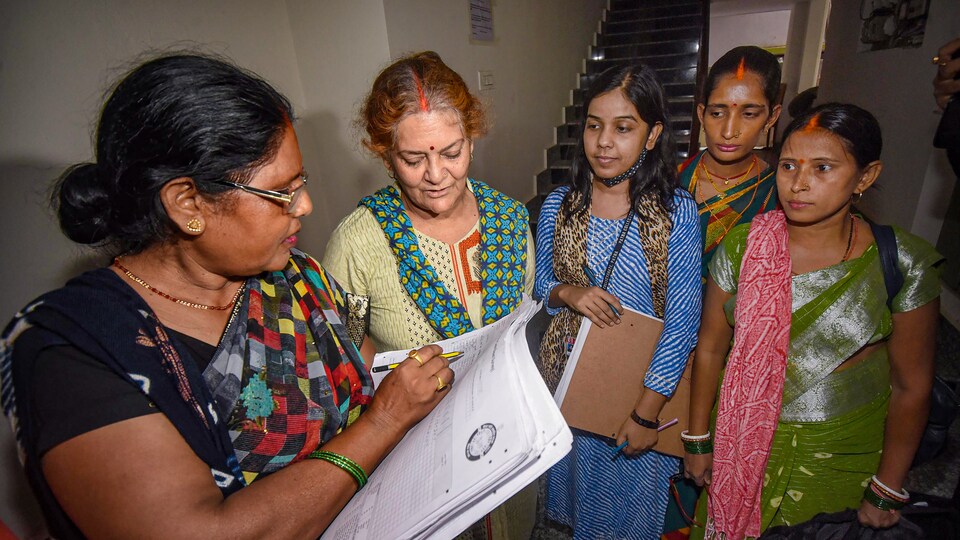
Addressing the media on the Cabinet's decisions, information and broadcasting minister Ashwini Vaishnaw said while some states have conducted caste surveys, conducting a census falls under the purview of the Centre. He added that the Cabinet Committee on Political Affairs (CCPA) has resolved to include caste enumeration in the next census.
Several opposition leaders welcomed the Centre’s announcement, saying it would support the government in addressing reservation demands from various caste groups.
The Congress, which has consistently called for a caste census, has reiterated the demand in numerous public addresses by its leaders.
What is caste-census?
A caste census is a population-based survey that collects data on the caste composition of a region or country. It includes details such as the distribution of caste groups, their socio-economic conditions, educational status, and related factors.
The key objective is to understand the demographic and developmental profile of various castes and to inform government decisions related to policy planning, resource allocation, and affirmative action.
In this exercise, caste information is also gathered along with general citizen data. This enables the government to assess the socio-economic position and representation of different caste groups, especially in areas like public employment and access to welfare schemes. It helps identify which communities have benefited from government initiatives and which remain marginalised, allowing for more targeted and inclusive development strategies.
Following independence, the Indian government classified citizens into four broad groups based on social and educational criteria: Scheduled Tribes (ST), Scheduled Castes (SC), Other Backward Classes (OBC), and the General category.
When was the last caste-census conducted?
Since independence, every Census in India from 1951 to 2011 has collected and published data on Scheduled Castes (SCs) and Scheduled Tribes (STs), but not on other caste groups. In contrast, caste-based data was a regular feature in every Census conducted before 1931, under British rule.
The last comprehensive caste census in India took place in 1931. After that, independent India excluded broader caste enumeration from the decennial census, limiting data collection to SC and ST categories. As a result, groups like the Other Backward Classes (OBCs) have not been officially counted in recent national censuses.
In 2011, the government conducted the Socio-Economic and Caste Census (SECC), which aimed to gather broader caste data. However, the results were never formally released due to questions surrounding data accuracy and consistency.
According to a previous report by Hindustan Times, the British carried out caste enumeration in decadal censuses from 1881 to 1931. After 1931, this practice was discontinued and was not revived in post-independence India. The report also noted that the proportion of SC-ST population was 21.54% in the 1971 Census and increased to 25.26% in the 2011 Census. This rise aligns with the trend that economically disadvantaged populations, like SCs and STs, tend to have higher fertility rates, particularly when income levels are lower.


