
 E-Paper



Why foreign diplomats have a field day in India
While foreign diplomats have a field day in India, the reverse is not true for Indian diplomats who face harassment in countries like Pakistan and Canada.

 Prefer HTon Google


On September 13, addressing the Indian community in Geneva, External Affairs Minister S Jaishankar side-stepped a question about some foreign diplomats based in New Delhi having personal meetings with certain Opposition leaders in their state.
Jaishankar said: “I have no problems if people comment about our politics, but then, I think in fairness, they should also be ready to hear my comments about their politics.”
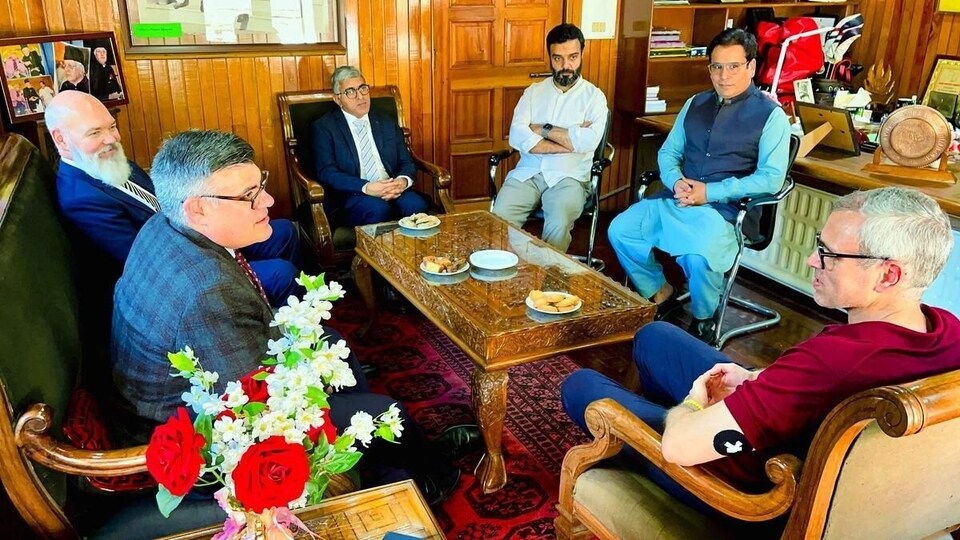
While Narendra Modi-led India has no problems with foreign diplomats meeting Opposition leaders as Bharat is the world’s biggest democracy, it has noted the timing of the visit of US diplomats including Political Affairs Counsellor to Srinagar to meet National Conference leaders in election-bound UT of Jammu and Kashmir late last month.
Also Read | Engineer Rashid's AIP joins forces with leaders of banned Jamaat-e-Islami for J&K polls
The Chinese ambassador to India Xu Feihong, who took over charge in May 2024, met then CPI (M) leader Sitaram Yechury and CPI leader D Raja in late June.
While US, UK and Chinese diplomats may consider themselves more equal than others, it would be interesting to see the reaction of the Biden-Harris administration if Prime Minister Narendra Modi met Republican US Presidential candidate Donald Trump in New York during his visit to the US over the weekend. Trump has claimed that PM Modi is coming to meet him in New York.
Even though minister Jaishankar did not answer the question directly, he also gave a message to Indian diplomats that they should also not be shy of meeting Opposition party leaders and media in the countries to which they are posted. Fact is that Indian diplomats in countries like Pakistan, Iran, China and Canada are kept under constant intelligence surveillance, physically and mentally harassed and are virtually forced to stay within the embassy compounds.
Also Read | Afzal Guru’s brother to contest J&K polls from Sopore
But diplomats of the above-mentioned countries and the P-5 on the other hand have a field day when they are posted in India with government officials and ministers downwards ready to talk to them. Fact is that a Pakistan ambassador to India who served in Modi 1.0 used to have a permanent slot in a five-star hotel restaurant where he would entertain all top honchos of selected media and certain government officials to get Islamabad's point of view across in India. This is also a standard habit of EU countries.
Before the Modi government decided to enforce reciprocity in diplomatic personnel with Canada, the representatives of Ottawa were merrily engaging politicians of the ruling party in Delhi and Punjab with one diplomat assigned to one important leader of the ruling party. At the same time, Indian diplomats were being harassed by Khalistani elements at the instigation of the Trudeau regime in Canada with Sikh extremists putting up posters targeting PM Modi, Minister Jaishankar and NSA Ajit Doval. The same has been happening in the US since PM Modi took over and cannot be without the knowledge of the State and Justice departments.
After the Modi government showed the mirror to Iranian religious leaders for his totally inappropriate remarks on the treatment of minorities in India, it is quite evident that Bharat will retaliate to any mischievous barb directed at the country or indirectly through propaganda media. India believes in a diplomatic level playing field.


