
 E-Paper



Why Indian Predator drone will be a game-changer against adversaries
While China and Pakistan have armed drones in inventories, US MQ 9B drone with its proven missiles and bombs is the next level of strike capability.

 Prefer HTon Google


New Delhi: The Narendra Modi government’s interest in acquiring US Predator MQ-9B armed drone grew after the national security planners saw the crystal clear images of Chinese military capabilities across the Line of Actual Control (LAC) taken by the same drones leased to Indian Navy post-PLA aggression on East Ladakh in May 2020.
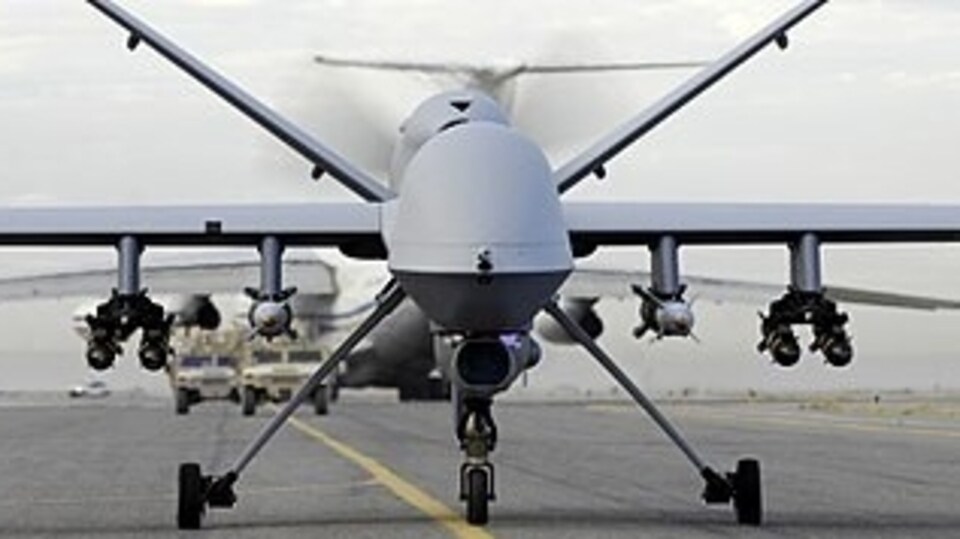
It was the surveillance footage of the leased Sky Guardian (unarmed version of MQ 9B) drones and Indian Navy’s Boeing P8I multi-mission aircraft that India got actionable intelligence on the PLA military capabilities, missiles silos, rocket systems deployments and troops movement all along the 3488 km long LAC. This vital information helped national security planners in the counter-deployment to not only keep the PLA at bay but also surprise it in the worst-case scenario.
With the US giving the green signal to USD 3.99 billion deal for India to acquire 31 latest armed versions of Predator drone, Bharat’s military capability will multiply manifolds in the Indo-Pacific as the hunter-killer drone allows India to project power thousands of kilometres away from its borders. Not only will the Indian Navy with its 15 drones have max maritime domain awareness in the region but it also has the deterrence to challenge any expansionist Navy in the region with its array of sub-surface, surface and aerial platforms.
While the Western and left media will try their utmost to scuttle the deal through orchestrated stories designed to make the US suspicious of the Modi government, the fact is that the top leadership of the two sides is constantly in touch with each other so that there is no space for any discordant note. It is this very media that is trying to tell the world that the US plans to fully transfer GE-414 engine technology to India for Tejas Mark II have gone awry even though the deal is cleared and commercial negotiations between GE and HAL have already begun. National Security Advisor Ajit Doval was informed about the India-US Predator deal clearing the four-tiered Congress review on a real-time basis on Wednesday night itself.
Even though India’s principal adversaries China and its vassal state Pakistan have armed Chinese-manufactured drones in their inventories, the high altitude long endurance Predator drone is a different level altogether as it is a proven system with the legacy of Afghan and Iraq wars. Pakistan has a fair idea of the drone’s capabilities as Akhtar Mansour, the second Supreme Leader of the Taliban, was killed in a US Predator drone strike in Balochistan on May 21, 2016, through AGM-114 R Hell-Fire air-to-ground missile. As per US State Department notification, India is buying 170 Hell-Fire missiles with an 11-kilometer range and 310 Laser Guided Bombs with a nearly 150 kilometres range. This means that India’s counter-terrorism capabilities will also increase manifolds as intruders can be targeted without crossing the borders. Besides, the Indian Army now has loitering ammunition to plug the gaps on the borders and beyond.
While detractors of India and Predator drones will raise questions over the UAV’s performance in contested airspace over the LoC or the LAC, the drone has an operational ceiling of 27000 feet and can look down on the enemy from nearly 50,000 feet and destroy it. The Predator drone will make Bharat a heavyweight in offensive mode in the Indo-Pacific.


