E-Paper



Air We Breathe | Why late rainfall may lead to more intense farm fires
Farm fires: Burning stubble is the cheapest and quickest way to clear the fields, but this practice leads to a massive spike in pollution.

 Prefer HTon Google


An unexpected drop in temperatures caused by unseasonal rainfall may have reduced pollution levels in the national capital and the northern plains, but it will further delay maturing of paddy, leaving a shorter window for farmers in Punjab and Haryana to sow the next crop, forcing cultivators to resort to burning stubble, and leading to a more intense pollution spike in the region.
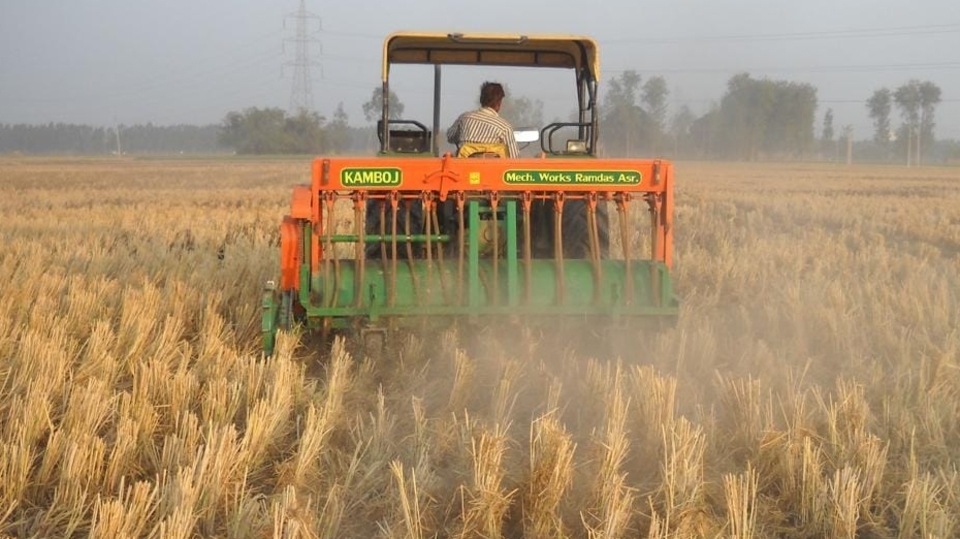
The Punjab government has deputed 50,000 volunteers and employees from the departments of revenue, agriculture, and rural development to reach out to each farming household in the state, and ask them not to burn stubble. Though Haryana has witnessed a considerable fall in incidents of farm fires so far this year, officials monitoring the situation are of the view that delayed harvesting and the latest spell of rain could result in more stubble burning in a tighter time frame.
“This means a shorter window for sowing in the rabi season. We fear that to ready their farms for wheat cultivation, a greater number of farmers will opt for the easiest method of dealing with paddy stubble, which is to just burn it,” said an officer in Punjab’s agriculture department, who is monitoring the weather conditions and paddy harvest.
Burning stubble is the cheapest and quickest way to clear the fields, but this practice leads to a massive spike in pollution as winds carry smoke to the National Capital Region, plunging it into a public heath emergency every winter.
This kharif season, paddy was sown over three million hectares in Punjab, and data from the state agriculture department says the crop has been harvested on 600,000 to 700,000 hectares while the rest is still in the maturing stage. The state meteorology department has forecast that overcast skies and light rain in several parts will continue for a few more days.
“We have developed a mobile application on which information related to availability of each machine for management of paddy stubble would be displayed and farmers can hire the machine,” said Punjab agriculture minister Kuldeep Singh Dhaliwal, who hopes that in spite of the vagaries of the weather the number of farm fires will come down this time.
An officer in the agriculture department said moisture content in the crop is as high as 22-25% in the affected areas, which needs to go down for farmers to get the right price at the time of procurement. Farmers have no option but to wait for harvesting the crop, the officer said.
Ground reports from the major paddy sowing districts of northern Haryana said nearly 40% of the crop is yet to be harvested.
“We are facing problems as nearly 50% of the procured paddy is still in the mandis and farmers are unable to bring their produce,” said Ajaib Singh, a commission agent at Karnal’s Indri grain market. Singh said most of the paddy was lying in the open and that has increased fear among farmers, arhtiyas (agents) and traders of crop damage.
Unseasonal rainfall has not only affected harvesting in Haryana’s paddy and bajra belt, but has also affected procurement and lifting operations, causing a glut-like situation in the mandis.
According to Haryana’s farmers, the rain and delayed harvest have already affected the sowing of crops for the next cycle, especially potato and mustard. They said most of the farmers who had grown early maturing paddy varieties to reap three rounds of harvest in a year could not clear their fields on time to sow the next crop as the state witnessed around 460mm rain in a week last month.
“So far we have managed to take the farmers along and there were only 81 incidents of farm fires reported in the state till October 9, but now we fear that a delayed harvest will leave a shorter widow for sowing of next crop, causing more farm fires,” said a senior officer from Haryana’s agriculture department, requesting anonymity.
“We are unable to sow potato even though my five acres under Pusa 1509 (a Basmati variety) were cleared on September 15. Now we have to sow wheat as the weather is not favourable for potato sowing,” said Rajkumar, a farmer from Ladwa in Kurukshetra district.
Another farmer Amarjit Singh of Kheri Dabdalan village of Kurukshetra said, “My six acres under potato got damaged due to heavy rain last month. I have dropped plans to grow mustard on the remaining 10 acres under paddy because of the delayed harvest and bad weather.”
“We are motivating farmers to make the best use of the machinery given to them for in-situ management of paddy straw,” a Punjab official said, adding that this season 32,100 machines for stubble management would be given to farmers, of which at least 10,000 had been dispatched to end-users.
Already 76,000 machines have been given to farmers over the last four years (from 2018 to 2021). Last kharif season, 71,246 cases of stubble burning were recorded in Punjab. In the current paddy harvest season, 711 cases have been reported.
“We are helping farmers make optimum use of the machines for in-situ management of paddy stubble,” agriculture minister Dhaliwal said. To set an example, Dhaliwal drove a tractor on Sunday to collect paddy straw with a baler — Delhi residents would hope that his agrarian audience pays heed so that the Capital’s annual air emergency is milder this time.