Prime Minister Narendra Modi has revived his appeal to Indians to avoid buying gold unless necessary and to postpone non-essential foreign travel, including overseas weddings, as he seeks to push self-reliance at a time when global conflicts are disrupting trade, energy markets and supply chains.
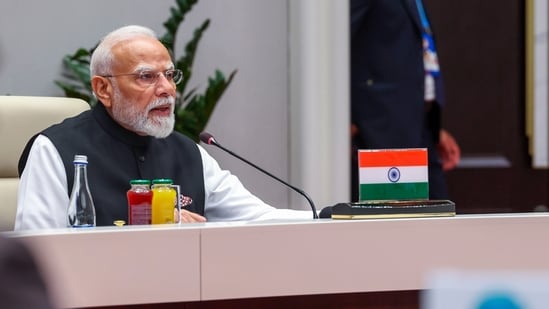
The appeal, made on Tuesday in a video message from Bishkek, comes even as India has posted a stronger-than-expected 7.8% economic growth for the quarter ended June. Modi said the country was progressing rapidly despite wars, global uncertainty and supply-chain disruptions, but stressed that Indians must continue to contribute to the country's economic strength by choosing swadeshi products and reducing avoidable foreign-exchange outflows.
“Foreign trips, if you are going for leisure, you should not go. If you are getting married abroad, you should not do so. And if it is not necessary, you should not buy gold either,” Modi said.
Why is Modi asking people to avoid gold?
The immediate economic concern is the amount of foreign exchange India spends on imported gold.
{{/usCountry}}The immediate economic concern is the amount of foreign exchange India spends on imported gold.
{{/usCountry}}India relies almost entirely on overseas supplies to meet its gold demand, making bullion one of the country's biggest import items after crude oil. When Indians buy more gold, a larger amount of foreign currency flows out of the country. That can add to the trade deficit and, when dollar demand is already high, put additional pressure on the rupee.
Gold imports have risen sharply this year. Shipments in the first four months of the financial year beginning in April were more than 32% higher than a year earlier, according to the latest inputs. At the same time, India's merchandise trade deficit widened to nearly $32 billion in July, its highest level since January.
That makes gold particularly important from a policy perspective. Unlike an imported machine, technology or industrial input that can potentially contribute to future production, much of India's gold demand is for savings, weddings and religious or cultural purposes.
India is also the world's second-largest bullion buyer. This means even a modest change in consumer demand can have a significant impact on the import bill.
Why does this matter more when oil prices are high?
Gold is only one part of India's external-payments challenge.
India imports more than 88% of its crude oil requirements, so a sustained rise in international oil prices immediately increases the country's import bill. The continuing war in West Asia and disruption around the Strait of Hormuz have kept energy markets vulnerable to further shocks.
When the oil bill rises sharply, India needs more dollars to pay for imports. If gold imports rise at the same time, the pressure on the trade balance and the rupee becomes greater.
This is why Modi's message is essentially an appeal to reduce discretionary imports at a time when external risks are elevated.
The argument is not that buying gold or travelling abroad will by itself trigger an economic crisis. Rather, the government is asking households to collectively reduce expenditures that result in foreign currency leaving the country when external risks are elevated.
Why has Modi brought up foreign travel again?
Foreign holidays and destination weddings similarly involve spending overseas. An Indian travelling abroad spends money on air tickets, hotels, food, local transport and other services. An overseas wedding can involve a considerably larger outflow. Much of that expenditure therefore goes towards services outside India rather than supporting domestic businesses.
Modi's latest appeal is consequently part of the same broader swadeshi argument: where an expenditure can reasonably be made in India, consumers should consider doing so.
His call is aimed specifically at non-essential travel. He is not asking Indians to stop all overseas travel, but to reconsider leisure trips and foreign weddings at a time of heightened economic uncertainty.
This is not Modi's first such appeal
The prime minister made a similar appeal in May, when the economic impact of the US-Iran conflict was particularly acute.
At the time, Modi asked Indians to avoid gold purchases for a year, postpone non-essential foreign travel and conserve petrol and diesel. He also urged people to revive practices such as working from home and virtual meetings where possible, use public transport and carpooling, and shift more freight from roads to railways.
The May appeal was made against the backdrop of surging crude oil prices and concerns about disruptions in the Strait of Hormuz.
So why make the appeal again when GDP growth is strong?
India's 7.8% growth in the June quarter is a strong number, but the government is conscious that growth does not automatically eliminate external vulnerabilities.
The latest GDP data showed that the economy remained resilient despite the disruption caused by the West Asia war. Growth, however, slowed from 8.6% in the March quarter. There are also concerns about inflation, the monsoon and the durability of some of the factors that have supported consumption.
The economic case for caution is therefore that India should use its current resilience to strengthen the foundations of growth rather than assume that the external shocks will disappear.
Modi made that point by linking swadeshi consumption with his larger vision of self-reliance. “The more we emphasise swadeshi, the more we emphasise self-reliance, I have firm faith that when it is 100 years of independence, we will present a developed India to our young generation,” he said.
What does the government gain from this?
There are three broad objectives behind the appeal.
First, conserving foreign exchange. Cutting unnecessary imports reduces the demand for dollars and can help limit pressure on the rupee and the trade deficit.
Second, reducing vulnerability to global shocks. India remains heavily dependent on imported crude and relies on foreign supplies for most of its gold. Lowering discretionary import demand can provide some cushion when global commodity prices or shipping routes are disrupted.
Third, boosting domestic consumption and businesses. If Indians choose domestic products, holidays and services instead of foreign alternatives, more of that spending remains within the Indian economy. This fits into Modi's broader push for swadeshi and self-reliance.
Another reason why gold is particularly sensitive right now
Gold itself has been performing strongly amid global uncertainty. Bullion rose almost 10% in August, its biggest monthly gain since January, driven partly by concerns about sovereign debt, currency depreciation and expectations surrounding US monetary policy. Spot gold was trading around $4,430 an ounce on Tuesday.
For Indian consumers, higher international prices make gold imports even more expensive in rupee terms. Strong domestic demand at elevated global prices can therefore add further pressure to the import bill.
At the same time, gold is a complicated asset during a geopolitical crisis. Wars and uncertainty generally increase its appeal as a safe-haven investment, but higher oil prices can fuel inflation and keep interest rates elevated, which can weigh on gold because bullion does not generate interest income.
For the government, however, the central issue is simpler: regardless of whether gold prices rise or fall, India has to use foreign currency to import most of the metal.