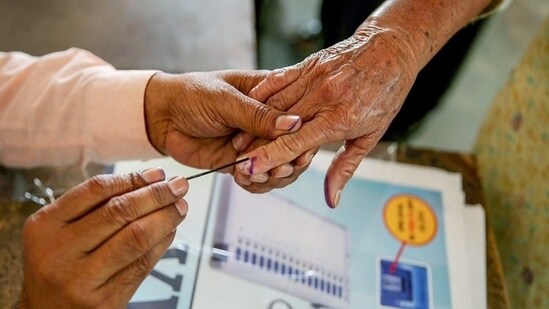
In four out of five states that will go to polls in the coming election cycle, the Bharatiya Janata Party (BJP) is the incumbent party. With the exception of Punjab, the BJP is fighting to seek another term in government in the states of Uttar Pradesh, Uttarakhand, Goa, and Manipur. When election results are declared on the March 10, the interpretations of the BJP’s success or lack of in these elections, will not just be confined to these state-specific results.
The setbacks in BJP-ruled states post-2019 are in keeping with the BJP’s vulnerability pre-2019
The BJP’s performance in the state elections held after the results of 2019 Lok Sabha results has once again underlined its vulnerabilities in dealing with anti-incumbency where it has been running the state government. Not only did the BJP lose the 2018 elections in Rajasthan, Madhya Pradesh and Chhattisgarh – all states where it was in power -- its victory margin also came down in the 2017 Gujarat elections. The BJP’s loss in Jharkhand in 2019, its reduced margin in Haryana (2019) and Assam (2021), and inability to repeat its 2014 performance in the Maharashtra elections in 2019 (which created ground for the post-poll rupture with the Shiv Sena) is further proof of this fact.
Given this record, the BJP’s performance in Uttar Pradesh, Uttarakhand, Goa and Manipur -- especially the first which is the largest among these states, and also India’s most important one politically -- will matter. The Uttar Pradesh results will also have significant bearing on politics in the run-up to the 2024 Lok Sabha elections. It was after the BJP’s overwhelming victory in the 2017 Uttar Pradesh elections that Janata Dal (United) leader Nitish Kumar parted ways with the grand alliance of the Rashtriya Janata Dal (RJD) and the Congress in Bihar ( Kumar described the BJP as invincible while justifying his decision), giving a jolt to hopes of forging an all-in-unity front against the BJP in the 2019 elections.
State election losses need not mean Lok Sabha losses for the BJP...
To be sure, even an adverse outcome for the BJP in the latest election cycle need not be read as a herald of its poor showing in the Lok Sabha elections in 2024. This becomes clear when one looks at the performance of the BJP in state elections and subsequent national elections. When it comes to the latter, the BJP seems to have an ability to not just manage a higher vote share , but also (and more importantly) convert adverse results in state elections into huge victories in national elections. The biggest example of this was seen in the BJP’s 2019 Lok Sabha performance in the states of Gujarat, Madhya Pradesh, Chhattisgarh, and Rajasthan. If Lok Sabha results are disaggregated at assembly constituency level, the BJP’s 2019 seat share in these states was 89% compared to a seat share of just 42% in the assembly elections held before 2019.
... but they could add to the economic policy pressure on the government
A possible setback in the latest election cycle could create serious problems on the economic policy front for the BJP. The latest Budget bet on capital expenditure reviving consumption growth, eschewing any direct measures to boost consumption or alleviate economic distress. It is also excepted that government owned oil marketing companies will unfreeze the existing cap on petrol-diesel prices as soon as the election cycle is over. Crude oil prices have increased significantly between November 2021 (when petrol-diesel prices were last increased) and now. If political pressure forces the government to defer a hike in petrol-diesel prices even after the ongoing elections, it will have a serious impact on the budget’s math. While an electoral victory for the BJP is no guarantee against the economic pain which a future hike in petrol-diesel prices will bring, it will give the BJP much needed political capital to do what it needs to.
{{^htLoading}}{{/htLoading}}{{#usCountry}}{{/usCountry}}