E-Paper



Will collegium impasse cost India chance to get woman CJI in 2027?
The five senior-most judges in the top court, who make up its collegium, have failed to arrive at a consensus on elevating justice Akil A Kureshi, currently chief justice of the Tripura high court, as a judge in the apex court, people familiar with the development said on condition of anonymity.

 Prefer HTon Google


A stalemate in the Supreme Court collegium over one name may cost the country the opportunity to have its first woman Chief Justice of India (CJI) in 2027.
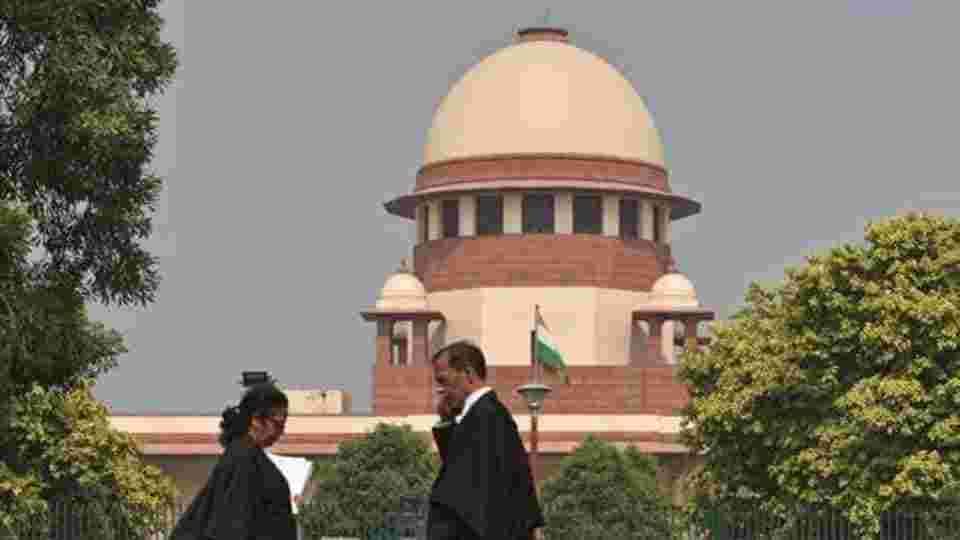
The five senior-most judges in the top court, who make up its collegium, have failed to arrive at a consensus on elevating justice Akil A Kureshi, currently chief justice of the Tripura high court, as a judge in the apex court, people familiar with the development said on condition of anonymity.
The collegium, which is headed by CJI SA Bobde, has met at least three times in last one month to decide on names of judges for elevation to the apex court, but each time, according to these people, it has been unable to decide on any name simply because of the lack of consensus on justice Kureshi, the second senior most judge across all of India’s high courts.
And that has cast a long shadow over the timely elevation of justice BV Nagarathna from the Karnataka high court, who, if elevated now, could become India’s first woman CJI in 2027.
The other judges in the collegium are justices NV Ramana, Rohinton F Nariman, Uday U Lalit and AM Khanwilkar. The people familiar with the matter added that one of the members of the collegium has insisted that justice Kureshi’s name be sent along with the names of others whose elevation is being recommended. With the collegium, which recommends names to the law ministry, not arriving at a consensus on his name, its other recommendations have been held up too.
The law ministry has the option of sending the recommendations back to the collegium for review, but if the collegium resubmits them, it has to approve the names -- although there is no time frame mandated for this approval, which means it can delay the process indefinitely if it so desires.
The top court currently has a vacancy of four judges out of the sanctioned strength of 34 judges. Five more judges will retire by the end of this year, including one out of the only two woman judges.
Justice Kureshi’s current posting, in Tripura, also raised eyebrows when it was made. He was appointed as a judge in the Gujarat high court in 2004, and he is scheduled to retire in March 2022, at the age of 62. Supreme Court judges retire at 65, and judges get an automatic extension of three years once elevated to the apex court. As a judge in the Gujarat high court, justice Kureshi heard several important and politically sensitive cases, including the one concerning the killing of extortionist and gangster Sohrabuddin Sheikh in an encounter.
In May 2019, the Supreme Court collegium recommended justice Kureshi ‘s appointment as the chief justice of the Madhya Pradesh high court, but the central government expressed its reservations. This prompted the collegium to modify its recommendation in September 2019 and transfer justice Kureshi to a different high court -- as chief justice of the Tripura high court, relatively a much smaller high court than Madhya Pradesh’s.
The prolonged disagreement within the collegium has not only created uncertainty over elevation of justice Kureshi and other senior high court judges, but it has also led to a state of suspense whether India could get its first woman CJI, justice Nagarathna.
If elevated without much delay, justice Nagarathna, who was appointed a judge of the Karnataka high court in February 2008, could succeed justice Surya Kant as CJI in February 2027, and occupy the post until 29 October, 2027. She will otherwise retire as a high court judge in October 2024. Justice Nagarathna’s father, Justice ES Venkataramiah, was CJI for a few months in 1989.
HT has learnt that if the current impasse continues and the possible elevation of justice Nagarathna is delayed further, her chances of becoming the first woman CJI may get diminished further.
Apart from her, the elevation of Punjab and Haryana high court chief justice Ravi Shanker Jha, whose parent high court is Madhya Pradesh, is also stuck owing to the dissonance over justice Kureshi’s elevation.
Other names in the zone of consideration for their elevation to the SC include Calcutta high court chief justice TB Radhakrishnan, Gujarat high court chief justice Vikram Nath and Delhi high court chief justice DN Patel.