
 E-Paper



Will new India-US strategic roadmap translate on ground ?
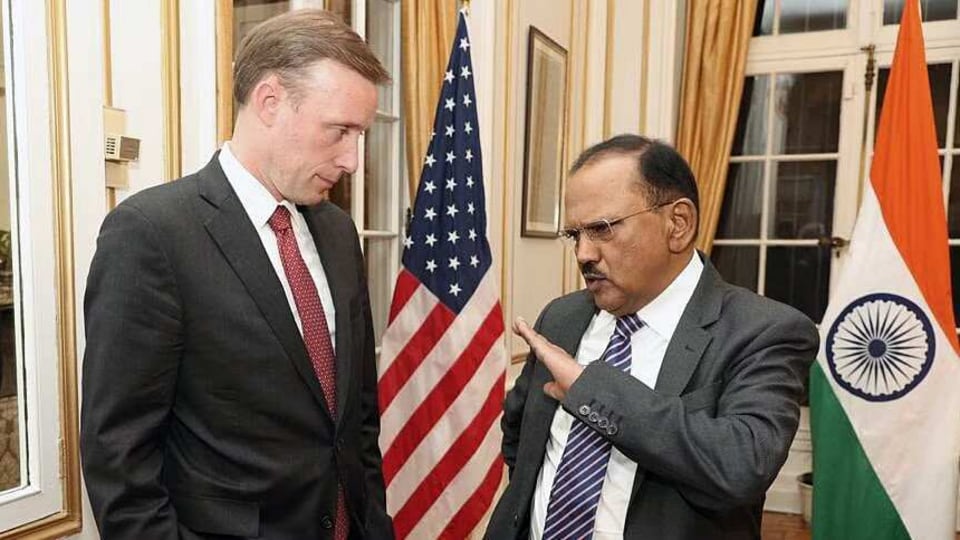
While National Security Advisors of India and US have charted a ambitious road-map on deep cooperation in strategic technologies, New Delhi is looking towards Biden administration to expedite the goals by pushing through Cold War Washington bureaucracy.

 Prefer HTon Google


On Saturday in Sydney, external affairs minister S Jaishankar said that India had made big changes in its foreign policy and also emphasized on change in American thinking towards the largest democracy. He said: “This is not the same US with which we dealt with in the 1960s or 80s or even 2005 (the year both countries signed the civilian nuclear deal).”
Given that Jaishankar has handled the India-US bilateral account as foreign service officer for half his life including the nuclear deal, there is not an iota of doubt about cementing of ties between the two democracies. The bilateral relations between the two countries have reached new heights under Prime Minister Narendra Modi with both countries on the same page on most global issues and ready for an open detailed discussion on issues where India and US have different perspectives. There is across the spectrum intelligence sharing and hotline operating between the White House and Lok Kalyan Marg through key officials for real-time discussion at any time of the day.
Although the two countries have charted a very ambitious roadmap for future during National Security Advisor Ajit Doval’s three-day visit to Washington (January 30-February 1), but more important is the translation of the bilateral goals on the ground. The roadmap includes deep cooperation in the field of semiconductors, aircraft engines, space technologies, innovation bridge and 5G/6G telecommunication to just name a few. As a delicious appetizer, the US has committed to “expeditiously review” the license application submitted by General Electric to manufacture GE-414 engines to power Tejas Mark II fighter in India under 100 per cent transfer of technology. As the product comes under US International Traffic in Arms Regulation (ITAR), the license will have to be cleared by the tri-services that is State Department, Pentagon, and the Commerce Department. India has already purchased GE-404 engines off the shelves to power Tejas Mark I fighter.
While the US has been talking about the transfer of critical and dual-use technologies since the 2004 Next Steps in Strategic Partnership (NSSP) under the Atal Bihari Vajpayee government, little of that is in evidence even today in the defence/security sector. One must remember that it was then Secretary of State Colin Powell who first offered the civilian nuclear deal to India by separating military nuclear reactors on July 28, 2002, at a meeting with then NSA Brajesh Mishra in PM Vajpayee's residence.
After the NSSP, India concluded the Indo-US civilian nuclear deal in 2005 and the Defence Technology Initiative (DTI) in 2012, which later was called the Defence Technology and Trade Initiative (DTTI). The key elements of DTTI were that India would manufacture latest state of the art shoulder fired Javelin anti-tank guided missile in India under transfer of technology and a working group on hot engine technology, a key to designing, developing, and manufacturing fighter engines. Although the DTTI was launched with much fanfare by then Defence Secretary Ashton Carter, the Javelin plan was stillborn as the US did not share the vital infra-red seeker technology (heart of the ATGM) with India and the hot engine technology group is still work in progress and in South Block files. During this entire duration of two decades , India became a major defence importer from US starting with gun-locating radars post Kargil war, Apache attack helicopters, C-130 and C-17 medium to heavy lift transport aircraft, P8I multi-mission surveillance aircraft, Sea Guardian drones on lease and landing ship INS Jalashwa apart from turbine engines for INS Vikrant.
The biggest worry within the national security establishment is whether the US will live up to the commitments inked on paper during NSA Doval’s visit to add muscle to the bilateral relationship amidst Chinese belligerence on the northern borders and the Indo-Pacific. If Washington does, then nothing can stop the two countries.


