
 E-Paper



'With China, you have to compete...': Army chief General Upendra Dwivedi says situation at LAC 'not normal'
General Dwivedi said the trust between Indian and Chinese forces at the LAC has become the "biggest casualty".

 Prefer HTon Google


Army chief General Upendra Dwivedi on Tuesday described the situation at the Line of Actual Control – the de facto India-China border – as sensitive and “not normal.”
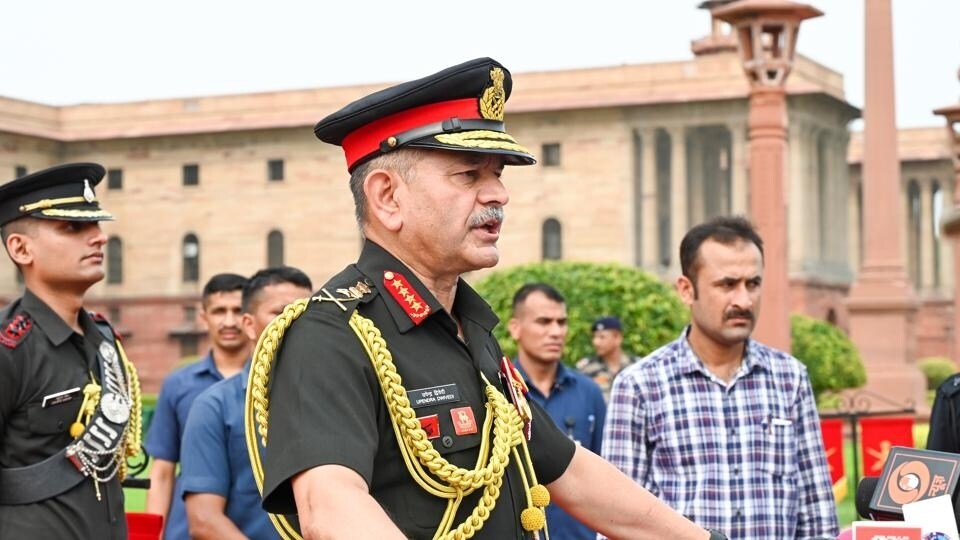
Speaking at the Chanakya Defence Dialogue, the Army chief said the situation at the de facto border is "stable" but the Indian side wants it to be restored to what it was before April 2020.
In April 2020, China attempted to transgress the Indian side of the de facto border. The attempt was thwarted by the Indian forces. However, tension prevails in eastern Ladakh bordering China.
China's subversive activities have also damaged its diplomatic ties with India. Last week, external affairs minister S Jaishankar described India's diplomatic ties with China as “very significantly disturbed”.
Also read: Very significantly disturbed ties with China, says Jaishankar
General Dwivedi said the trust between Indian and Chinese forces at the LAC has become the "biggest casualty"
"As far as China is concerned, it has been intriguing our minds for quite some time. With China, you have to compete, cooperate, coexist, confront, and contest... So what's the situation today? It's stable, but it's not normal and it's sensitive. We want the situation to be restored to what it was before April 2020, whether in terms of the ground occupation situation or the buffer zones which have been created or patrolling which have been kind of planned as of now. So until that situation is restored, as far as we are concerned, the situation will remain sensitive and we are fully operationally prepared to face any kind of contingency... Trust has become the biggest casualty," he said.
India and China held two rounds of diplomatic talks in July and August to find an early resolution of outstanding issues on the LAC in eastern Ladakh.
"The positive signaling is coming from the diplomatic side, but what we need to understand (is that) the diplomatic side gives options and possibilities," he said, according to PTI.
Also read: ‘Illegal’: China reacts as mountaineers name Arunachal Pradesh peak after 6th Dalai Lama
"But when it comes to the execution on the ground, when it relates to ground per se; it is dependent on the military commanders on both sides to take those decisions," the Army chief added.
Since 2020, India and China have engaged in several rounds of military-level and diplomatic-level dialogues, leading to disengagement at a host of friction points. However, the full resolution of the border row has not been achieved.
Last month, national security advisor Ajit Doval met China's foreign minister Wang Yi on the sidelines of the BRICS conclave. The two sides agreed to work with "urgency" and "redouble" efforts to achieve complete disengagement at the remaining friction points in eastern Ladakh.
Also read: ‘When I said 75%…’: S Jaishankar on border dispute talks with China
General Dwivedi also spoke about China constructing villages along the LAC.
"They are carrying out this artificial immigration, settlement. No problem, it's their country, they can do whatever they want. But what we see in the South China Sea. When we talk about the grey zone, initially we find fishermen and those kinds of people who are at the forefront. And to save them, then you find the military moving in... As far as the Indian Army is concerned, we have already been having this kind of model village... But more importantly, now the state governments have been empowered to put in those resources and this is the time when the army, state governments and supervision by the central government are all coming together. So the model villages that are being built now will be even better," he said, according to ANI.


