
 E-Paper



World Population Day: Small towns in India recasting urban landscape
Reverse migration — people moving out of big cities to satellite areas and beyond — has given rise to these boomtowns and forced stuttering growth in metros such as Delhi, Mumbai and Kolkata.


Small towns are recording a growth spurt and a population boom, slowly transforming the urban landscape.
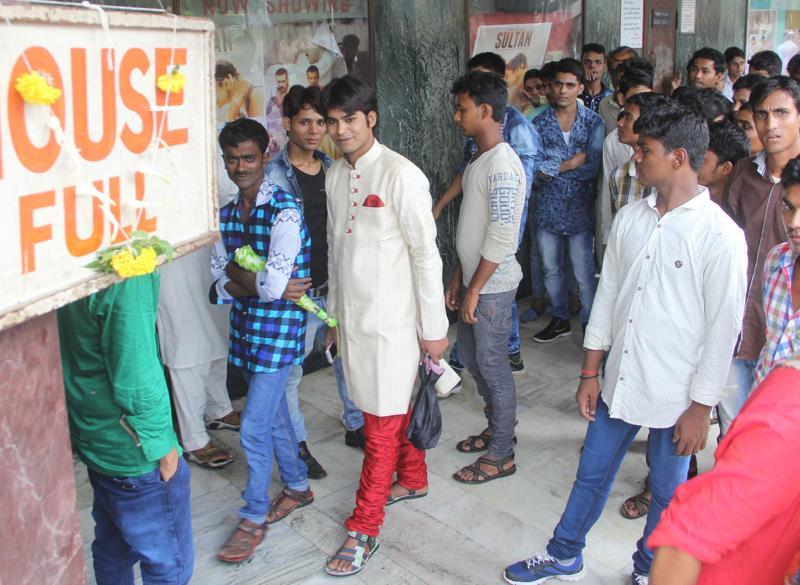
Reverse migration — people moving out of big cities to satellite areas and beyond — has given rise to these boomtowns and forced stuttering growth in metros such as Delhi, Mumbai and Kolkata.
“We are seeing it everywhere, the National Capital Region, Hyderabad, etc. In the peripheral settlements, the service sector is thriving because of low land cost, low labour cost, less stringent byelaws,” said Debolina Kundu, an associate professor with the National Institute of Urban Affairs, an autonomous agency under the urban development ministry.
“Industries are shifting from urban to rural areas. Better connectivity, more job opportunities and much lower cost of living have resulted in people migrating away from the core city.”
According to the Census 2011, the country’s urban population grew by 91 million in the past decade.
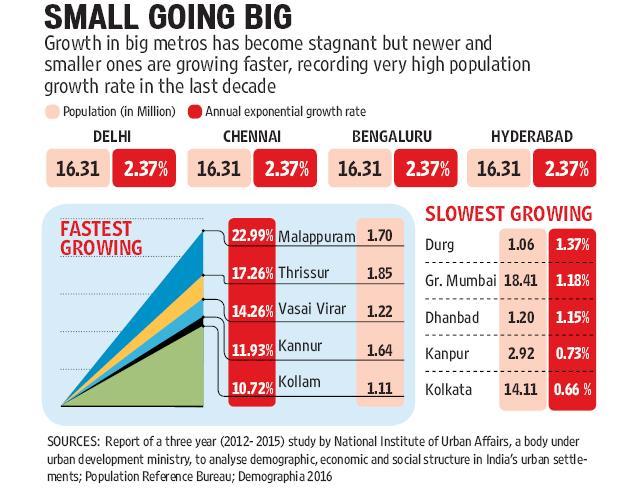
A National Institute of Urban Affairs report says 18 new metropolises, which are cities with a million-plus population, have sprung up across between 2001 and 2011. This is the highest in any decade.
The southern state of Kerala leads the pack, with six of the new million-plus cities, followed by Uttar Pradesh, Maharashtra, Madhya Pradesh, Gujarat and Tamil Nadu.
Metros have recorded a reverse trend. While Mumbai registered an annual exponential growth rate of just 1.18% in the past decade, Kolkata recorded just 0.66%.
Census 2011 says 2,530 new census towns have surfaced in the past decade, with a minimum population of 5,000.
“These urban agglomerations indicate how rural areas are acquiring urban characteristics. Unfortunately, in terms of development of infrastructure and amenities, these census towns are still way behind,” said YK Alagh, a former member of the now-defunct Planning Commission.


