
 E-Paper



Row over Smriti Irani’s sanitary napkin remark on Sabarimala
Union minister Smriti Irani’s remarks come amid a controversy over the Supreme Court’s verdict overturning the centuries-old ban on women of menstrual age entering the hilltop shrine in Kerala’s Sabarimala.


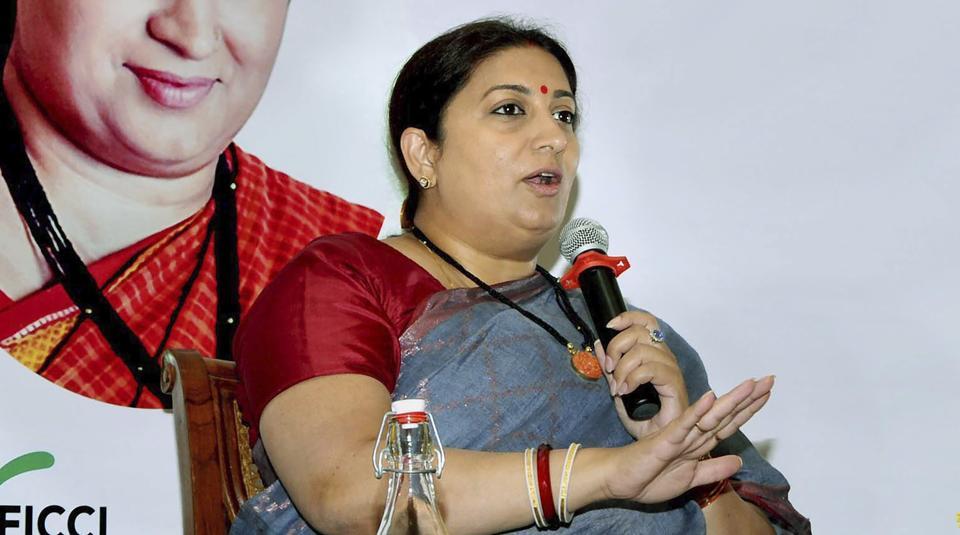
Union Minister Smriti Irani posted a video of her interaction at a Mumbai event after she was trolled on social media for her comment that people had a right to pray but not desecrate.
“As a practising Hindu married to a practising Zoroastrian, I am not allowed to enter a fire temple to pray. I respect that stand by the Zoroastrian community / priests and do not approach any court for a right to pray as a mother of 2 Zoroastrian children. Similarly Parsi or non Parsi menstruating women irrespective of age DO NOT go to a Fire Temple,” she said in a string of tweets on Tuesday evening.
“These are 2 factual statements. Rest of the propaganda / agenda being launched using me as bait is well just that ... bait,” the minister said in her comeback.
The minister had earlier declined to speak on the Supreme Court verdict on allowing women into Sabarimala temple since she was part of the Union cabinet. But she had underlined that the right to pray did not mean the right to desecrate.
“But just plain common sense. Would you take sanitary napkins steeped in menstrual blood and walk into a friend’s home? You would not. And would you think that is it respectful to do the same when you walk into the house of god? So that is the difference. I have a right to pray but I don’t have the right to desecrate that is my personal opinion,” the 42-year-old minister had said earlier.
Irani’s remarks came at a Young Thinkers’ Conference organized by the British Deputy High Commission and think-tank, Observer Research Foundation (ORF).
“I am yet to find a person who ‘takes’ a blood soaked napkin to ‘offer’ to any one let alone a friend,” Smriti Irani said, getting back at those who she said had “jumped the gun”.
The Supreme Court had in September lifted the ban that prevented women of menstruating age from entering the 800-year-old Sabarimala temple in a 4-1 majority verdict, saying divinity and devotion cannot be subject to the rigidity and stereotypes of gender.
The court said the exclusion on the basis of biological and physiological features was unconstitutional and discriminatory because it denied women the right to be treated as equals.
However, no woman was able to enter the shrine amid protests by devotees, the Congress, Bharatiya Janata Party and various Hindu organisations.


