
 E-Paper



WPI inflation at record high of 15.08% in April
On May 12, the National Statistical Office (NSO) released data which showed that retail inflation, as measured by the Consumer Price Index (CPI), in April was 7.79%, the highest value since the 7.87% reading in April 2014.


India’s wholesale inflation touched 15.08% in April, the highest in 27 years, powered largely by power and fuel prices, with the reading being in the double digits for the 13th straight month. The underlying cause: global supply-chain disruptions and the war in Ukraine.
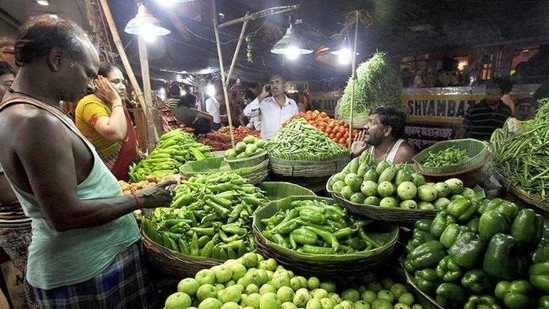
On May 12, the National Statistical Office (NSO) released data which showed that retail inflation, as measured by the Consumer Price Index (CPI), in April was 7.79%, the highest value since the 7.87% reading in April 2014.
Data released by the ministry of commerce and industry on May 17 showed that inflation in wholesale markets, as measured by the Wholesale Price Index (WPI) grew at 15.08% in April. This is the highest wholesale inflation reading in India since March 1995, shows spliced WPI data — the current series only starts from April 2011 — from Centre for Monitoring Indian Economy (CMIE). What makes the latest WPI reading even more alarming is the fact that it comes on the back of a double digit WPI growth in April 2021. This means that there is practically no base-effect — an artificial boost to annual growth numbers because of an abnormally low value in the previous period — at play in what is a very high, almost unprecedented wholesale inflation reading.
Such is the magnitude of momentum in wholesale prices at the moment that it is better understood by looking at absolute WPI levels. From a value of 100 in April 2011, it took WPI 115 months to reach the 125-mark in November 2020. WPI has made its journey from 125 to 150 (it stands at 151.9 in April 2022) in just 17 months after that.
What has led to this rapid rise in wholesale prices? The overall momentum is broad-based. Inflation has been growing in double digits for all of the three main sub-categories of WPI: primary articles (22.6% weight), fuel and power (13.15% weight) and manufactured products (64.23% weight) since November 2021. However, the fuel and power sub-category has been showing an annual growth more than 30% in every month since October 2021. The food sub-category (24.38% weight) of WPI, which includes both primary articles and manufactured food items, grew at 8.9% in April. Wholesale prices for wheat grew in double digits for the sixth consecutive month in April 2022 (10.7%), even though the pace seems to be slowing down.
The fact that food prices are lagging non-food prices also means that farmers are likely experiencing a worsening of terms of trade, or ratio of prices received and paid, at the moment. Experts believe that this does not bode well for rural demand going forward. Policy decisions such as banning wheat exports could add to this possibility with little gains in controlling overall inflation.
“The strong action of the wheat export ban is a complementary fiscal step to monetary tightening, and we would not be surprised if even the MSP increase for summer crops is relatively modest as inflation objective dominates,” Samiran Chakraborty, chief economist, India, Citi Research, said in a research note dated May 16. “Much lower production and unfavourable price dynamics are now going to become headwinds for rural agricultural demand. In effect, the wheat export ban reduces the upside risk to our 6.8% FY23E average CPI forecast, but increases the downside risk to our 7.5% GDP growth forecast,” Chakraborty added.
To be sure, India is not the only country experiencing high inflation at the moment. Persisting supply chain disruptions because of the Covid-19 pandemic, which have only become worse after the latest outbreak in China; a sharp revival in demand in advanced countries putting pressure on already fragile supplies; and to top it all, a war in Europe which has inflicted a sharp disruption in global fuel and food supplies have generated very strong inflationary tailwinds in commodities markets.
It is important to keep in mind that the WPI basket, unlike its CPI counterpart, is more representative of commodity markets facing producers rather than consumers. This is why WPI includes items such as metals and key industrial chemicals such as fertilizers and does not have things such as personal services and housing. This also means that the headline numbers for CPI and WPI capture movements in prices for a very different commodity basket.


