
 E-Paper



Yogendra Yadav, Suhas Palshikar threaten legal action against NCERT: ‘No right to…’
Noted academics Yogendra Yadav and Suhas Palshikar alleged that the NCERT published revised textbooks under their names without consent.

 Prefer HTon Google


The ongoing controversy around the revised NCERT textbooks escalated on Monday as noted academics Yogendra Yadav and Suhas Palshikar threatened legal action against the council for allegedly publishing the new textbooks under their names without consent.
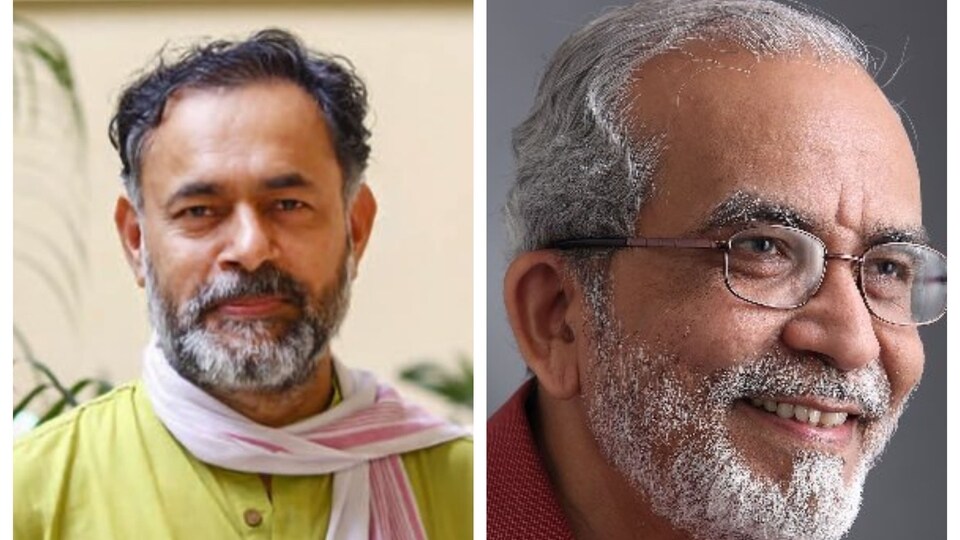
Yadav and Palshikar has written to the NCERT director Dinesh Prasad Saklani, vehemently objecting to the latest revisions in the textbooks. They said NCERT has no moral and legal right to distort textbooks and publish them under their names despite their explicit refusal.
Read: NCERT functioning as an RSS affiliate since 2014: Jairam Ramesh
The revised textbooks, now available in the market, reportedly minimise references to the BJP's 'rath yatra' and the aftermath of the Babri Masjid demolition, while focusing prominently on the Supreme Court's decision to allow the construction of a Ram temple at the disputed site.
The revised Class 12 political science textbook, does not mention the Babri masjid, but refers to it as a "three-domed structure". It has pruned the Ayodhya section from four to two pages and deleted details from the earlier version.
The revised version of the textbooks still identify Yogendra Yadav and Suhas Palashikar as chief advisors.
In the e-mail to Saklani, the duo referred to their last year's communication where they had categorically asked to "give effect to this request immediately and ensure that our names are not used in the soft copies of the textbooks available at NCERT website as also in the subsequent print editions."
"The NCERT did not act upon our request, nor did it have the courtesy to write back to us. We are shocked to discover that more than a year after our original request, the NCERT has gone ahead to publish and distribute the new edition of these six textbooks without removing our names from the publications that we do not wish to be associated wit," they said.
"Besides the earlier practice of selective deletions, the NCERT has resorted to significant additions and rewriting that are out of sync with the spirit of the original textbooks… the NCERT has no moral or legal right to distort these textbooks without consulting any of us and yet publish these under our names despite our explicit refusal," the letter said.
"There can be arguments and debates about someone’s claims to authorship of any given work. But it is bizarre that authors and editors are forced to associate their names with a work they no longer identify as their own," it added.
In response to mounting criticism, NCERT Director Dinesh Prasad Saklani defended the revisions, asserting that the changes were part of routine updates aligned with the National Education Policy (NEP) 2020. He dismissed allegations of saffronisation, arguing that the adjustments aimed to foster a positive educational environment and prevent the propagation of potentially divisive historical narratives.
Read: Ayodhya Ram temple chief priest flays NCERT over revised textbook, says…
Asked about references to Gujarat riots or Babri masjid demolition being tweaked in NCERT textbooks, Saklani said, "Why should we teach about riots in school textbooks? We want to create positive citizens not violent and depressed individuals".
"Should we teach our students in a manner that they become offensive, create hatred in society or become victim of hatred? Is that education's purpose? Should we teach about riots to such young children ... when they grow up, they can learn about it but why school textbooks. Let them understand what happened and why it happened when they grow up. The hue and cry about the changes is irrelevant," he said.
With PTI inputs


