
 E-Paper



Gurdaspur: DGP Saini had full faith in his team, refused NSG, Special Forces help
Soon after three Pakistani terrorists entered the Dinanagar police station in Punjab’s Gurdaspur district with their weapons blazing on Monday morning, Union home secretary LC Goyal called up Punjab director general of police Sumedh Singh Saini, offering to send a team of NSG commandos to help eliminate the threat.


Soon after three Pakistani terrorists entered the Dinanagar police station in Punjab’s Gurdaspur district with their weapons blazing on Monday morning, Union home secretary LC Goyal called up Punjab director general of police Sumedh Singh Saini, offering to send a team of NSG commandos to help eliminate the threat.
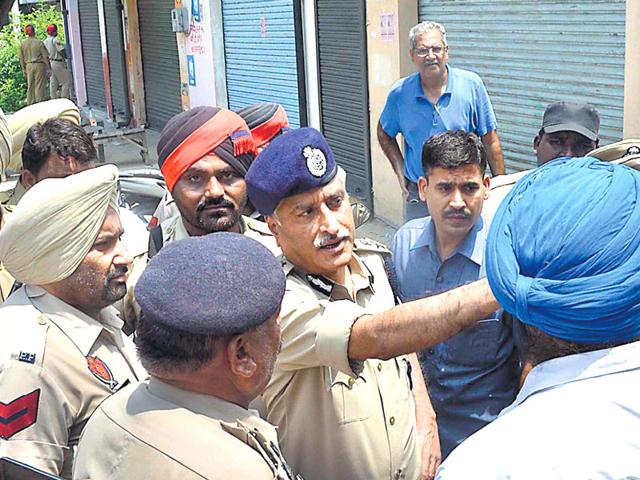
Official sources said Western Army Commander Lt General KJ Singh too sent a Special Forces team to counter the fidayeen (suicide) team and support the police effort.
However, after discussing the matter with National Security Adviser (NSA) Ajit Doval, Saini, a veteran of Punjab militancy, politely declined any outside help to tackle the three terrorists holed up inside the police station.
Officials said Gurdaspur SSP Gurpreet Singh Toor, SP Balijit Singh and local policemen engaged the gunmen, sending out the message that Punjab Police was capable of handling the operation.
With the state government’s lone helicopter located in Amritsar, DGP Saini left in an unmarked Innova for Dinanagar with a local police escort at around 8am.
The threat to Saini from Khalistani terrorists is rated to be of the highest level and he usually travels in a bulletproof Toyota Fortuner with a 20-car cavalcade, said sources.
Maintaining close contact with the NSA, he took over command of the Dinanagar operations by noon, with instructions to capture a terrorist if possible.
Doval spearheaded counter-terror operations in Punjab in the 1980s and has a good working relationship with Saini since then.
On reaching the spot, Saini immediately asked for a security cordon from nearby Amritsar and Batala to prevent any chances of the terrorists escaping.
With the gunmen firing explosive ammunition from AK-47 rifles, Saini sent for a dozen medium and light machine guns along with 200 grenades from the Punjab Armed Police (PAP) ordnance depot in Jalandhar, and made preparations for floodlights and night vision devices in case the operation extended beyond dusk.
Sources said every effort was made to capture at least one of the three terrorists, with superintendent of police Baljit Singh losing his life in the attempt but, by around 3pm, Saini concluded that the attackers would rather kill themselves than be taken alive.
A quick consultation with Delhi by the DGP was followed by a dynamic response from police with personnel lobbing grenades and firing continuously into the rooms where the gunmen were hiding. The operation was over by 5pm with all three Punjabi-speaking terrorists gunned down.
Read:Gurdaspur hero SP Baljit Singh cremated with full state honours


