
 E-Paper



Mangalyaan celebrates I-Day, sends stunning pics of Mars canyon
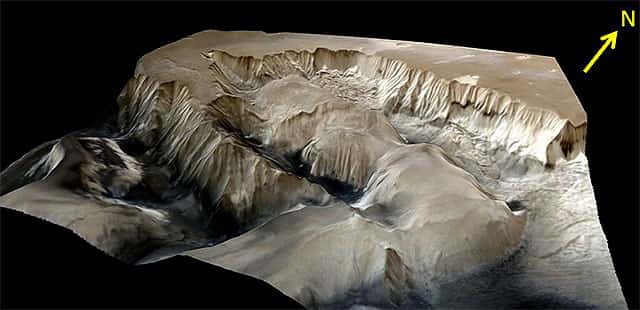
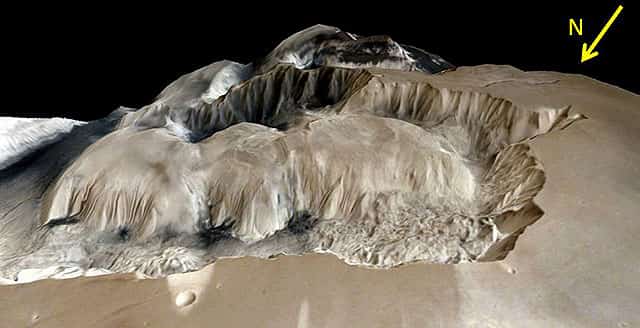
India's Mars Orbiter Mission Mangalyaan has sent home stunning three-dimensional images of a 5000-km long canyon on the red planet, on the occasion of Independence Day.


India's Mars Orbiter Mission Mangalyaan has sent home stunning three-dimensional images of a 5000-km long canyon on the red planet, on the occasion of Independence Day.

The 3-D images captured with the Mars Colour Camera from a height of nearly 2,000 km are of Valles Marineris, which is the largest-known canyon complex in the solar system.
The package includes pictures of the Opir Chasma, a valley 62 km wide and bordered by high cliffs.
Mangalyaan reached Mars 15 months after it was launched in September 2014, making India the only country after the US, Russia and Europe to have successfully undertaken missions to Mars in its maiden attempt.
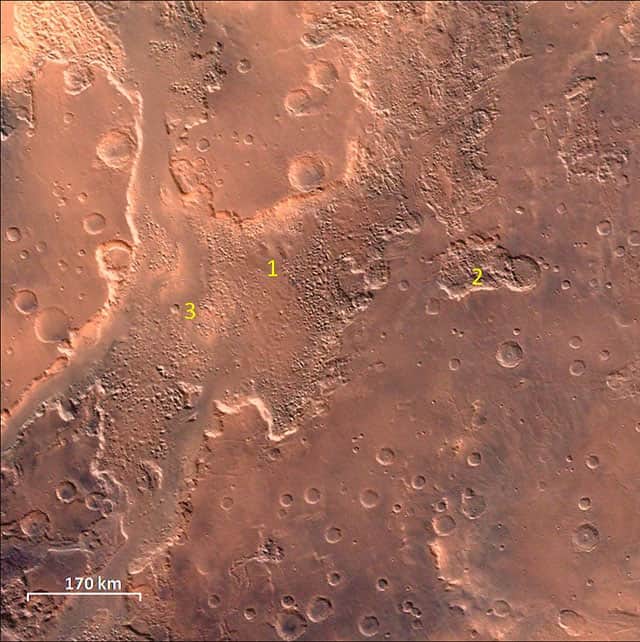
Earlier this year it beamed back high resolution pictures of prominent Martian landmarks including the Aurorae Chaos -- a part of chaos terrain which comprises irregular flat topped blocks several kilometres across. The pictures showed signs of fluvial activity, meaning that water flowed there sometime in the past.
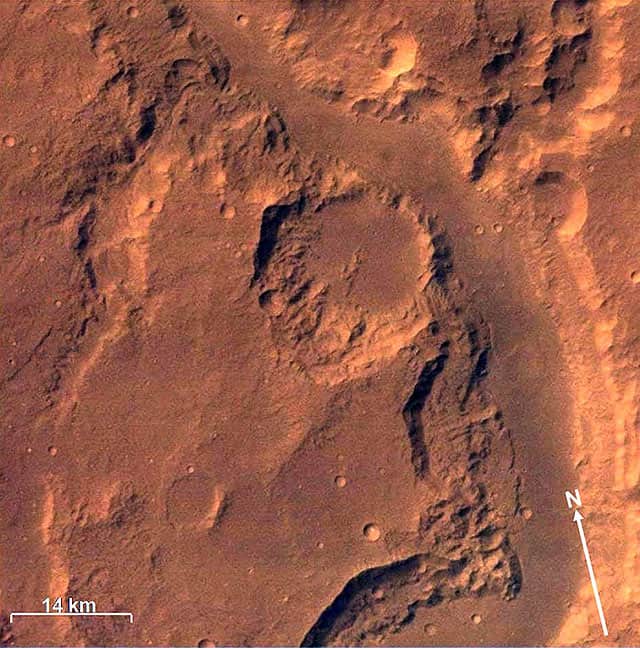
Fluvial impressions were also seen in pictures sent earlier of the 700 km long Ma'adim Vallis, which is an outflow channel from an area believed to have once contained a group of lakes.
Mangalyaan cost Rs. 450 crores, and can last for years in the Martian orbit with the 39 kilograms of fuel that it still has in its fuel tanks.
ISRO plans to develop and launch a follow-up mission called Mangalyaan 2 with a greater scientific payload to Mars between 2018 and 2020.
( All pictures courtesy Isro)


