
 E-Paper



Tigers roar back, numbers show steady rise
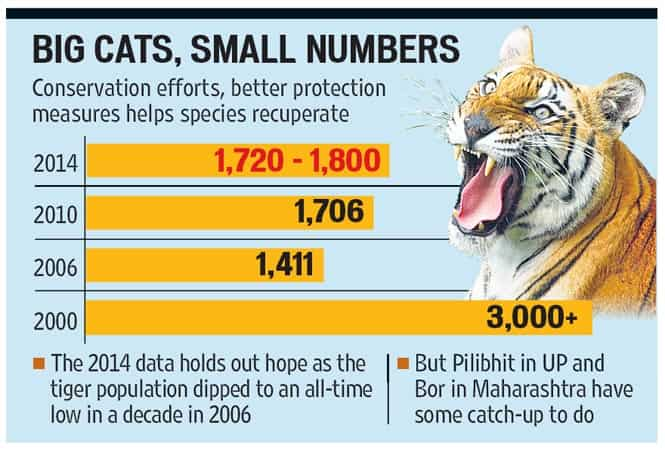
The total number of tigers in 2014 could be somewhere between 1,720 and 1,800 as compared to 1,706 four years ago, said top government sources, quoting figures from a year-long survey.


The country’s tiger population has increased marginally and the numbers were stabilising in most of the protected habitats for big cats, indicating good tidings for the besieged kings of our jungles.
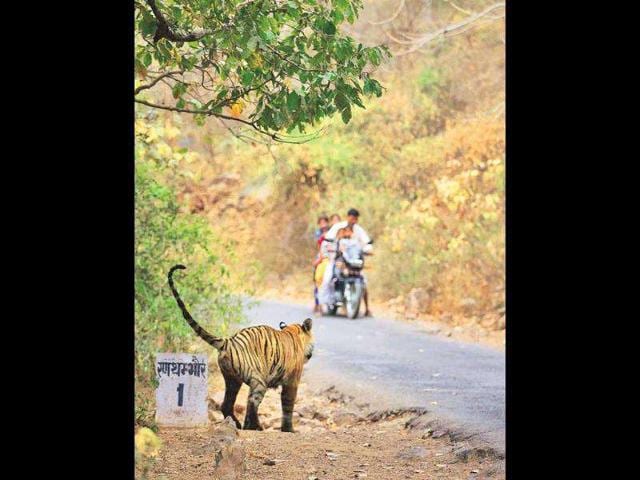
The total number of tigers in 2014 could be somewhere between 1,720 and 1,800 as compared to 1,706 four years ago, said top government sources quoting figures from a year-long survey which will go into the third tiger estimation report to be made public on January 20.
“The data from some tiger landscapes was still being collated and, therefore, we have not reached the final population figure for 2014. But, initial estimate show slight and not a significant increase in numbers,” said an official.
India has been struggling to hold on to its last few hundreds of big cats left in the wild because of rampant poaching that feeds an illegal international trade, which supplies animal parts to the traditional Chinese medicine market, and also habitat loss, prey depletion and poor management of tiger reserves.
But conservation efforts have paid off. The species breeds quickly wherever there is adequate prey and good protection measures are in place.
Tiger population has been on an upswing since 2006 when it dipped to an alarming 1,411 from over 3,000 in early 2000, prompting the government to form a Tiger Task Force and tighten protection measures.
The increase between 2006 and 2010 didn’t reflect uniformly because only a handful of habitats — such as Corbett National Park in Uttarakhand, Kaziranga National Park in Assam and some reserves in southern India — supported a good population.
The comforting roar was missing from Madhya Pradesh, which was once an undisputed tiger haven. The country’s other popular tiger destinations, Rajasthan and Maharashtra, recorded a dip in numbers in some of their tiger reserves.
Not for long though, as latest trends suggest. “The decreasing trend has either reversed or stopped. There has not been a fall in tiger numbers in any landscape and most have witnessed some increase. Many tiger reserves show a stable population near to its optimal capacity, some are moving in that direction and only a few have shown a slight dip,” the official said, describing Pilibhit in Uttar Pradesh and Bor in Maharashtra as habitats with some concern.
The country has five landscapes — Shivalik-Gangetic Plains, Central India and Eastern Ghats, Western Ghats, North-Eastern India and Sunderbans — for the tiger census that started in early 2013.
Besides the tiger headcount, the census provides useful data on other wildlife living alongside the big cats. Data is collected through camera trap, DNA tests and ground report from thousands of foresters scouring the wild.
The latest report could show a decline in tiger population outside its 47 protected areas the corridors connecting them are in a shambles. Less than 10% of the tiger population lives outside the protected zones — not a small number to be wished away considering so much little are left in India.
Over the past several years, the government has sanctioned projects in some of the corridors despite initial resistance by the National Tiger Reserve Authority.


