An American citizen was caught photographing the Khajuraho temples, the UNESCO World Heritage Site in Madhya Pradesh, using a drone camera, Archaeological Survey of India (ASI) officials said on Tuesday.
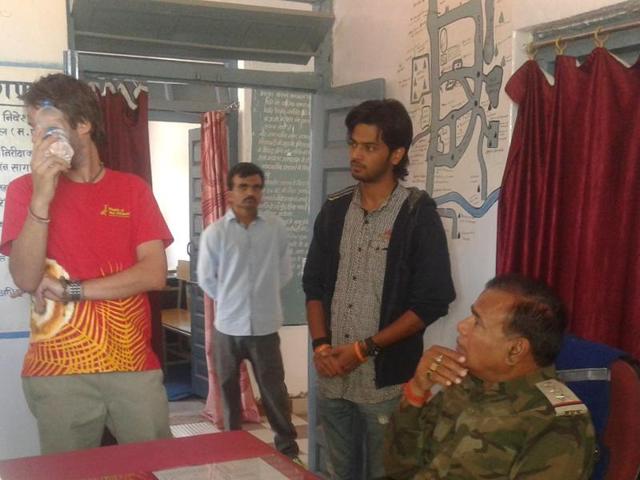
Gopal Krishen Sharma, junior conservation assistant at ASI sub-circle in Khajuraho, told Hindustan Times over the phone that they found the man flying a drone from the rooftop of a hotel in front of the western group of the Khajuraho temples without any permission on Monday.
“We immediately rushed to the hotel, caught the foreigner and seized his drone and its remote. We handed him over to the local police. A case will be registered against him based on our complaint. We are consulting our superiors on legal aspects like under which act and rules we should file this case,” he said.
Sharma said his documents showed he was from the US and had come to Khajuraho on Monday.
“His name is Derek Bessimier according to his visa. When we questioned him why he was filming the world heritage site without due permission, he said he was not aware that drone photography was not allowed there. He also said there were no signboards anywhere which said it was prohibited in the area,” he said.
Khajuraho police station in-charge KG Shukla told HT as the US citizen was not aware of the prohibition and it was a not a serious criminal act and they won’t lodge any case against him.
{{/usCountry}}Khajuraho police station in-charge KG Shukla told HT as the US citizen was not aware of the prohibition and it was a not a serious criminal act and they won’t lodge any case against him.
{{/usCountry}}“He said there was no signboard anywhere which said it was not allowed. But the ASI itself is competent to take action against the US citizen according to their acts and rules. They can penalise him for this,” he said.
In October 2014, the director general of civil aviation (DGCA) also had issued a public notice banning flying drones in Indian airspace till further notice. It had cited “security threats” as the reason for the ban.
The ASI has been cautious over the violation of the airspace over world heritage sites not just for security reasons but also for the safety of the structures. According to ASI officials, they take such violations seriously because the vibration in the air due to flying and the possibility of any accident involving planes can pose a danger to the temples in Khajuraho.
In February this year, a Polish and an Italian were caught using a drone for aerial photography at the world heritage site. “We stopped them before they could do much. After scanning their documents and deleting all the contents of their cameras, they were let go,” Sharma said.
In February 2012, after a motor glider flew over the no-flying-zone over Khajuraho temples, ASI officials filed a complaint with the local police against the violator. The motor glider was taking part in an adventure sports programme being held at the nearby Beni Sagar dam.
“But using a drone is a separate matter. It cannot be used without ASI’s permission,” regional director ASI central region SB Otta said.
Hidden from the world for centuries due to the dense jungles surrounding them, Khajuraho temples were rediscovered by an English army captain in the mid-19th century. Built by the Chandelas between the 9th and 10th centuries AD, the local tradition lists 85 temples at Khajuraho. However, only 25 temples exist now.