
 E-Paper



A wild muse chase: Sanjoy Narayan on the kinship of jazz and hip-hop

 Prefer HTon Google


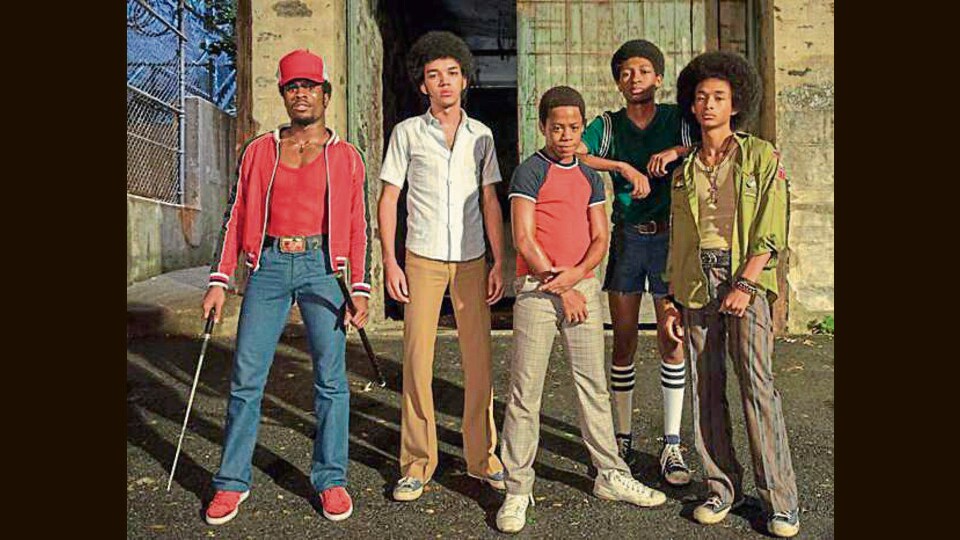
Separated by decades but bound by spirit, both Black-American art forms thrive on improvisation. Their fusion is conversation, intergenerational and unforced.
There’s a scene in The Get Down, Netflix’s lavish but short-lived 2016 series about the birth of hip-hop, in which the young MCs in the Bronx huddle around turntables, eyes wide, excitement palpable, as the breakbeat drops.
The disco fades, the crowd surges, and suddenly there is only rhythm: raw, stripped-down, irresistible. Watching it felt like being transported into a myth: part musical, part street documentary, part fever dream.
For fans of the show, it captured the very essence of a cultural revolution whose effects would last for a very long time. For Netflix’s bean-counters, though, it was an expensive gamble gone wrong; the series was canned after one season amid ballooning budgets and production chaos.
Despite its abrupt end, The Get Down left something lasting. It reminded us of what the Bronx in the 1970s really was: a crucible. Out of crumbling buildings and social decay came a sound stitched together from other sounds. DJs became archaeologists, digging through crates of funk and jazz records, isolating their most explosive parts — the breaks — and looping them until the dancers nearly levitated.
It was August 11, 1973, at 1520 Sedgwick Avenue. DJ Kool Herc, with two turntables and stacks of vinyl, found the sweet spot between James Brown’s funk, the Incredible Bongo Band’s percussive fury, and the improvisational grooves of jazz drummers such as Billy Cobham. In that basement room, hip-hop was born. And with it, an unlikely romance began between that genre and jazz.
Hip-hop and jazz are separated by decades but bound by spirit. Both are Black American art forms created in conditions of marginalisation. Both were dismissed in their early years as noise, fad, even menace. Both thrived on improvisation; on the freedom to bend form, to speak in one’s own voice while staying within a collective groove.
By the 1980s, when hip-hop moved from block parties to record stores, this kinship became explicit. Groups such as A Tribe Called Quest, De La Soul and Gang Starr didn’t just sample jazz records, they built their identities out of them. The double-basslines, horn riffs and smoky atmospheres became hip-hop’s new vocabulary. Jazz wasn’t an ancient curio to them; it was a living partner, a way of signalling sophistication and rebellion at the same time.
The late Guru of the duo Gang Starr took it even further, with his Jazzmatazz series of albums in the 1990s and Aughts. He didn’t just sample Donald Byrd or Roy Ayers, he brought them into the studio to play alongside MCs. It wasn’t fusion in a superficial sense. It was conversation, intergenerational and unforced.
The 1990s were the apex of jazz-inflected hip-hop. Producer and DJ Pete Rock looped horns into elegies, DJ Premier chopped piano riffs with surgical precision. The Roots blurred the line between live jazz band and hip-hop crew. Albums such as The Low End Theory (A Tribe Called Quest; 1991) and Moment of Truth (Gang Starr; 1998) felt like extensions of Blue Note Records’ jazz catalogue, refracted through turntables and drum machines.
Some records became foundation stones: Jazz keyboardist Bob James’s 1975 cover of Paul Simon’s Take Me to the Mardi Gras, Herbie Hancock’s Chameleon (1973), Billy Cobham’s Heather (1974). These weren’t plagiarised, as critics sometimes charged. They were transformed. Hip-hop, like jazz before it, took existing material and reimagined it for new contexts. Improvisation wasn’t confined to instruments; it lived in samplers and MPCs (music production centres, which combine sampling and sequencing).
What is remarkable today is how the loop has come full circle.
Jazz, once sampled, is now sampling hip-hop back. Pianist Robert Glasper’s residencies at the Blue Note jazz club in New York pair him with MCs as often as with trumpet players. Terrace Martin, a saxophonist and producer, moves easily between Kendrick Lamar’s To Pimp a Butterfly and his own jazz albums. Kamasi Washington builds sprawling works that nod as much to J Dilla’s beat-making as to John Coltrane’s cosmic suites.
Across the Atlantic, London’s jazz scene — Ezra Collective, Kokoroko, Shabaka Hutchings — blends grime and UK rap, producing a sound in which swing and street appear to meet naturally. Canada’s BadBadNotGood began as a jazz trio covering hip-hop tracks and ended up collaborating with rappers such as Ghostface Killah. Even record labels have adapted: Blue Note now signs hip-hop-leaning artists; rap producers seek out conservatory-trained jazz musicians.
What links all this — whether it is Kool Herc looping breaks, DJ Premier scratching horns or Glasper improvising over beats — is freedom.
Jazz and hip-hop are, at their core, acts of liberation. Both emerged from oppression and found ways to turn constraint into innovation. They refused the mainstream until the mainstream came to them. They insisted on individual expression within collective creation.
Which is why The Get Down, even as fiction, felt so true. It didn’t matter that its sets were too polished and its storytelling a tad flamboyant. At its heart, it showed that hip-hop wasn’t just entertainment. It was survival. It was kids on rundown blocks finding solace through poetry in rubble, rhythm in despair, and colour in dull grey.
That, perhaps, is the lesson as hip-hop turns into its middle-age. It is not only the world’s most popular genre, shaping fashion, film, language and other billion-dollar industries. It is also still in conversation with its elder sibling, jazz; a conversation that highlights improvisation, resistance, and relentless reinvention.
That basement in the Bronx in 1973. The Blue Note club in 2023. The distance is five decades, but the dialogue is continuous. The breaks keep spinning, the bassline keeps strutting, and the revolution — musical and cultural — goes on.
(To write in with feedback, email sanjoy.narayan@gmail. com. The views expressed are personal)


