
 E-Paper



Amrut Distilleries ED Thrivikram Nikam: ‘A collaborative approach is needed to protect the Indian single malt category’

 Prefer HTon Google


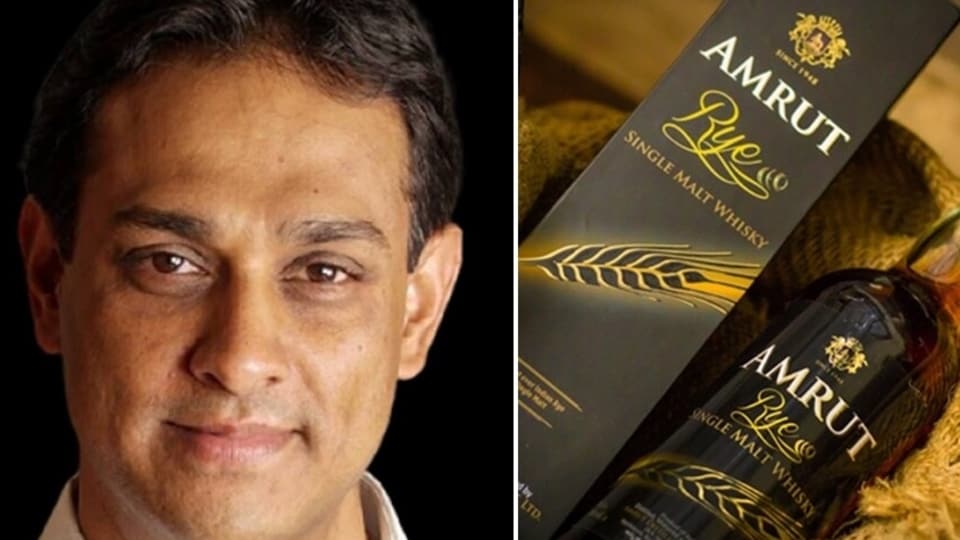
Amrut Distilleries turned 75 years last year. The company’s executive director Thrivikram G. Nikam in an interview looks back at the company’s long legacy.
Amrut Distilleries turned 75 years old late last year. The company began operations in 1948, supplying Indian Made Liquor to the military and the armed forces which still remain its major clients. It gradually started distilling its own brandy, rum, and whisky in the ensuing decades and has a prominent presence in the mass and premium segments, especially in South India. The distillery makes everything except tequila, and its portfolio of brands include the popular Old Port Deluxe Rum and Silver Cup Brandy. (Also read: Meet the new crop of India’s single malt whisky makers)
The company’s pioneering entry into the high margin Indian single malts space around 2004, though, puts it into a different orbit. Today, Amrut, which distills one million litres annually, is expanding capacity by 30% to meet the burgeoning demand for its single malts from both home and abroad, says the company’s executive director Thrivikram G. Nikam. The Bangalore-based company sells 58 lakh cases annually, of which premium single malt whisky accounts for about 120,000 cases. In this interview with Hindustan Times, Nikam looks back at the company’s long legacy, on the attributes that made Amrut’s malts stand out, and its new craft rums. Excerpts from an interview with Murali K Menon.
The last 20 years of Amrut Distilleries’ 75-year journey have been extraordinary. You have been part of it for a long time. How do you look back on it?
Indian single malt is a bonafide category now. It is recognised and respected and the fact that multinational companies are now launching their own Indian single malts is tremendously satisfying. It shows the kind of potential the category has. But 15 to 20 years ago, it was an uphill struggle to get the world to take a closer look at Indian single malt. The perception was that it was made from molasses, that it was not whisky. We were at the receiving end of a lot of sarcasm and snide remarks. A lot of credit for where Amrut is today has to go to my father-in-law (late N R Jagdale, former chairman and managing director). He was patient despite the lack of response initially and despite the money that was locked up into the single malt project. If it were not for his courage and conviction, we might not have had Amrut single malts, or maybe, even an Indian single malt category altogether. He literally created the Amrut Fusion, which accounts for two-thirds of our single malt whisky sales.
I’m also proud that besides being a pioneer, Amrut is also known for its innovation. Very few whisky makers have as many expressions as we do — we have some 45 at the moment — and we’ve done some bold experiments. The Amrut Spectrum series uses a barrel that is made with mixed staves from four different types of casks. The Naarangi is made using casks that have previously held olorosso sherry, matured wine and orange peel… I think it’s this inventiveness that marks us out. There are many good single malts out there, but I’m not sure if they have an entire legion of fans like ours. There is this Swede named Dennis Steckel who set up Amrut Fever Club in 2016 and goes about evangelising our whisky. He even came and visited us last year.
Many whisky experts say that the trajectory of the Indian whisky enthusiast’s journey has changed. Their first single malt whisky is no longer entry-level expressions from multinationals, but an Amrut, Paul John, or an Indri.
Yes, and more importantly, youngsters today have a lot of exposure to all kinds of spirits, not just whisky. They might start off in the world of spirits with a breezer, but the time taken to transition from a breezer, beer, or rum drinker into a premium whisky, and ultimately, single malt drinker has reduced a lot. Because of the high accessibility of different liquids, the evolution is happening much faster at the premium and luxury end. The awareness about spirits has also introduced an openness to try different whiskies. You might have the best brands in your bar, but you are also game to give a new brand a chance. With the proposed Free Trade Agreement with the UK, consumers will have more choice and prices of premium foreign whisky may come down by a certain extent. But while their sales may go up, it won’t be at the cost of a premium Indian product and that’s because the well-heeled want variety in their bars.
Cask prices, which have shot through the roof over the last couple of years, have put enormous pressure on Indian distillers. How is Amrut coping with it? Would an association with a multinational spirits maker helped in such a situation?
It is a very challenging situation for a privately held company like ours. Every year we need to add barrels and we are adding them now even as we speak. It will have an impact on us — not immediately but a couple of years down the line. But I’m hoping the cask prices will settle down by next year. Regarding the association with international spirit companies, we have had many expressions of interest. There have also been overtures from venture capitalists. Right now, we are just listening to what they have to say.
As more Indian single malt brands enter the market, there is this apprehension that a few of them might not be playing by the rules. What do you think needs to be done to protect the Indian single malt category?
I’m all for a collaborative approach to protect the Indian single malt category and ensure that the work done by companies such as ours is not diluted. We all have to come together to ensure standardisation and maintain quality levels. The Food and Safety Standards Authority of India has to be involved and there is also the need of an industry body which, along with experts in the field, can guide newer entrants and lay down rules. You don’t want a few players to besmirch an entire category. Secondly, we have to be careful when it comes to pricing. We should not be pricing our products cheaper than anyone else. Once you do that, you are compromising on various aspects of the whisky, from the ageing to the finishing. You might benefit from increased sales initially, but you’ll be categorised as cheap and you don’t want to go there again after all these years.
The craft rum scene is steadily picking up. What can we expect from Amrut?
We’ve always had the Two Indies, which has been doing steady numbers without any kind of marketing. It is a blend of Caribbean rum and jaggery-based rum. We are also working on the launch of Bella, our 100% jaggery rum. From an ingredients point of view, there is nothing quite like it. Work is also on a rhum-agricole style spirit.


