
 E-Paper



Deadheads hope to “make America grateful again”


 Prefer HTon Google


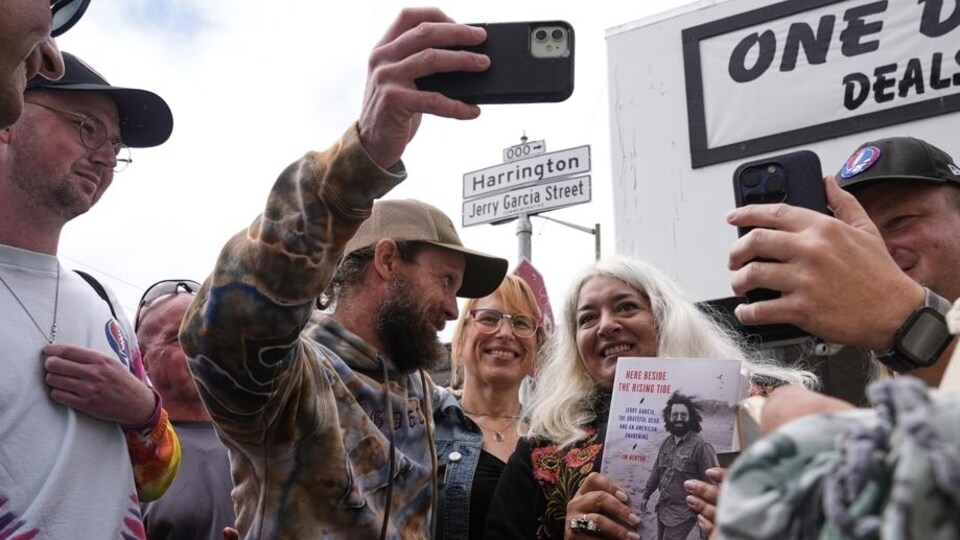
The band’s 60th anniversary concerts show how much San Francisco has changed
AN ARMY OF people in tie-dye descended on San Francisco. In the 1960s this would not have been remarkable. Young people thronged to the Haight-Ashbury neighbourhood in those days, tripping on LSD and fashioning a performance of their own disillusionment with America. But on August 1st in Golden Gate Park many of the hippies were getting on in years. Several men sporting rainbows or funky hats leaned on canes. They were there to celebrate 60 years of the Grateful Dead, a band formed in San Francisco that came to epitomise the counterculture of the ’60s. “We’re Deadheads but we’re not crazy people,” explains Mary Kay Williams, who travelled with her husband Greg from Pennsylvania. Greg chimes in: it’s about “making America grateful again”.
Many of the Grateful Dead are, well, dead. Jerry Garcia, the band’s beloved frontman and a hugely talented guitarist, died in 1995. So the trio of shows in Golden Gate Park were played by Dead & Company, which former band members created in 2015, adding a few younger musicians who can improvise as well as the old guard—and draw in new fans. “I’m a millennial so I’m into John Mayer,” says Maria, one of three new moms hanging out in the VIP area, referring to the guitarist and singer-songwriter popular in his own right.
The concerts are part of a plan from Daniel Lurie, the city’s new wealthy philanthropist mayor, to use live entertainment to help fix San Francisco’s brand, which has been tarred in recent years by public drug use and homelessness. Some of the city’s buses were covered in psychedelic colours and flowers for the occasion. Not all drugs are shunned, however. Every other person at the show seemed to be pinching a fat joint. As the city’s notorious fog settled over the park, billows of smoke thickened it.
The shows also provide a way to compare the Dead’s San Francisco to the city as it exists today. The tech elite who were perhaps once drawn to the city for its reputation for freethinking and disruption have helped create a world where everyone is staring at screens, transfixed by whatever X or Instagram post is going viral. The concert blended old and new. Patagonia vests, the sartorial choice of many techies, abounded. The Economist spotted at least one startup boss sauntering out of a private suite.
Politics were inescapable. Deadheads grumbled about Donald Trump, whose presidency, they say, is antithetical to their “be kind” ethos. Some counterculture scholars argue that Mr Trump’s election can be tied to the turbulence of that era. “Every single presidential election since the 1960s has been, in some way, a referendum on the ’60s—its impact or its meaning,” says Nicholas Meriwether, executive director of the Grateful Dead Studies Association, an independent academic outfit devoted to “advancing the scholarly study of the Grateful Dead and their associated contexts”.
To the uninitiated, the show felt like a ghostly gathering fuelled by nostalgia and weed. But for older attendees, the music helped them take a long, strange trip back to their youth. LizAnn and Scarlet, who preferred to use aliases (“Doesn’t everyone have one?”), met at a Grateful Dead show in 1982 and have been friends ever since. “Jerry [Garcia] travels on an astral plane and takes all of us with him,” says Scarlet. “It’s awesome.”


