E-Paper



Fright club: Check out an archive that untangles India’s vibrant ghost stories

 Prefer HTon Google


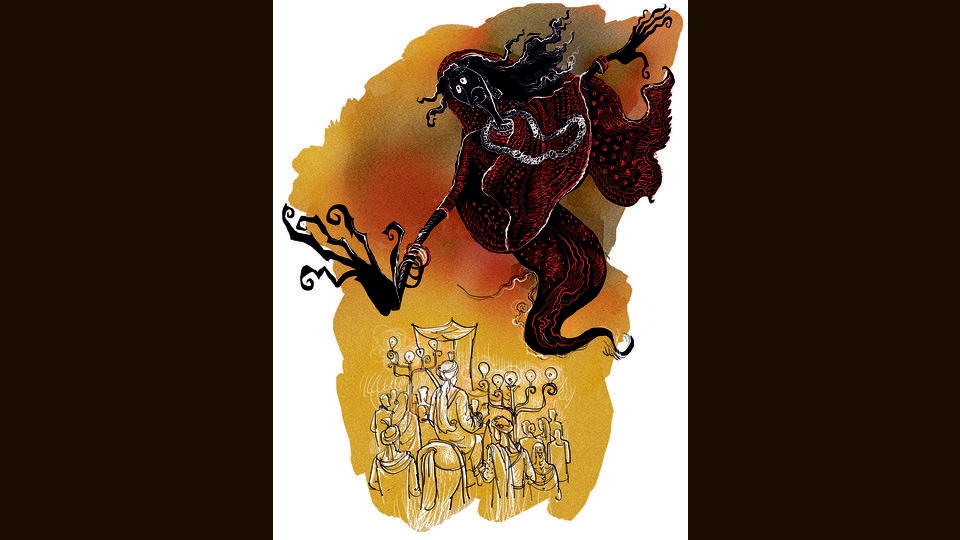
What do tales about spooks and spirits say about the communities in which they sprung up? The India Ghost Project traces roots in fear, power, anger.
Almost everyone has a ghost story to share in India, based on something they heard or saw, fear or believe.
In these shadow worlds dwell jealous djinns; hungry chudails (always, for some reason, with their feet turned backwards); manipulative nishi daks, calling out to people in the voice of a loved one; powerful brahmarakshasas, the restless spirits of deviant priests or scholars.
These are only the most familiar tropes. Every city and community evolves its own.
“There is something deeply social about ghost stories, a sense of community even in the sharing and borrowing of these tales,” says Azania Patel, 26, a researcher with a Master’s in public policy and South Asian studies from Oxford University, who is also a research fellow with the Chicago-based innovation lab Equitech Futures.

Why do our ghosts look the way they do? What determines which ones live on? What do they reveal about us? For five years, Patel has been studying the politics of fear, power and identity embedded in stories of the supernatural.
She and Diwakar Kishore, 36, a PhD scholar at London School of Economics, have now co-founded India Ghost Project, a research initiative that aims to create India’s first open-access digital archive of paranormal narratives.
Their website (indiaghostproject.com) aims to feature tales from across the country, interviews with the people who contributed them, and research material that represents the context in which each story emerged.
The project emerged from a ghost-story-swapping session.
In December 2020, Patel and Kishore had both flown into Mumbai from London, and were assigned rooms at a government-mandated quarantine hotel. “We had nothing to do and ended up bonding over stories about spirits and spooks,” Kishore says.
His stories, rooted in his childhood in Bihar, centred on religious belief, superstition and economic precarity. Patel’s were tales of construction labourers haunting the corridors of Mumbai slum tenements, or the high-rise buildings where they had worked and died.
The duo kept in touch and, in the months that followed, wondered why there was no large-scale analysis of such stories online. Given the scale of myth-making and belief, there ought to be a single platform where one could access such tales, see how they differed and how they were evolving.
In April, accordingly, India Ghost Project was launched, with a call sent out via social media, inviting people to share their favourite tales. The duo has received over 1,500 submissions from across 20 states so far, with more arriving weekly.
A team of volunteers is now working to verify, document and contextualise these accounts through sociological research, interviews with sources and members of their community, and site visits where possible.

In some cases, a story can help unravel a whole “ghost economy”, says Kishore. The presence of a “haunted” space, such as the Bhangarh Fort in Rajasthan, can either stigmatise an area or turn it into a tourist attraction. “We want to understand such economies,” he says.
Depending on who’s telling them, these can also be tales of memory and tribute, fear or resistance. Take a look.
Jharkhand: The chudail is both a witch-like cliche in tales originating here, and something of a feminist icon. In tales framed by men, the stories indicate, a chudail is the ghost of an unmarried and therefore discontented woman. She haunts families and may hurt them.
Among women, she is a sort of avenger in cases of domestic abuse. When a woman has been pushed beyond what she can endure, it is said that this spirit takes over and goads her to extremes of anger.
In an extension of this idea, there are stories told of an “anti-dowry ghost” in Jharkhand. She is said to be the spirit of a young woman who died by suicide after running away from her demanding groom-to-be. She is said to haunt wedding processions, seeking out grooms who behave as hers did. “She is said to appear on roads at night and disrupt celebrations,” Kishore says.

Mumbai: Here, stories have evolved of slumdwellers haunting sites they were evicted from, and the new buildings erected there.
Among these are a headless djinn that smokes a beedi from a gash-like opening in its stomach; a witch who lures children with sweetmeats that turn into maggots; an apparition that follows those who walk too close to a former burial ground; and the ghosts of construction workers who died on the job.
What’s interesting, Patel says, is that the original residents might move on, but the stories stay rooted in place. A tale about a tenement dweller haunting the corridors where he once lived becomes a story about a former tenement-dweller haunting the lift shaft of the high-rise that now stands on the site.
In this way, the fears and longings of the original residents live on, she says.
Ladakh: In local folklore, restless red-skinned spirits known as tsan are said to traverse village roads at sundown, in search of a home where they may stop for the night, or longer. “To prevent the spirits from choosing their home, families paint red-ochre signs on doors and walls, to ward them off, or place painted stones on the road as waymarkers, directing the spirits onward,” Patel says. When a family suffers a spell of illness or misfortune, it is said that perhaps their waymarkers had toppled or faded, and so the spirit settled upon their home.

Himachal Pradesh: In the mountains, they say one should never respond to a familiar face that appears unexpectedly in the mist, or the sound of a familiar voice. These are spirits trying to lead one off the trail. The encounters are likely linked to dipping oxygen levels and extreme fatigue, which can cause mild hallucinations, particularly in extreme climates. The ghost stories, then, serve as a way to pass on cautionary advice about not trusting everything one sees or hears in the Himalayas.
The eventual hope, says Patel, is that the archive will help people understand a little more about how belief systems are shaped, who they serve, how they reflect power structures and affect decision-making, and who they memorialise. “These things matter, because these stories shape what we believe,” says Kishore, “which in turn shapes our everyday lives.”