People who spend nearly half their day in an office need a flexible workspace that can adapt to different ways of working. But flexibility does not only mean having adjustable workstations. It also means creating a layout that helps employees stay focused, collaborate and work comfortably. For instance, placing workstations in quieter areas can help minimise distractions and support concentration. With changing work cultures, modern offices are increasingly expected to support multiple ways of working, from focused individual tasks and team collaboration to client meetings. This changing nature of work is also influencing how businesses approach office design. Instead of simply creating larger workplaces, organisations are looking for ways to make better, more efficient use of the space they already have.
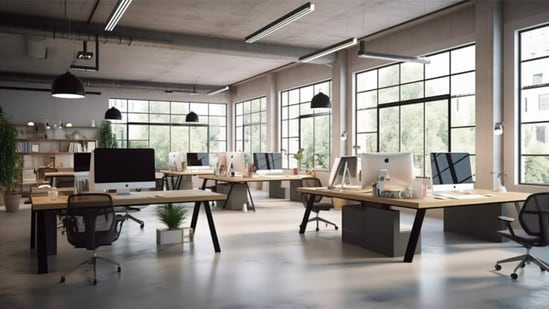
According to Ricky Wells, Global Head for Capital Development at The Executive Centre, the growing need for flexibility is transforming workplace design, with space-efficient and adaptable furniture emerging as an important part of this shift.
From fixed layouts to flexible workplaces
Traditional office layouts often assign a specific purpose to each area. Desks are meant for individual work, meeting rooms are reserved for discussions, and separate areas may be created for training or social interactions. However, such fixed arrangements may not always work for every employee. A meeting room, for example, may remain unused for several hours when no meetings are scheduled. Similarly, a large collaborative area may not always be occupied by an entire team. Flexible workplace design addresses this challenge by allowing spaces to serve different purposes at different times of the day.
“Space-efficient furniture” has become an important part of this office design transformation. Modular workstations, movable partitions, adjustable desks, standing desks, and multifunctional furniture can help offices adapt to changing requirements without compromising functionality or the appeal of the office interior design.
One space, multiple functions
The main advantage of a flexible workspace is its ability to adapt to changing needs. A meeting room can be turned into a training space when needed. A collaborative area can be rearranged to accommodate an entire team during an important project. Similarly, customer or community spaces can be adapted for presentations. This approach allows businesses to make better use of their existing space while creating a workplace that can adapt to different needs.
Why flexible workspace is becoming an investment strategy
Businesses today operate in an environment where teams can change in size, working patterns can evolve, and organisational priorities can shift. An office designed for one specific arrangement may therefore become less useful when those requirements change. Flexible workspace can help solve this challenge. Instead of carrying out major renovations every time an organisation needs to change its layout, businesses can reconfigure workstations, move partitions, or adjust spaces to suit their needs. This can potentially extend the useful life of workplace investments while making offices more adaptable to changes in team structures, occupancy, and business priorities. This creates a workplace that can change throughout the day while continuing to meet functional and aesthetic requirements.
Employees need different spaces too
Employees can also feel overwhelmed in a fast-paced office environment, making it important for workplace design to consider their different needs throughout the day. This can include spaces such as:
- Quiet zones: Help employees concentrate and minimise distractions.
- Collaborative spaces: Give teams room to discuss ideas and work together.
- Lounges: Encourage informal conversations and help employees build connections.
So, instead of expecting everyone to work at the same desk in the same way all day, a flexible office gives people different spaces depending on what they are doing.
The future of office design is about using space smarter
The biggest takeaway from Wells' inputs is that a smarter workplace does not necessarily mean a bigger workplace. Instead, businesses are looking at how effectively each part of an office can be used while keeping employees' needs in mind. This changes the way organisations approach office design. Rather than creating separate spaces for every activity, flexible workplaces can be designed to adapt as teams, work patterns and business requirements change.
The focus, therefore, is shifting from how much space an organisation has to how well it uses the space available. Flexible workplace and adaptable layouts can give businesses more room to respond to changing needs without constantly redesigning the entire workplace. As Wells suggests, flexibility is likely to remain an important part of future workplaces, where office spaces are designed around the changing needs of their users.
- What is flexible workplace design?
Flexible workplace design means creating office environments that can be easily adapted to different activities, team sizes and working styles.
- How can flexible furniture help save office space?
Flexible furniture allows the same area to serve multiple purposes.
- Why are quiet zones important in modern offices?
Quiet zones provide employees with spaces where they can focus on tasks that require concentration and minimal interruptions.
Disclaimer: At Hindustan Times, we help you stay up-to-date with the latest trends and products. Hindustan Times has an affiliate partnership, so we may get a part of the revenue when you make a purchase. We shall not be liable for any claim under applicable laws, including but not limited to the Consumer Protection Act, 2019, with respect to the products. The products listed in this article are in no particular order of priority.