
 E-Paper



Soul survivors: Sanjoy Narayan on the magic of a retro music movement

 Prefer HTon Google


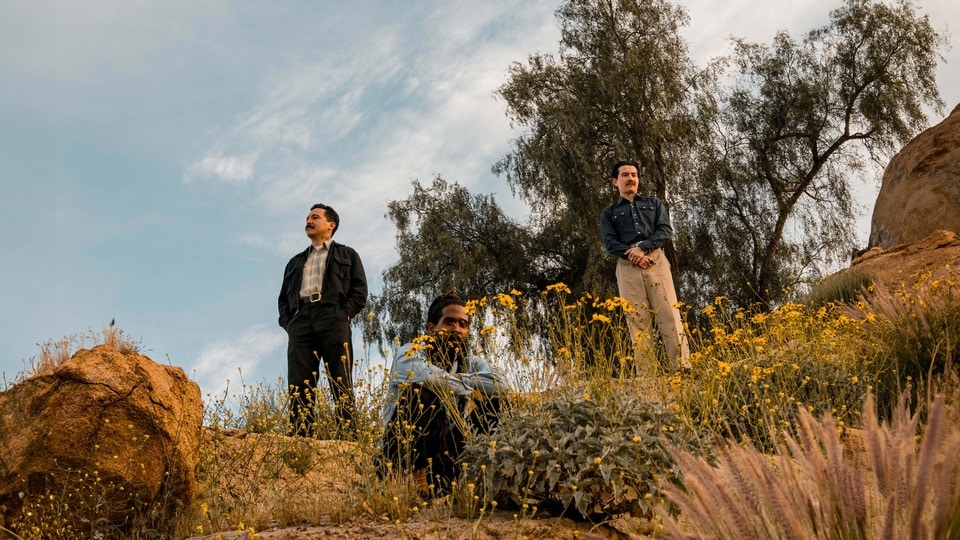
In a shift that is being called “anti-AI authenticity”, a new generation is rejecting digital perfection for analog warmth.
There is something delectably anachronistic about watching a young band in 2026 commit themselves to the sound of 1968. Yet that’s precisely what Thee Sacred Souls have been doing since they emerged from San Diego’s garage scene, and judging by their packed festival schedule — from California’s Old School Love Show in March to New York’s Governors Ball Music Festival in June and Birmingham’s Mostly Jazz Funk & Soul Festival in July — audiences can’t seem to get enough of it.
The trio’s “sweet soul” aesthetic isn’t pretentious pastiche or vintage cosplay. It is a deliberate rejection of the synthetic smoothness that dominates contemporary production, and a return to the crackle and hiss of analog tape, and the slight imperfections that remind you actual humans are making the music.
In an age when AI can generate a passable R&B track in seconds, Thee Sacred Souls are betting that listeners still crave something irrefutably human.
They are not alone in making this wager. The retro-soul movement has been quietly gathering momentum for years, but 2026 could feel like an inflection point. Walk into any independent record store in Los Angeles, London or any other global city — yes, vinyl shops are thriving, perhaps because of this very phenomenon — and one finds new releases that could easily be mistaken for long-lost recordings from Stax Records, the Memphis-based soul and R&B label founded in 1957, renowned for its raw, gritty sound and legendary artists such as Otis Redding, Isaac Hayes and Booker T & the MGs.
The movement has its own vocabulary now: “lowrider soul” for the cruise-ready grooves of Durand Jones & The Indications and Thee Sinseers, and “discodelic” for the psychedelic vocal harmonies of Say She She, whose current North American tour is drawing fervent crowds.
To understand why this revival resonates so powerfully, we must revisit soul’s extraordinary lineage. Birthed in the late 1950s from the sacred-secular crossroads where gospel met rhythm-and-blues, soul music was always about something larger than entertainment. It was a confluence of catharsis, politics and romance, compressed into songs that were three-minute miracles.
The genre’s architects remain towering figures. Aretha Franklin, the Queen of Soul, whose voice could shake buildings and electrify the mind. Sam Cooke, who brought gospel’s ecstatic yearning into the pop mainstream. Ray Charles, who essentially invented the genre by secularising his gospel roots. James Brown, the Godfather of Soul, whose rhythmic innovations would later beget funk and hip-hop. These weren’t just singers; they were cultural revolutionaries who transformed American music.
Soul’s golden age stretched from the late 1950s through the 1970s, producing a trove of riches: Marvin Gaye’s socially conscious masterpieces, Stevie Wonder’s genre-defying albums, Al Green’s sublime romanticism, Gladys Knight’s powerful narrative singing, Smokey Robinson’s poetic tenderness. The labels themselves — Motown, Stax, Atlantic — became synonymous with a sound and an aspiration. Even as soul evolved, spawning offshoots such as funk, disco and contemporary R&B, its influence echoed through artists ranging from Michael Jackson to Whitney Houston to Prince.
Which brings us back to 2026 and a crucial question: Why now? Why are young musicians who grew up with infinite digital possibilities choosing to work within the constraints of vintage recording techniques?
Part of the answer lies in a backlash that is being called “anti-AI authenticity”.
As synthetic music proliferates, often indistinguishable from human-made tracks, there is a growing hunger for the demonstrably “real”. The retro-soul artists aren’t only making music; they are making a statement about value, craft, and the irreplaceable nature of human expression. This is what we hear when Jalen Ngonda channels Motown’s melodic sophistication or Lady Wray delivers vocals that could have come straight from a 1972 Memphis studio.
The movement’s infrastructure is equally important. UK labels such as Expansion Records, whose Luxury Soul 2026 compilation was released to widespread acclaim on January 16, are curating and championing this sound with the fervour of true believers. Elsewhere, breakout artists such as EJ Jones and Molly Grace (the latter bringing a glitzy pop-funk sensibility) suggest the genre’s boundaries are fluid and inviting.
I expect this retro-soul scene will evolve in intriguing directions. Already, there is hybridisation. The rise of the sub-genre PluggnB (which merges ’90s R&B with trap) and discodelic soul suggests that pure retro will increasingly blend with contemporary elements. This should be viewed not as dilution but as adaptation, the natural evolution of any living musical tradition.
More significantly, there is a shift towards what might be called “real-world localisation”. After years of internet-driven music discovery, scenes are re-forming around physical spaces: record stores, small venues, neighbourhood clubs. Cities such as Los Angeles and London are becoming “soul hubs” where subcultures can incubate through face-to-face connection rather than via streaming platforms.
The retro-soul revival ultimately represents something larger than musical nostalgia. It is a referendum on how we want music to sound and feel in an age of infinite digital possibility. Thee Sacred Souls and their contemporaries are arguing, persuasively, that sometimes the most forward-thinking move is to look backward — not to live in the past, but to recover something essential that we have lost in our rush towards the future.
(To reach out, email feedback to sanjoy.narayan@gmail.com.The views expressed are personal)


