
 E-Paper



Sticky situation: Swetha Sivakumar on how Teflon caught on

 Prefer HTon Google


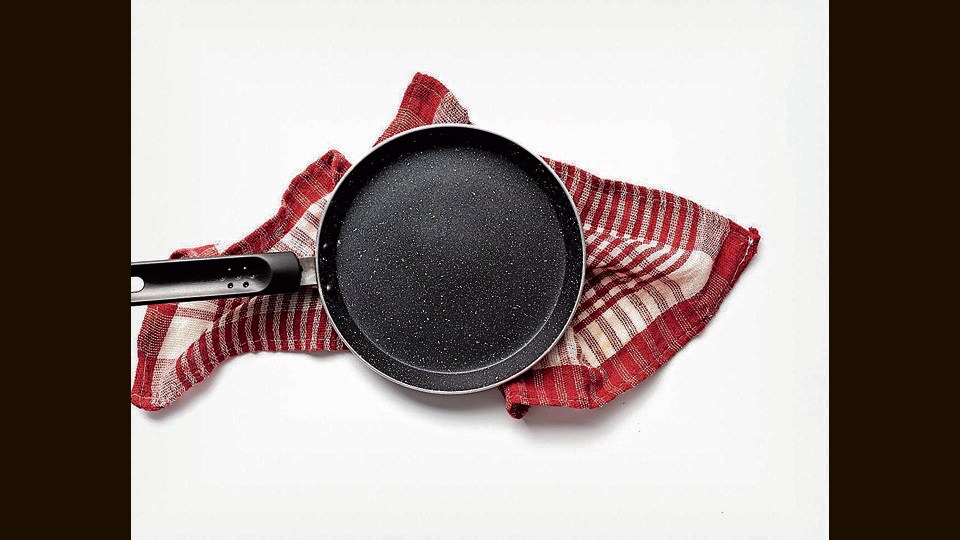
The non-stick material found its calling in cookware in the ’50s, but was also found to be releasing toxic fumes. Is it safe? Are there alternatives? Read on
In 1938, The DuPont Company hired a young chemist, Roy J Plunkett, to invent an efficient refrigerant. He accidentally invented a white, waxy substance instead. Plunkett was disappointed by the results. But he was curious about the new material he had created. It felt extremely slippery. It did not react with the harshest solvents, alcohols and even the most corrosive acids.
Even DuPont didn’t quite know what to do with it. The company did use it, during World War 2, to seal pipes carrying some of the world’s most corrosive acids as part of the development of an atomic bomb. It was not even remotely associated with cookware until 1956, when a French engineer, Marc Grigoire, decided to bond the polymer to an aluminium pan. Plunkett’s material is what we now know as Teflon (chemically, polytetrafluoroethylene or PTFE). Grigoire called his invention Tefal, a blend of the words Teflon and aluminium. The non-stick revolution had begun.
There are two reasons Teflon has been a hit in the kitchen. It’s slippery. On metal pans, the starches and protein in foods bind to the surface as they heat up. But a coating of Teflon makes the carbon-flourine bonds so strong that nothing else gets a chance to stick: not water, not oil, not starches or proteins. The food can only slide around. A Teflon layer also makes it easy to brown foods with less oil and makes pans easy to clean.
The other reason for its popularity is that it is non-reactive. One of the biggest downsides of most metals is that it reacts to acids. Aluminium and iron, the metal used in pans, leach in the presence of acid (tomatoes, tamarind, kokum, etc). Teflon has no such concerns. Even if you accidentally digest pieces of it, your stomach acids won’t be able to break it down. It will pass through unaffected.
But the slippery material has a dark side. When overheated to at 280 degrees Celsius, it emits toxic fumes. There have been documented cases of pet birds inhaling the fumes and dying. Humans can get polymer fume fever, a condition similar to flu, if they inhale these fumes. Leave the pan on heat unattended even for two minutes and Teflon will start to break down, finds one study by The Good Housekeeping Institute.
Teflon is also no friend of the environment. Until 2013, DuPont and other manufacturers used a chemical called PFOA (Perfluorooctanoic Acid) to manufacture Teflon. PFOAs are part of a large group of man-made chemicals that can last virtually forever in the environment. Their presence in the human body impacts the endocrine system, fertility and immune system.
Today, most non-stick cookware manufacturers claim that they do not use PFOAs. Instead, they use a substance called GenX or PFBS to manufacture Teflon. Now, will GenX create similar or worse problems for the environment like PFOAs? We do not yet know. We could be seeing a phenomenon called “regrettable substitution”, in which you replace one known, toxic chemical for another without knowing the long-term effects of the new one. It took several decades before the truth about PFOA came out. Given the nature of Teflon (highly inert and long lasting) and the family of chemicals it is made from, it is likely that we may see problems decades into the future.
So many industries use Teflon for making products like raincoats, shaving cream, fast food wrappers, dental floss, shoes, waterproof mascara etc. In the kitchen however, we have so many other cookware options to choose from. Cast iron can be seasoned to be smooth over time. Metal cookware like stainless steel or anodized aluminium do not react to acids. Ceramic cookware is staging a big comeback. Given all these better earth friendly options, and if your budget permits it, should you still stock up on non-stick cookware?
(To reach Swetha Sivakumar with questions or feedback, email upgrademyfood@gmail.com)


