
 E-Paper



Tibetan Mustang: Read an excerpt from a photobook on a cultural renaissance in Nepal

 Prefer HTon Google


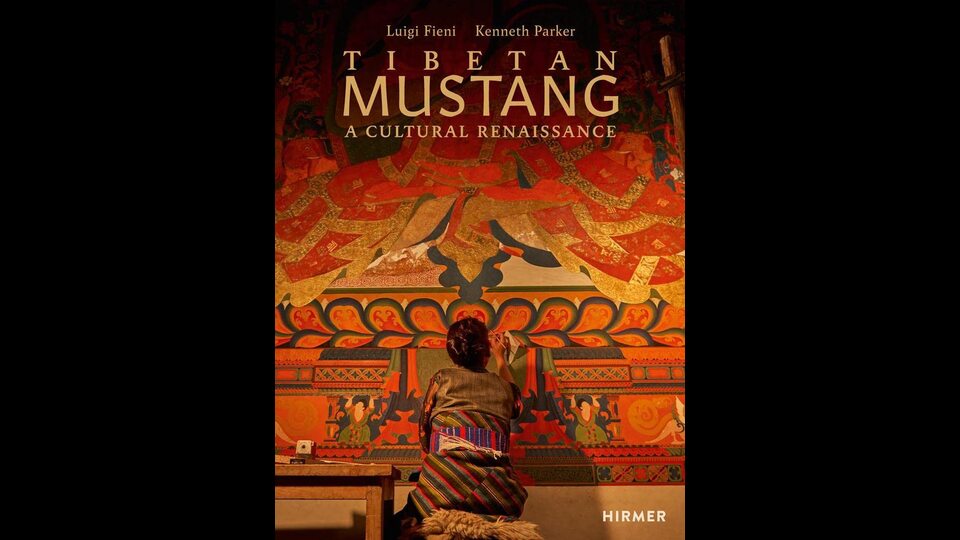
How hard was it to restore the art in the ancient monasteries of Lo Manthang, a remote walled city in the Himalayas? Take a look.
Mustang Landscape
In the late 1990s Lo Monthang village, set at an average altitude of 3,850 meters, was disconnected from modern civilization. The village lacked basic forms of communication (e.g. telephone and Internet), and there was no electricity. Three days by horseback were necessary to reach Lo Monthang from the nearest airport, Jomsom, while walking could take nearly a week.
To work in such a remote site required very meticulous planning for each season’s work. The amount and the selection of needed materials had to be chosen judiciously since it was not possible to purchase additional supplies on site. Besides, because of the lack of telephones, Internet and a feasible way to ship whatever was needed, it was impossible to get anything from Europe or even Nepal before the end of each season.
Since there was no electricity, it was crucial to carry more than an electric generator, enough fuel, and spare parts to provide adequate lighting in the dark worksites throughout the summer. From a technical point of view, it was challenging to have enough power for the professional lights to produce the right color temperature in order to avoid as much as possible metamerism problems in the retouching process.
One more challenging task was the transportation of bulky or fragile equipment on site, since the only way to deliver these items was on horseback or by porters. Chemicals, consolidators, generators and light bulbs had to be packed extremely well to prevent damaging or breaking key materials that could not be replaced on site.
Practical solutions were devised on site even for the simplest of operations...What would be very easy to buy ready-made in the Western world became a challenge to be made ex-novo in the Himalayan environment.
Material storage during the cold season was a serious concern as well: because of very low temperatures, Himalayan winters could have affected the chemical, physical and mechanical properties of some conservation materials. Thus, the amount of required chemicals had to be carefully estimated in order not to leave any leftovers on site. When it was not possible, a storage system was implemented to protect the chemicals in a warmer environment by wrapping them in several layers of blankets during the cold season.
Furthermore, given the extreme temperatures of the winter months, it was possible to run the project only between spring and fall.
Monlam Chenmo Puja
On August 8, 2018, HH the 42nd Sakya Trizin held the first Monlam Chenmo Puja in Tubchen Monastery after ages of oblivion. Thousands of people gathered from all over Mustang to listen to his teachings and to pray together with their religious leader. For the occasion all scaffoldings were dismantled—though Restoration Phase II was still ongoing—and the whole assembly hall was packed with monks and all members of the royal family. There was not a single square centimeter without a praying soul in it. Villagers were all dressed up in their best traditional attires, and an endless procession queued for hours to get a blessing from HH the 42nd Sakya Trizin.
Witnessing those moments was like a jump back in time. The sight and the atmosphere in front of my eyes appeared as if they were coming out from a movie trying to depict how a religious ceremony would be held in the 15th century. On August 8, 2018, the Mustang conservation project received the best reward ever conceivable. There were no medals, no garlands or gold. There were just believers. Enlightening a 15th-century monastery once again.
(Excerpted with permission from Tibetan Mustang: A Cultural Renaissance by Luigi Fieni and Amy Heller, with photographs by Kenneth Parker, published by Hirmer; 2023)


