
 E-Paper



Trapped between two wars: The art of the Lost Generation

 Prefer HTon Google


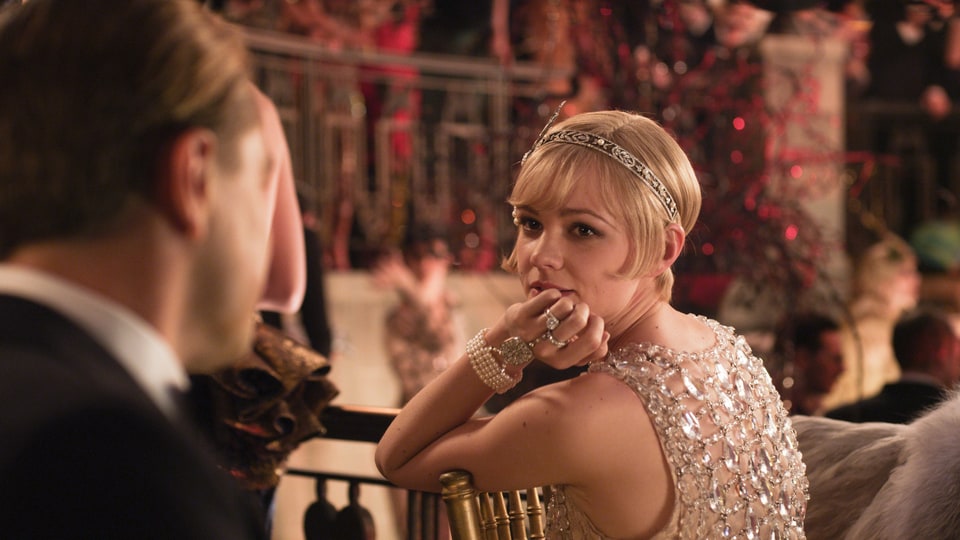
It’s been 100 years since the publication of The Great Gatsby. But there was so much else being birthed in this era too. Take a look.
Sometime in the early 1920s, Gertrude Stein took her ancient Ford Model T from her home in Paris’s Rue de Fleurus to a local mechanic. The car had been having starting trouble, and the young mechanic assigned to it was making heavy weather of it.
Eventually, Stein deemed his efforts unsatisfactory and complained to his boss, who berated the boy, saying: “You are all a generation perdue.”
When Ernest Hemingway, a friend, next visited her home, she applied it to him and others of his generation. “All of you young people who served in the war. You are a lost generation,” she said.
Hemingway, who understood the value of phrases like that, used it as an epigraph for his first novel, The Sun Also Rises (1926), which follows the lives of a group of American and British expatriates in Paris in the mid-1920s, rootless people wounded physically and emotionally by the Great War, looking for, and not always finding, an anchor.
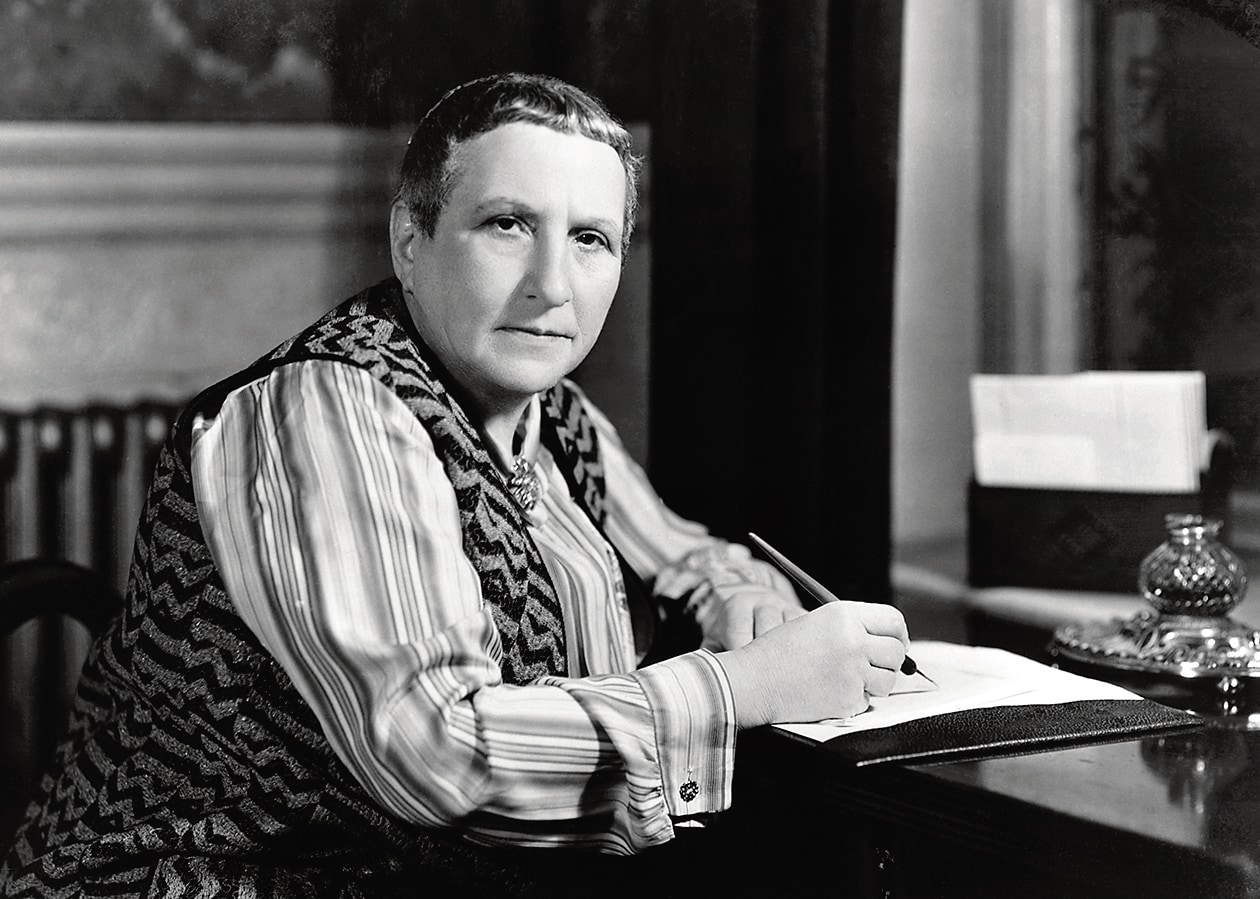
The expatriates in Paris at the time, incidentally, made up a sort of who’s who of the cultural icons of the first half of the 20th century. The poet Ezra Pound moved to Paris in 1921. Writer Ford Madox Ford in 1922. Novelist John Dos Passos in 1919. James Joyce came to Paris intending a two-day layover en route to London, and ended up staying until France fell to the Germans in World War 2.
Sylvia Beach, the daughter of American missionaries, moved to Paris in 1917, and set up Shakespeare and Company, one of the world’s most famous bookshops. F Scott Fitzgerald and his wife Zelda Fitzgerald visited in 1921 and ’24. (A year after that second visit, he would release his best-known work, set in this era, but in New York: The Great Gatsby. It is 100 years old this year.)
Back to Paris, in the wake of the Great War, this was a city where people caught fish in the Seine for dinner, and toilets with aluminium containers were still emptied into cesspools that were cleared by horse-drawn wagons.
But it was also the home of Picasso, Modigliani, Chagall and, on occasion, Salvador Dali. It was the city of Sergei Diaghilev’s Ballets Russes, of Coco Chanel and the singer Josephine Baker. It was a world of people who had been in the war young, were trying to build their own anchors — through art and sculpture and dance, stories and fashion and architecture — and didn’t yet know another war was coming.
***
The rootlessness was not restricted to Paris. In England, in 1922, TE Lawrence, better known as Lawrence of Arabia, dissatisfied with life as a civil servant, applied to the Royal Air Force under the name TE Ross and was initially rejected, before people like Winston Churchill recommended he be accepted.
The poet Robert Graves suffered so badly from shell shock that even the smell of flowers reminded him of the gas warfare attacks he had suffered as a soldier. Siegfried Sassoon, awarded the Military Cross, one of the war’s highest decorations, became a poet and a conscientious objector. Wilfred Owen, generally considered one of the great poets of the war, was killed a week before its end, aged 25.
What passing-bells for these who die as cattle? /
Only the monstrous anger of the guns. /
Only the stuttering rifles’ rapid rattle /
Can patter out their hasty orisons. /
No mockeries for them; no prayers nor bells, /
Nor any voice of mourning save the choirs, — /
The shrill, demented choirs of wailing shells; /
And bugles calling for them from sad shires…
he wrote, in Anthem for Doomed Youth (1917).
***
This was also the beginning of a new world for the Western woman.
First, with the men off in the battlefields, they took up jobs in factories. Many lost their menfolk and breadwinners; the lucky among them received war-widow pensions, but others struggled. More women were forced to seek permanent employment.
This, directly and indirectly, contributed to the movement for women’s suffrage, and the right to vote was finally extended to them.
Back to Stein’s phrase, “Lost Generation” soon began to be used beyond its original context of her inner circle of artists, poets and writers who flocked to Paris in the 1920s. It became the tag for anyone born between 1883 and 1900.
Franz Kafka (1883-1924) would fit the bill, even though he never fought in the war, having been found medically unfit. The Trial (1925) and The Castle (1926), his best-known novels, deal with the sense of despair, alienation and fruitless search for meaning that would come to define the young adults of this age.
But what about Hugh Lofting of Doctor Dolittle fame, or PG Wodehouse? Well, there never has been just one kind of art.
This is a period that saw the rise, for instance, of the crime novel, with people essentially binge-reading the work of great British pulp-fiction writers such as Sax Rohmer (a former soldier and creator of the Chinese criminal mastermind Fu Manchu); Hermann McNeile aka Sapper of the Bulldog Drummond adventures (who was still serving when he began to write these tales, and would inspire authors such as Ian Fleming and Alistair MacLean); Dornford Yates, who alternated been funny stories of upper-class Englishmen dealing with declining fortunes, and hard-edged spy thrillers, with characters that moved between genres.
It wasn’t just the men. Three of the four Queens of Crime who dominated the Golden Age of Mystery: Agatha Christie and Dorothy L Sayers in England, and Ngaio Marsh in New Zealand, were from this cohort. (The fourth, Margery Allingham, was born in 1904.)
Christie served as a nurse with the Red Cross during World War 1, which left her with a vast knowledge of poisons (and a penchant for murderous nurses). Sayers, credited with popularising the statement “It pays to advertise”, also wrote the original advertising jingle for Guinness. Marsh toured as a stage actress during the war and would use her knowledge of stagecraft to great effect in her Roderick Alleyn books.
***
Across the Atlantic, other Lost Generation authors were redefining the crime novel. Dashiell Hammett, an ambulance driver in the war, would define the “hard-boiled” detective novel; a genre launched by Carroll John Daly’s Three Gun Terry (1923). Raymond Chandler (1888-1959) would take up Hammett’s mantle with gritty, hard edged crime thrillers such as The Big Sleep and Farewell, My Lovely.
The Lost Generation changed children’s literature as well. The Australian-British Pamela Lyndon Travers created Mary Poppins in 1934. Antoine de Saint-Exupery’s The Little Prince (1943) remains one of the bestselling books of all time. The Englishwoman Richmal Crompton created that irrepressible schoolboy William Brown in 1922. Air Force pilot WE Johns (also the man who rejected Lawrence’s application to the RAF) created Biggles. And there was, of course, Enid Blyton (1897-1968).
***
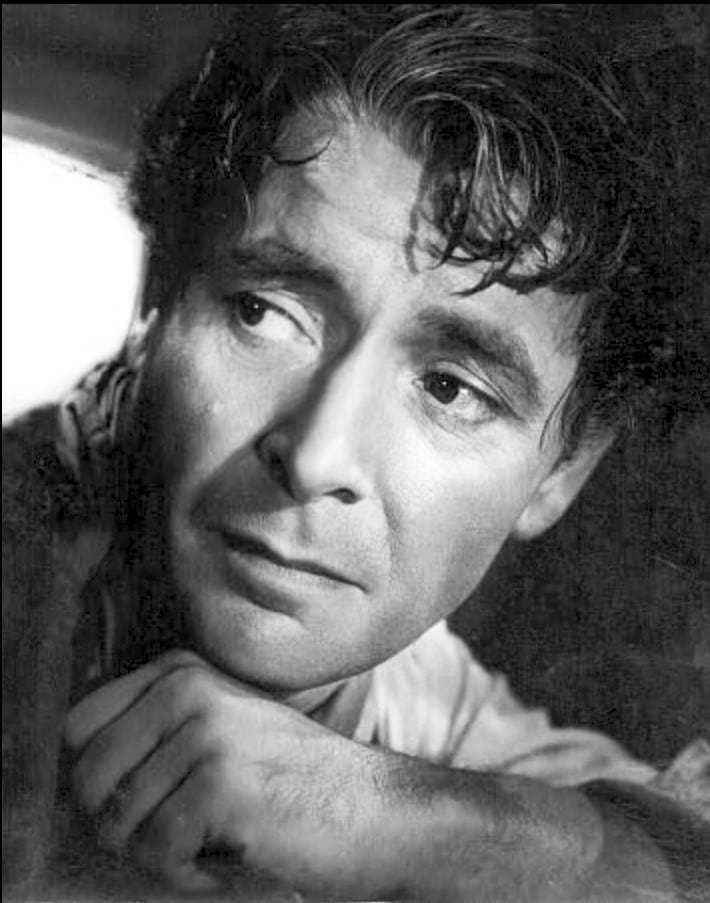
World War 1 made Hollywood what it is today. The destruction of European cinema in the war saw a wave of actors and directors make their way to America. There were so many movies being made in the US after the war — 80% of all movies made worldwide — that the studio system evolved, as did the producers who would dominate the industry’s golden age: Louis B Mayer, Irving Thalberg, Harry Cohn, Jack L Warner.
All the great silent comedians belonged to this generation: Charlie Chaplin, Buster Keaton, Stan Laurel, Oliver Hardy, and Chico, Harpo and Groucho Marx. So did many of the great directors who would transform cinema: Ernst Lubitsch, Fritz Lang, George Cukor, Howard Hawks, Alfred Hitchcock, Jean Renoir, Rene Clair.
And, of course, there were the actors.
The South African-born Basil Rathbone crawled to the German side, across no-man’s land, disguised as, of all things, a tree, to recover military intelligence that would earn him the Military Cross. He would go on to epitomise sneering British villainy in swashbuckling films, and is still considered one of the best portrayers of Sherlock Holmes.
Claude Rains, who made every movie better just by being in it, and whose performance in Casablanca is still remembered, lost almost all the vision in one eye as a result of a gas attack.
Within months of the war breaking out, Ronald Colman (A Tale of Two Cities, Prisoner of Zenda) had his leg shattered by a mortar shell, forcing him to crawl back to safety. The experience left him with an air of melancholic reserve that worked well for the characters created by another Lost Generation Englishman: James Hilton. His novels Lost Horizon (1933) and Random Harvest (1941) both featured world-weary protagonists scarred by the war. Colman played both men in the film adaptations.
“It was the war that made an actor out of me,” he would later say. “I wasn’t my own man anymore. We went out. Strangers came back.”
(K Narayanan writes on films, videogames, books and occasionally technology)


