
 E-Paper



Wild Women: Read an excerpt from a collection of sacred poetry by women

 Prefer HTon Google


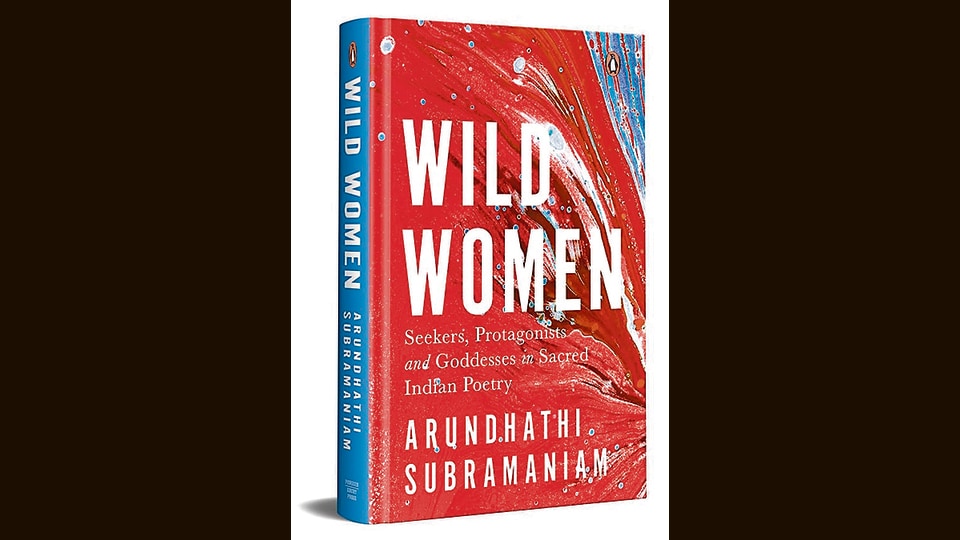
A work by Rupa Bhavani, a poet-saint from Kashmir, as featured in Wild Women: Seekers, Protagonists and Goddesses in Sacred Indian Poetry.
RUPA BHAVANI
[17th - 18th century]
One of Kashmir’s best-known saints, Rupa Bhavani, like Lal Ded before her, walked out of a marriage, charted her own course and refused to submit to socially-assigned roles. Unlike Lal Ded’s language that was part of an oral tradition, Rupa Bhavani’s poetry was written, and ‘remained,’ says translator Neerja Matto, ‘the possession of the Kashmiri Pandit intellectual elite.’ There is a certain gravitas, or what Mattoo terms ‘a brooding intellectuality’, about her work, making her not merely a mystic but an obviously scholarly and culturally refined woman of letters.
Rupa Bhavani was spiritually inclined from an early age. Born into a learned Kashmiri brahmin family, she seems to have grown up in an ethos that offered her exposure to Vedanta, Kashmiri Shaivism and Sufism. She married at age seven, and after an unhappy marriage, gave up the householder life and returned to her father’s home where she continued her spiritual exploration uninterrupted. Her father was not merely supportive, but was the first to acknowledge her attainments. Like Lal Ded before her, she did not remain within her home for very long. She soon became an itinerant, wandering the countryside, entering into long spells of meditative absorption, her poems mapping the subtle aspects of her yogic journey.
She had her own loyal following that regarded in her lifetime as an incarnation of goddess Bhavani. ‘The springs and secret grottoes associated with her mystic experiences are well-known to Kashmiris who venerate them as shrines’ says Mattoo. Conversant with Sanskrit, the language of Hindu scripture, and classic literature in Persian, the official language, Rupa Bhavani was recognized by some of the major Hindu and Sufi male mystics of her time with whom she seems to have had conversations on an equal footing. These included Rishi Peer, Mohammad Sadiq Qalandar and Baba Asaruddin Quadiri. Her enigmatic poetry (composed in a mix of old Kashmiri, Sanskrit and Persian) was never deemed popular, but has had a devoted readership of literary initiates over the centuries.
I have not bowed, I never will
The one who listens
Is resplendent, within me
That is worship, that’s what I do
[translated by Neerja Mattoo]
The ever-alert plays and dances as others do
Decks herself, good clothes she wears
Ever-conscious, herself is perfect
On Shiva’s path, becomes Shiva Himself
[translated by Neerja Mattoo]
(Excerpted with permission from Wild Women: Seekers, Protagonists and Goddesses in Sacred Indian Poetry, edited and introduced by Arundhathi Subramaniam, published by Penguin Random House India; 2024)


