
 E-Paper



Holi 2022: History, significance, date, time, celebrations and all you need to know about the festival of colours

 Prefer HTon Google


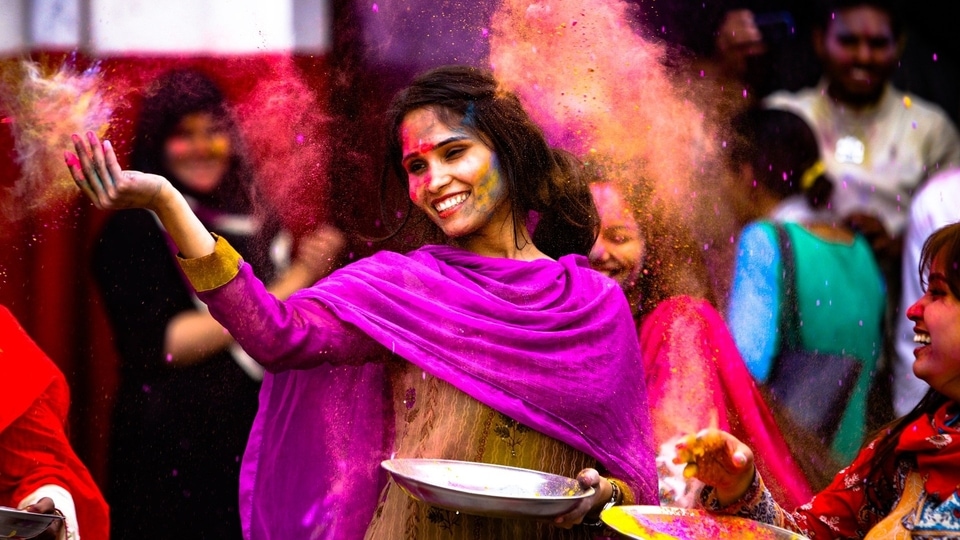
Happy Holi 2022: This year, Holi falls on March 18. The festival is celebrated with much pomp. Read on to know all about the history, significance, celebrations, and date.
Holi, also known as the festival of colours, is a religious occasion celebrated with much pomp. It is considered the second biggest Hindu festival after Diwali, and the celebrations last for two days - Choti Holi or Holika Dahan and Dhulandi or Rangwali Holi. It marks the celebration of the victory of good over evil. The festival falls in the Hindu calendar month of Phalgun, which usually falls between February and March. On this day, people play with colours, water, flowers and more, children and adults smear Gulal on each other, and people seek the blessings of their elders. People visit their friends and relatives and also relish Holi delicacies like gujiya, thandai and more after playing Holi.
Holi Date:
This year, Holi falls on March 18, and Holika Dahan falls on the evening of March 17. According to Drik Panchang, Purnima tithi begins at 1:29 pm on March 17 and ends at 12:47 pm on March 18. The Holika Dahan tithi will last from 9:06 pm to 10:16 pm on March 17.
ALSO READ | Holi 2022: How to keep your pets safe during celebrations
Holi 2022 Significance And History:
Holi is a celebration of the divine love between Lord Krishna and Radha. According to mythology, Lord Krishna was of a dark complexion and used to complain to his mother, Yashoda. Additionally, Radha was very fair, and Krishna used to be anxious if she would accept him despite the contrast in their complexion. So one day, Yashoda playfully suggested that Lord Krishna should smear Radha's face with colours to remove the difference in their complexion. Krishna followed his mother's advice and smeared Radha's face. And that is how Holi celebrations began all over the country. This is why the festival is played with much pomp in Mathura and Vrindavan. It is also a harvest festival and marks the arrival of spring and the end of winter.
ALSO READ | Holi 2022: How to protect your eyes from colour? Expert offers insights
Another legend associated with Holi is of demon king Hiranyakashipu, his son Prahalad - a devotee of Lord Vishnu, and his demoness aunt, Holika. According to Hindu mythology, Hiranyakashipu was blessed with a boon that he could not be killed by either a man or any animal. He wanted people to worship him. However, when his son became a devotee of Lord Vishnu and refused to worship Hiranyakashipu, he asked his sister Holika to kill him by sitting on a pyre. When Holika sat on the pyre, she donned her flame-shielding shawl and sat Prahlad on her lap. However, Prahlad began praying to Vishnu, who summoned a gust of wind that blew the shawl off Holika and onto Prahlad, saving him and letting her burn to death. This is why a day before Holi, Holika Dahan is celebrated.
After that, Lord Vishnu took the avatar of Narasimha, which was half human and half lion, and killed the demon king. That is why Holi is also known as the day when good wins over evil.
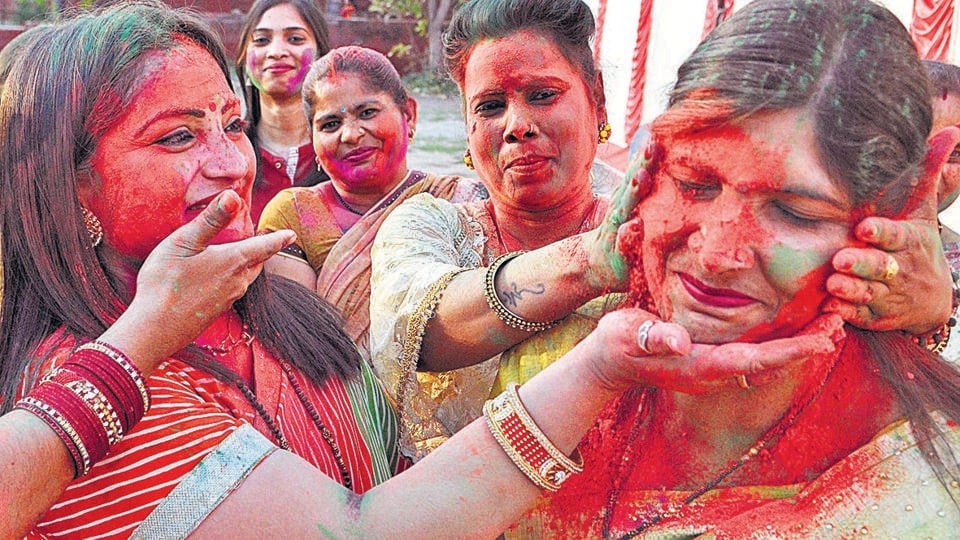
Holi Celebrations:
Holi celebrations begin with Holika Dahan, as people celebrate by lighting a bonfire to signify the victory of good over evil. On the next day, people wake up early in the morning to play with colours, also known as Gulal. They get together with friends and family and smear each other's faces with colours. Children fill balloons and toy guns with water and play with their friends. People also relish sweet delicacies and thandai specially prepared for the festival with their loved ones.
Holi is celebrated in more or less the same manner throughout the country. However, some states enjoy this festival in a slightly different way. For instance, in Braj regions - Mathura, Vrindavan, Gowardhan, Gokul, Nandagaon and Barsana - people celebrate Lathmar Holi where women hit men with lath or sticks while they try to shield themselves. Additionally, Phoolwali Holi in Vrindavan is also celebrated with much pomp. Devotees and priests gather at Banke Bihari Temple and throw flowers at each other.


