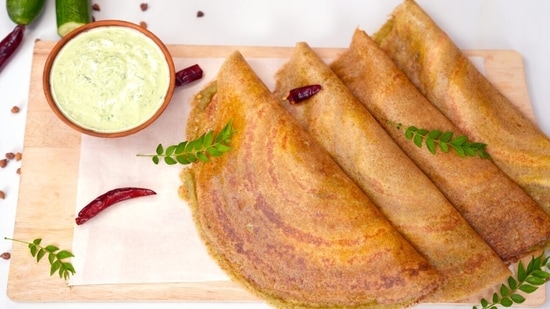
Dosa is an absolute delight to eat. Its golden crispness is paired with the savoury flavours of sambar, coconut chutney and tomato chutney, creating an explosion of flavours in every bite. But before you can relish it, one common cooking problem may leave your dosa in a tattered mess: the batter sticking stubbornly to the pan. As you try to flip or lift it, the delicate dosa may tear apart. Fortunately, a few corrective measures can prevent this kitchen mishap.
ALSO READ: Food safety experts reveal 10 foods they avoid because of foodborne illness risks
We asked executive chef Varun Parashar of The Leela Palace, Jaipur, to address some common questions home cooks may have about dosa, from why it sticks to the pan and how to prepare the perfect batter.
Why does dosa stick to the pan?
It can be frustrating to see your dosa stick to the pan, with only torn scraps coming off when you try to flip it. To fix the problem, you need to identify where you are going wrong in the prep.
According to the chef, dosa usually sticks for three reasons: an improperly seasoned pan, an incorrect cooking temperature or poorly fermented batter.
The amount of oil used and the condition of the pan should also be looked into: “Excess oil, residue from previous batches or a non-stick pan that's beginning to wear out can also cause sticking,” he said.
{{/usCountry}}The amount of oil used and the condition of the pan should also be looked into: “Excess oil, residue from previous batches or a non-stick pan that's beginning to wear out can also cause sticking,” he said.
{{/usCountry}}So, what should you focus on to achieve a perfectly golden dosa? Varun simplified, “The key lies in balancing batter consistency, fermentation and pan temperature; when all three are right, the dosa releases naturally and develops its signature golden, crisp texture.”
What are some tips to ensure dosa does not stick to the pan?
How can you ensure your dosa does not stick? Some techniques can determine if your dosa is going to lift neatly or not. As per the chef, here are some tips that provide the best results:
- Use a well-seasoned cast-iron tawa for the best results.
- Make sure the pan's surface is clean, evenly heated and lightly greased before cooking.
- Heat the pan evenly before pouring the batter. If the pan is too hot, the batter sets instantly and sticks; if it's too cold, the dosa won't spread evenly.
- After each dosa, lightly wipe the surface with a damp cloth before pouring the next ladle of batter to maintain the ideal temperature.
How do you make the perfect dosa batter?
A crisp dosa begins with how well you prepare the batter, from the proportion of ingredients and grinding method to the fermentation time. All these help to determine how easily the batter spreads on the pan and the texture the dosa develops.
“A great dosa begins with a well-balanced batter. Traditionally, use a ratio of 3 parts rice to 1 part urad dal, with a small quantity of fenugreek seeds. Soak, grind separately to a smooth consistency, combine and allow it to ferment naturally for 8–12 hours, depending on the climate. A well-fermented batter should be light, airy and slightly tangy, producing dosas that are crisp on the outside while remaining delicate within,” Chef Varun described how to make the perfect batter.
A properly fermented batter will ensure your dosa is crisp without being too hard.