
 E-Paper



A Moonshot Won’t Stop Cancer


 Prefer HTon Google


The best approach to conquering the illness is through small-scale, adaptive, individualized initiatives.
In June, I was diagnosed with stage four cancer.
This deepened my loathing for an affliction that stole my father and grandmother—an animosity millions of other people share. When citizens feel strongly about something, politicians will try to capitalize on it. They initiate wars. High-tech crusades. Megaspending. Moonshots. There is an instinct to crusade against things we abhor.
So in 1971 President Richard Nixon announced a “war on cancer” that aimed to eradicate the disease as a major cause of death. Later the National Cancer Institute in Washington proposed a crash effort to “eliminate the suffering and death from cancer” by 2015. In 2009 Barack Obama trumpeted an even more aggressive “war against cancer,” with National Institutes of Health Director Francis Collins promising a “quantum leap” in progress. In 2022 Joe Biden further ratcheted up the rhetoric, launching a federal “moonshot” to “eliminate cancer as we know it.”
But grandiose claims from politicians and scientists about cures, breakthroughs and quantum leaps haven’t conquered cancer. Improvements in survival rates over the last 50 years have been tepid.
Patients like me appreciate the tools that have become available since my father was treated a generation ago. But the record is clear: Moonshots won’t banish cancer.
There are reasons for this. Cancer isn’t monolithic, it has hundreds of variations. It weighs on different people in different ways. Therapies must be personalized and changed as the disease mutates. Cancer is best mastered by small-scale, adaptive, individualized initiatives.
This matches a kind of iron rule that applies across many aspects of human endeavor: Thousands of little dispersed, improvised, practical solutions will generally cumulate into something much more effective than a single master plan.
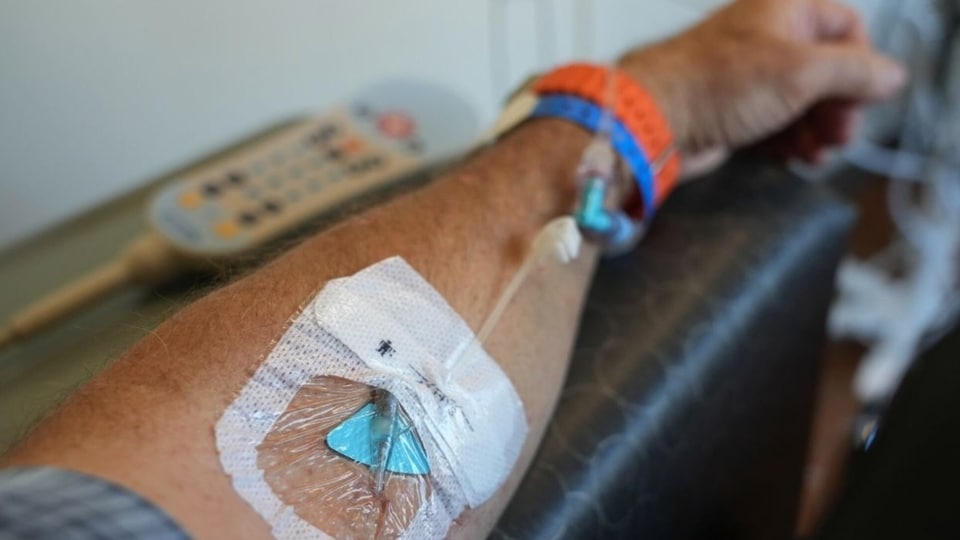
I’m currently taking three major drugs in an attempt to regain control of my body. Such chemotherapy and immunotherapy compounds are big, sharp tools. Some of them are fairly new products of medical research, others have been in use for decades. I am grateful for them, but they are only the beginning of my treatment.
For each of these megamedicines that get injected into my veins I receive roughly 10 more humble therapies that are just as vital. Countercompounds that soften harmful side effects of major drugs. Common vitamins that are needed for the medicines to take hold. Antinausea medicines without which my body would refuse the monthly infusions. Steroids that reduce inflammation and suppress malignant growths. Substances that prevent the immune system from being shut down. A regular shot to strengthen bones. Dental care to prevent the bone drug from destroying my jaw. Exercises and blood thinners so vein clots won’t bring treatment to a halt. Carefully evolved nursing techniques that administer the right elements at the right time. Most of these have been slowly, locally worked out by caregivers coping with immediate individual needs.
Human touches are at least as crucial as technical tools: careful listening by medical practitioners, practical help from kind and experienced nurses, the spiritual boosts that help patients keep their head above water during the miseries of chemo. Without these unflashy elements, all the expensive supermedicines and genetic tests and immunotherapies in the world won’t succeed.
Intensive cancer treatment doesn’t feel like a space journey. It feels as if you’re in a beehive, or an anthill. Workers are engaged in small acts, none of them dramatic, that are productive when aggregated together.
Medicine is no different from other societal undertakings: The most effective solutions are built on thousands of marketplace adjustments, small tests and successes in real-life experience that get noticed and repeated. Widely distributed, microscaled, trial-and-error intelligence is more effective than uniform centralized assault.
Utopian mobilizations promised by politicians and technocrats are almost always dead ends. The better way to solve social problems is to focus on gradual ameliorating refinements that bring more modest, reliable, honest progress. Evolutions not revolutions. Bottom up, not top down.
Like many other life challenges (addiction, poverty, etc.), cancer is a chronic menace one grapples with, not something banished by expert brilliance. Rather than launching mass assaults, waving magic wands and promising cures, we should equip people to manage vulnerabilities and experiment with new ways of solving specific problems. Instead of moonshots, we need earthbound realism, respect for varying circumstances and support for individual action. That is what yields real and lasting accomplishment on the ground—in most all human battles.
Mr. Zinsmeister has just completed a personal, political, and cultural memoir titled “Dreamland: A Love Letter to Ordinary America.”

Catch your daily dose of Fashion, Taylor Swift, Health, Festivals, Travel, Relationship, Recipe and all the other Latest Lifestyle News on Hindustan Times Website and APPs.


