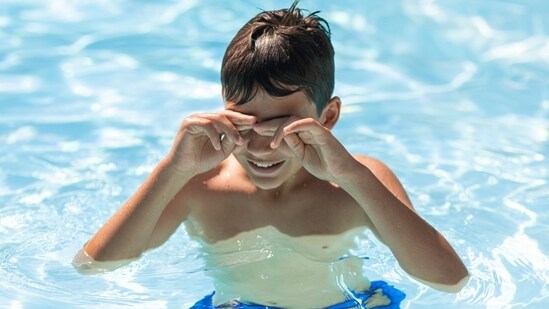
To beat the summer heat, the season is all about cooling off, and what better way than with pool parties or water park outings? But amid all the splashing fun, don’t let your eyes pay the silent price. Chlorinated water, although essential for hygiene, can be harsh on your eyes if proper precautions aren't taken.
In an interview with HT Lifestyle, ophthalmologist Dr Neeraj Sandhuja, founder and director of the Viaan Eye Centre and Retina, explained more about the risks and the precautions one can take.
He said, “Chlorinated pools are an effective means of keeping water clean from harmful bacteria that can lead to illness. While chlorine is an important part of keeping water clean, it should be noted that chlorine can be irritating to the eyes sometimes, particularly with extended or frequent exposure.”
Dr Neeraj Sandhuja shared a complete guide on how to keep your eyes safe in swimming pools, from symptoms of irritation, protective measures, to when to visit a doctor when an emergency arises:
How does chlorine in pools affect your eyes?
Main source of eye irritation from chlorine: When chlorine combines with organic substances such as sweat, body oils, and even urine, it produces chloramines. Chloramines are the main source of eye irritation.
{{/usCountry}}Main source of eye irritation from chlorine: When chlorine combines with organic substances such as sweat, body oils, and even urine, it produces chloramines. Chloramines are the main source of eye irritation.
{{/usCountry}}Chlorine exposure can cause the following symptoms:
- Redness
- Stinging or burning sensations
- Blurred vision
- A gritty or dry feeling in the eyes
How can swimmers protect their eyes?
If you want to minimise irritation and care for your eyes, you can reduce the likelihood of irritation through these simple precautions:
- Use swimming goggles: Correctly fitted swim goggles create a seal to keep chlorinated water out of your eyes.
- Flush your eyes after swimming: Flushing residual chlorine out of your eyes with clean water or sterile saline drops will help reduce discomfort.
- Do not swim with contact lenses: Chlorine can trap bacteria under the lens, which can increase the risk of a bacterial infection, such as conjunctivitis.
- Shower before entering the pool: Don't forget to rinse off in clean water before entering the pool. This helps wash off organic material (oils, dirt, skin) on your body to minimise the amount of chloramines that form.
When to seek medical attention?
- When symptoms persist: Even though much of the eye irritation you may experience from pool water is considered a mild and self-limited irritation, you should seek the advice of a health care professional if your eye irritation lasts longer than 24 hours or if you are experiencing severe pain, blurry vision that lasts, or persistent drainage.
- Potential infections: You could have something more serious going on with your eyes, if symptoms persist, like an infection.
ALSO READ: Doctor shares 5 tips to relieve your tired eyes and help reduce screen fatigue
Note to readers: This article is for informational purposes only and not a substitute for professional medical advice. Always seek the advice of your doctor with any questions about a medical condition.
Catch your daily dose of Fashion, Taylor Swift, Health, Festivals, Travel, Relationship, Recipe and all the other Latest Lifestyle News on Hindustan Times Website and APPs.
Catch your daily dose of Fashion, Taylor Swift, Health, Festivals, Travel, Relationship, Recipe and all the other Latest Lifestyle News on Hindustan Times Website and APPs.