
 E-Paper



US doctor explains the subtle warning signs of melanoma and shares a simple screening test to examine your moles at home

 Prefer HTon Google


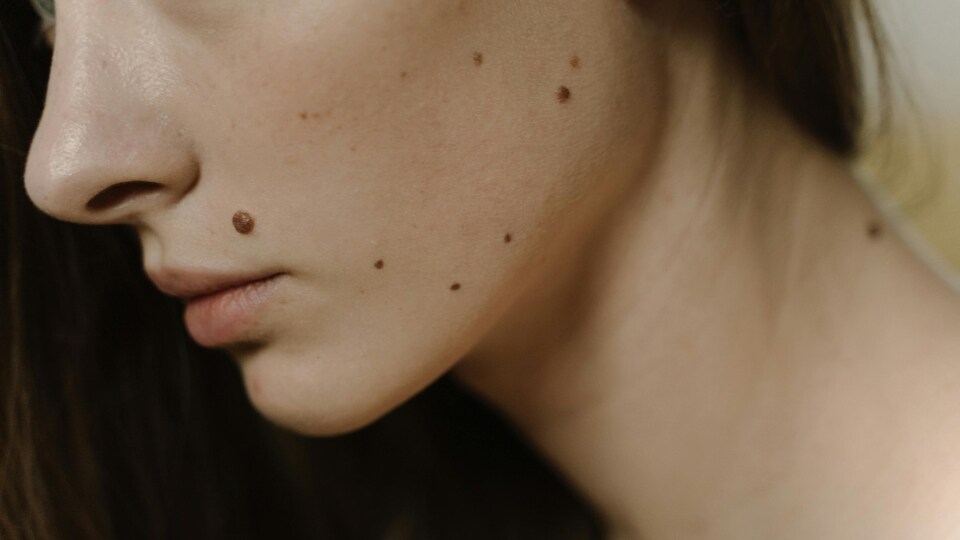
Melanoma is the most aggressive form of akin cancer, but when detected early, it can be lifesaving. Dr Sood shares the ABCDE rule to detect subtle signs early.
Skin cancer is one of the most common cancers worldwide, and melanoma remains its most aggressive form. What makes it particularly dangerous is how quickly it can spread - and how easily its early signs can be overlooked. In the initial stages, melanoma may appear as nothing more than a slightly unusual mole, which is why many cases are detected later than they should be. However, simple screening tools that can be performed at home, can play a crucial role in catching warning signs early - when treatment is most effective and potentially lifesaving.
Also Read | Did you know that women need more sleep than men? US doctor shares 5 surprising facts about sleep
Dr Kunal Sood, an anaesthesiologist and interventional pain medicine physician, is breaking down the crucial screening components of melanoma - an aggressive form of skin cancer which presents as subtle signs in the early stages. In an Instagram video shared on February 23, the physician explains the ABCDE rule - a simple clinical screening tool - highlighting that detecting these signs early can be lifesaving.
The ABCDE rule for melanoma
According to Dr Sood, not every mole is dangerous - but no mole, especially when it changes over time, should ever be ignored. He highlights five key screening factors to watch for: A for asymmetry, B for irregular borders, C for uneven colour, D for diameter, and E for evolving. Among these, he stresses that “E” is the biggest red flag and warrants prompt medical attention.
He explains, “If a mole is changing, don't ignore it. Here's a quick ABCDE check for melanoma. A is for asymmetry; one half doesn't match. B is for border; jagged or blurry edges. C is for color; multiple colors in one spot. D is for diameter; bigger than a pencil eraser. E is for evolving; changing, itching, or bleeding. The last one is the biggest red flag, evolving.”
The physician describes each sign as follows:
Asymmetry
Dr Sood highlights that benign moles are usually symmetrical in shape. If you draw an imaginary line through the middle and the two halves do not match, it can be a cause for concern. He explains, “If you draw a line through it and the two halves don’t match, that raises concern. Benign moles are often symmetrical.”
Border
Taking a closer look at the borders of a mole can also reveal potential warning signs - particularly if the edges appear jagged, irregular or poorly defined. The physician warns, “Look at the edges. Irregular, jagged, or poorly defined borders can signal abnormal growth.”
Colour
The physician states that benign moles typically have a uniform, consistent colour throughout. If a single lesion shows multiple colours or uneven pigmentation, it can be a cause for concern. He explains, “Uniform brown is common in benign moles. Multiple colors in one lesion, such as tan, dark brown, black, red, or even blue, is more concerning.”
Diameter
The commonly cited safe limit for a mole’s size is roughly the diameter of a pencil eraser. However, Dr Sood highlights that some melanomas can be smaller than this, which means relying on size alone is not sufficient for proper screening. He stresses, “Traditionally, anything larger than six millimeters, about the size of a pencil eraser, deserves attention. That said, melanomas can be smaller, so size alone is not enough.”
Evolving
The most significant screening factor, according to Dr Sood, is whether a mole is evolving. Any change in size, shape or colour - or symptoms such as itching, crusting or bleeding - should be taken seriously and evaluated promptly. He explains, “This is the most important sign. Any mole that is changing in size, shape, color, itching, crusting, or bleeding needs evaluation.”
The “ugly duckling” sign
The physician also highlights the classic “ugly duckling” sign as an important screening clue. If one mole looks noticeably different from your other moles, it should be evaluated - even if it does not meet all the ABCDE criteria.
Melanoma is the most aggressive form of skin cancer, but when detected early, it is highly treatable - and early diagnosis can be lifesaving. Highlighting this, Dr Sood explains, “Another helpful concept is the “ugly duckling” sign. If one mole looks different from all your others, even if it does not meet every ABCDE feature, it should be checked. Melanoma can be subtle early. Early detection significantly improves survival outcomes.”
Note to readers: This article is for informational purposes only and not a substitute for professional medical advice. It is based on user-generated content from social media. HT.com has not independently verified the claims and does not endorse them.


Catch your daily dose of Fashion, Taylor Swift, Health, Festivals, Travel, Relationship, Recipe and all the other Latest Lifestyle News on Hindustan Times Website and APPs.


