
 E-Paper



The secrets of the seven chakras: Sadhguru explains what each energy centre represents

 Prefer HTon Google


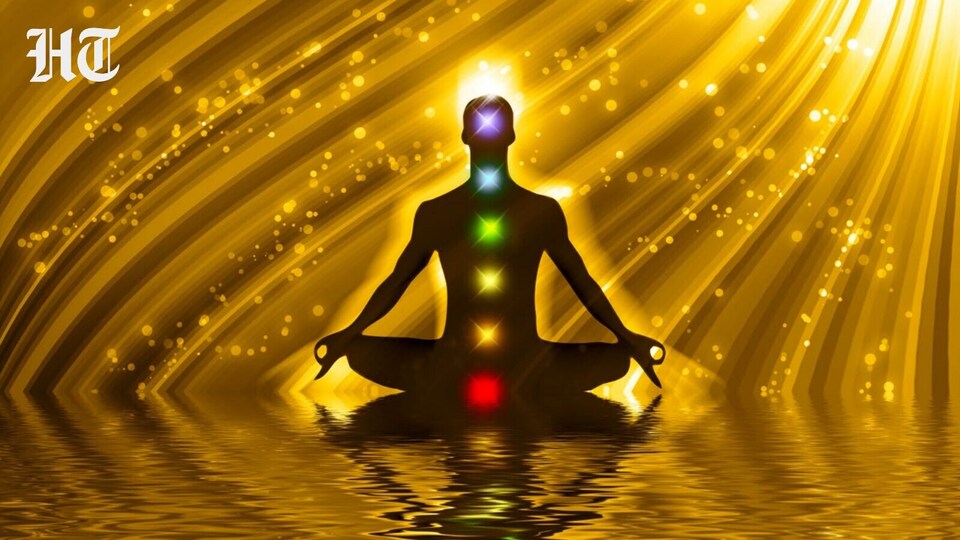
In a recent Instagram Reel, Sadhguru shared how a person's priorities and outlook on life may change as their energy moves through each chakra.
The idea of the seven chakras has been part of yogic traditions for centuries. These energy centres are believed to represent different stages of human experience and spiritual growth. While different schools of yoga explain them in their own way, they are often described as points where energy flows through the body.
In a recent Instagram Reel, Sadhguru shared how a person's priorities and outlook on life may change as their energy moves through each chakra. According to him, the journey begins with basic survival and gradually moves towards higher awareness and inner bliss.
Mooladhara: Where life begins
Sadhguru says the Mooladhara, or root chakra, is connected with your basic needs.
"If your energies are in the lowest chakra, which is referred to as the Mooladhara, food and sleep will be the most dominant factors of your life," he says.
At this stage, everyday survival and physical comfort naturally take centre stage.
Swadhisthana: The search for pleasure
The next energy centre is the Swadhisthana, also known as the sacral chakra.
According to Sadhguru, "If your energy is moving to Swadhisthana, then you are a pleasure seeker."
He explains that as energy rises, people often become more interested in experiences that bring enjoyment and satisfaction.
Also Read A spiritual perspective: Sadhguru explains how emotions can influence every part of your life
Manipuraka: The drive to achieve
The Manipuraka, or solar plexus chakra, is linked with action and ambition.
"If your energy is moving to Manipuraka, then you are a doer in the world. You are an achiever," Sadhguru says.
This stage reflects the desire to work hard, take responsibility and make a mark in the world.
Anahata: Living with creativity
When energy reaches the Anahata, or heart chakra, life begins to look different.
Sadhguru says, "If your energy is moving into Anahata, you are a creative person. You are more creative about life."
According to him, creativity is not limited to art. It is about the way you think, respond and experience the world around you.
Vishuddhi: Becoming a powerhouse
The Vishuddhi, or throat chakra, represents a different kind of strength.
"If energies move into your Vishuddhi, you are a powerhouse. Power need not just mean this. Human beings can be powerful in so many different ways," Sadhguru explains.
He suggests that real power can show up through wisdom, compassion, influence or the ability to inspire others.
Also Read 7 Chakras meditation: Meaning, locations, benefits and how to activate them
Ajna: A state of clarity
The Ajna, often called the third eye chakra, is associated with clear perception.
"If energies move into your Aagna, then you have clarity of vision. Nothing can touch you, nothing can disturb you," Sadhguru says.
He believes this stage brings a sense of stability that is not easily shaken by the ups and downs of everyday life.
Sahasrara: Beyond all methods
Sadhguru says there are many ways to move from the Mooladhara to the Ajna, but the final step is different.
"From the lowest point of Mooladhara to Ajna, there are many ways of reaching there. But from Ajna to Sahasrara, there is no way. It's a pathless path. When all methods are dropped, only then from Ajna to Sahasrara, one will reach," he explains.
The Sahasrara, or crown chakra, is described as the highest energy centre.
"If your energies touch your Sahasrara, the topmost chakra, you will become ecstatic for no reason," Sadhguru says.
According to yogic philosophy, this state is not about chasing happiness through external achievements. Instead, it is seen as a state of inner joy that arises from within.


