
 E-Paper



Heart racing at takeoff? Therapist explains why ‘airplane anxiety’ is physiological and shares simple tips to manage it

 Prefer HTon Google


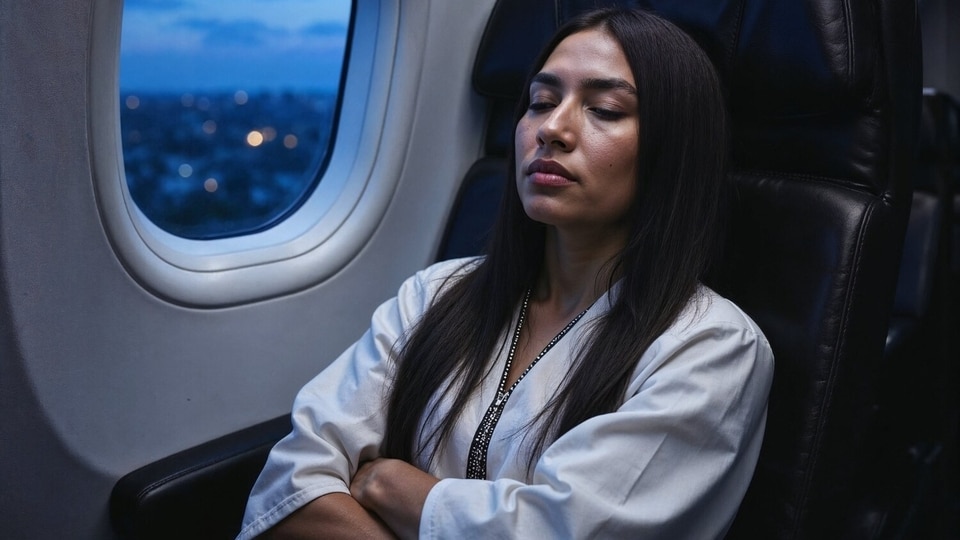
Why does airplane anxiety feel so intense? Therapist explains how the body reacts to flying and shares simple, effective ways to stay calm during air travel.
If you've ever gripped an armrest through turbulence while the person next to you slept soundly, you know how isolating flight anxiety can feel. You're not imagining it, and you're definitely not alone. Airplane anxiety is one of the most common fears, and what makes it particularly frustrating is that it doesn't respond to logic. You can know, intellectually, that flying is safe, and still feel your heart rate spike the moment the cabin door closes. (Also read: Cardiologist with 20 years of experience shares how a woman’s symptoms dismissed as ‘anxiety’ led to cardiac arrest )
In an interview with HT Lifestyle, Aanandita Vaghani, mental health counsellor and founder at UnFix (Your Feelings), explains how airplane anxiety can be managed with practical, body-based strategies rather than just rational thinking.
She emphasises that anxiety during flights is deeply physiological and begins with understanding what the body is reacting to. “Airplane anxiety almost never lives in facts. It lives in the body. The loss of control, the strange sounds, the pressurised air, the sense of being sealed into a metal tube with nowhere to go, these are all things the nervous system can read as threat, regardless of what your rational mind is telling it.”
She adds that instead of trying to “think” one’s way out of fear, it is more effective to identify personal triggers. “Stop trying to think your way out of it. Instead, get curious about what specifically triggers you. Is it takeoff? Turbulence? The moment the doors close?”
Regulate early, don’t wait for panic
According to Vaghani, one of the most effective shifts is learning to regulate the nervous system before the anxiety peaks. “Most people dealing with flight anxiety try to manage it in the moment, when they're already mid-panic at altitude. At that point, it's hard to access calming tools because the nervous system is already in overdrive.”
She recommends simple breathing practices like extended exhales before and during travel. “Extended exhale breathing, where your exhale is longer than your inhale, directly activates the part of the nervous system responsible for rest and calm. It’s physiology, not a trick.”

Stop resisting physical sensations
Vaghani also points out that fighting anxiety symptoms often intensifies them. “The anxiety about the physical sensations is often worse than the sensations themselves.” Instead, she suggests acknowledging them without panic. “This is adrenaline, it peaks and passes on its own, I don’t have to fix it.”
Give the nervous system a safe anchor
She highlights the importance of sensory grounding tools during flights. “Anxiety needs a redirect, not just a suppression. A sensory anchor, a playlist, scent, or something tactile, gives the brain something neutral and known to land on.”
Redefining the goal of flying
Finally, she stresses that “just surviving” flights can reinforce fear over time. “When you power through something in a state of high fear, your brain files it as: that was dangerous and I barely made it out.”
Instead, the goal should be building tolerance and safety awareness. “What you're working toward is being uncomfortable on a flight and coming out the other side with enough presence to notice: I was okay. That’s the data your nervous system needs.”
Vaghani concludes that airplane anxiety is highly treatable with the right support, including therapy, structured exposure, and consistent self-regulation tools.
Note to readers: This article is for informational purposes only and not a substitute for professional medical advice. Always seek the advice of your doctor with any questions about a medical condition.


Catch your daily dose of Fashion, Taylor Swift, Health, Festivals, Travel, Relationship, Recipe and all the other Latest Lifestyle News on Hindustan Times Website and APPs.


