
 E-Paper



Lok Sabha Elections 2019:Water woes, joblessness worry villages in Uttarakhand’s Pauri constituency
Lok Sabha Elections 2018: In many villages of Uttarakhand’s Pauri constituency, small land holdings make farming unviable; lack of industries forces youth to migrate for jobs and traders are worried about losing their shops due to the construction of an all-weather road.

 Prefer HTon Google


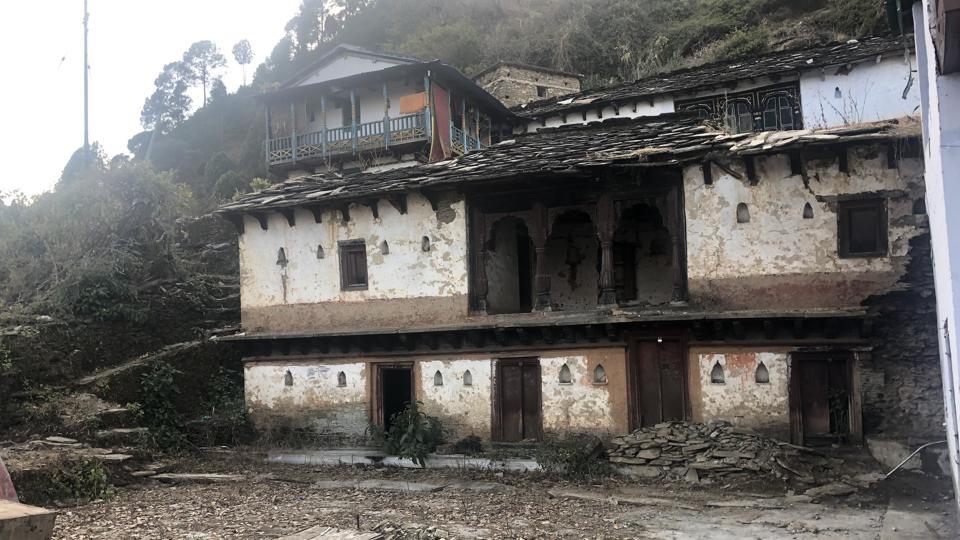
People of Bhainskot, a nondescript village, 18 km from Srinagar in Pauri district of Uttarakhand, have a battle to fight every day. Women wait for hours to collect two buckets of water daily. And men sit idle in the absence of farm practices.
The Pauri Lok Sabha constituency is buzzing with construction of an all-weather road, Prime Minister Narendra Modi’s flagship project aimed at connecting all four shrines -- Gangotri, Yamunotri, Badrinath and Kedarnath. But hundreds of villages in the constituency are facing hardships because of lack of employment, drinking water supply, health care and a policy to revive agriculture sector in hills.
Lack of drinking water supply impacts most households in the constituency. “Drinking water supply is limited in our village. It’s only two hours’ supply during the day. Under such circumstances, women queue up at water outlets,” said 40-year-old Santosh Kumar, a resident of Bhainskot.
Former CM Vijay Bahuguna’s ancestral village, Bughani, is left with only elderly people and kids - thanks to migration. Locals complain of unemployment and lack of policy to revive agriculture in the area. “Youngsters have left the village in search of livelihood in cities. Agriculture has suffered because of this. We, the elderly, can’t work in fields. The government should have given us an opportunity to revive our farms so that young men and women could have a reason to stay,” said Lalita Devi, 60, of Bughani.
Of nearly 16,500 villages in the state, at least 700, mostly in hilly areas, are depopulated, according to a report released by the Uttarakhand migration commission last year. Pauri district, which has six assembly seats, is the worst hit with over 300 ghost villages.
The reasons for the migration are many. Individual land holdings are small, making it increasingly difficult for farmers to feed growing families. Lack of private industries means the scope for an alternative livelihood is scarce.
People of remote villages believe Srinagar and Pauri towns are the only development spots. “Our village is hardly 15 km from Srinagar, but our problems are never addressed. The development is limited to Srinagar and Pauri towns,” said 50-year-old Anshi Devi of Kaligadh village.
The all-weather road passing through Rudraprayag would cost traders as they will have to vacate their shops. Devendra Bisht, 38, a book shop owner in Rudraprayag town, said, “Government plans to acquire our shops for the all-weather road. But they haven’t talked of compensation for local shopkeepers.”
The Jan Adhikar Manch, a social group, had staged a protest for over a fortnight. “The shops are on the government land for over four decades. The government issued guidelines in December 2018 promising compensation but nothing has been given so far,” said Mohit Dimri, president of the group.


