E-Paper



Caste on wheels becoming symbol of pride for some in UP
Note of caution: Putting caste labels on vehicles not permissible under Motor Vehicles Act, says senior transport official.

 Prefer HTon Google


The fad of many people taking pride in ‘boldly’ displaying their caste identities on windscreens or number plates of their vehicles is gaining ground rapidly in Uttar Pradesh, the state where caste has always been pivotal to electoral politics.
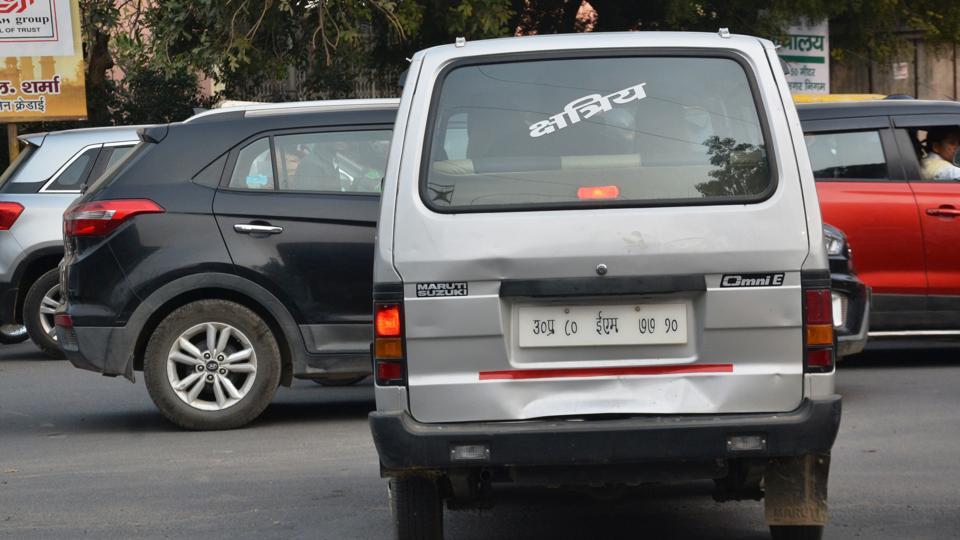
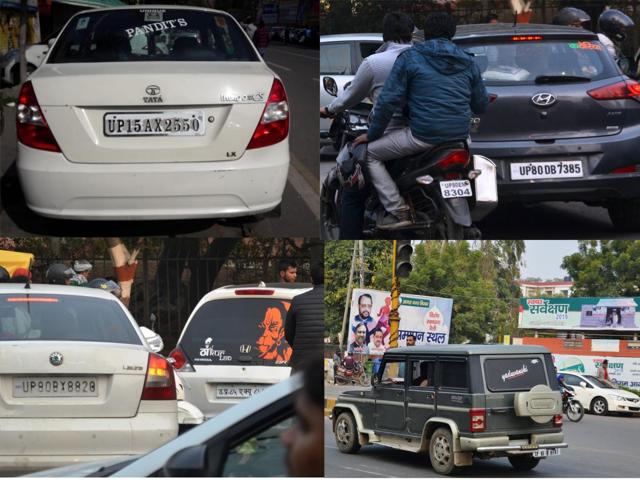
Castes like Yadav, Jat, Gurjar, Brahmin, Pandit, Khatriya, Lodhi and Maurya appear to be competing with each other in asserting their dominant social or political status by putting the caste and sub-caste name tags on their SUVs, cars, motorcycles and other vehicles.
“This is true many people nowadays drive vehicles with their caste name written on the body, windscreens or registration number plates,” additional transport commissioner, enforcement, VK Singh said, adding, “Doing this is not permissible under the Motor Vehicles Act and action against such vehicles is taken from time to time.”
The practice of some people displaying their particular caste identities on vehicles is said to have come to the fore with greater visibility during the Samajwadi Party (SP) regime under Mulayam Singh Yadav (2003-07) when it became fashionable to drive SUVs and motorcycles with ‘Yadav’ written in bold letters on them.
Similarly, vehicles with ‘Jatav’ stickers became more visible during the Bahujan Samaj Party (BSP) rule even as such vehicles can be spotted even today in some districts, especially in the western UP.
Now, Kshatriya, Thakur or Rajput (different variants of the same caste) as a label on vehicles is believed to be the new entrant into the caste rivalry.
“We suddenly see more vehicles with Kshtriya/Thakur/Rajput written on them these days,” said another transport official who did not wish to be identified.
He claimed that anyone who articulated his dominant caste status by displaying caste sticker on his vehicle did so with a clear purpose of sending out a message to others: “do not dare mess with me.”
Rajesh Mishra, a social scientist, said the fashion of dominant castes taking pride in asserting their caste identities was not limited to UP but it was a countrywide phenomena.
“The politically, socially or economically dominant castes often take pride in expressing their caste identities. In UP, they are doing this by displaying caste names on their vehicles,” he said.
“For example, vehicles displaying ‘Jat’ and ‘Gurjar’ as caste tags can be seen more in the National Capital Region (NCR), including western UP, where these castes are more dominant—politically as economically,” Mishra added.
Many people, however, feel that displaying cast or sub-caste names on vehicles is not only illegal but also a regressive trend that, according to them, reinforces the caste system.
“It is shocking to see that even many educated young people can be seen taking false pride in displaying their castes and sub-castes on their vehicles,” said Shivam Kumar, a final year law student at Amity University, here.
“The departments concerned must come down heavily on all such vehicles by booking them under relevant sections of the MV Act and other laws,” he demanded.