
 E-Paper



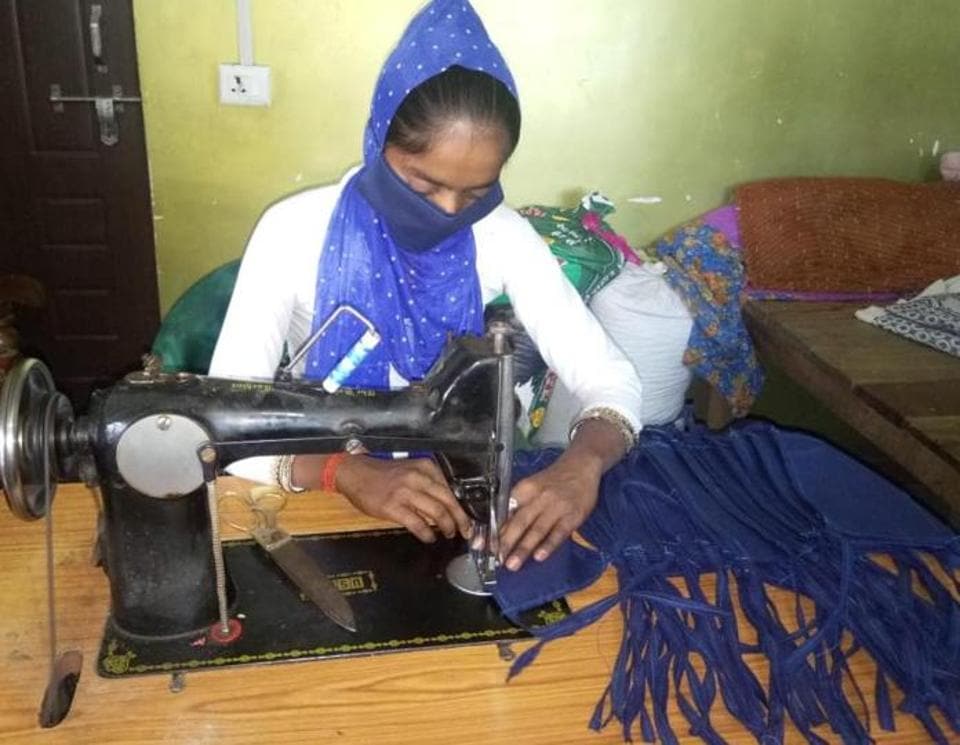
Undeterred by lockdown, these women are making masks to earn a living
With all mining activities coming to a grinding halt following the lockdown, labourers are facing a threat of survival in trans-Yamuna area.


In a bid to support their families financially amid lockdown which has stopped sand mining and stone quarry work in trans-Yamuna area, some women of these tribal and other marginalised communities have come forward to earn a living instead of depending merely on government assistance.
A large population in trans-Yamuna area depends on sand mining and stone quarries where they work as labourers. However, with all mining activities coming to a grinding halt following the lockdown, labourers are facing a threat of survival.
Even before the lockdown when there were few cases of coronavirus in the country and masks were fast disappearing from the markets, some women working in self-help groups were manufacturing them to distribute them to migrant labourers and members of their marginalised communities free of cost, said social activist Subedar Singh of trans-Yamuna area.
The women started manufacturing masks in bulk for commercial purposes a week ago, Singh added.
Singh said at present there were over 50 women in Meja, Koraon, Lohgara and Ghoorpur areas belonging to Kol tribe, Mushars and boatmen communities who were manufacturing masks at their homes.
These women worked in small groups in their respective areas and each group made some two hundred masks a day, Singh added.
“The manufactured masks are collected and supplied to local markets by another group of women. The women engaged in manufacturing and supply of masks belong to extremely marginalised sections and are mostly illiterate,” Singh added.
“Each mask costs Rs 10 in market which is much cheaper than other masks available,” says Shivangi who leads a group of 10 women in Lohgara area.
“We arrange cloth, elastic, thread and other raw material from nearby markets and distribute work among ourselves as per our skills,” Shivangi, a member of Kol tribal community, said.
“Reeta, Reema, Kanchan and other women of Mushar community in Meja area were worried after the lockdown but have now found work at their home. We take care that there is lesser assembly of women and women mostly work from home,” says their group leader Ruby.
Similarly, Sneha Sagar is leading the women of boatmen community in Ghoorpur and adjoining areas after men of the community were rendered jobless following the sudden lockdown on March 25.
“Women of marginalised communities are not only saving people from coronavirus infection by manufacturing masks in bulk but are also earning a living for their families,” says volunteers of a self-help group Akriti and Sudha.
Social activist Subedar Singh said some NGOs and social organisations of the city had approached the women and had taken samples of the masks manufactured by them. “Once receiving the nod from them, more women would be engaged in manufacturing of masks that will be purchased by these organisations to be distributed free in the cities as well,” Singh said.


